Smartphone tethering harness for height workers, securing mobile phones up to 0.5kg without a case, modification, or compromise to device functionality.
- Self-tightening silicone, grips harder on impact
- ANSI/ISEA 121-2023 certified, CE and UKCA marked
- Patented central D-ring, no catapult effect
- Fits phones 130x60mm to 200x110mm
- Third-party load tested, 2:1 dynamic safety factor
- Camera, fingerprint, and device functions uncompromised
Smartphone tethering harness for height workers, securing mobile phones up to 0.5kg without a case, modification, or compromise to device functionality.
- Self-tightening silicone, grips harder on impact
- ANSI/ISEA 121-2023 certified, CE and UKCA marked
- Patented central D-ring, no catapult effect
- Fits phones 130x60mm to 200x110mm
- Third-party load tested, 2:1 dynamic safety factor
- Camera, fingerprint, and device functions uncompromised
- Buy 10 for £12.96 £10.80 each and save 6%
- Buy 20 for £12.16 £10.13 each and save 12%
| BULK DISCOUNT | 10 | 20 |
|---|---|---|
| Price | £10.80 £12.96 | £10.13 £12.16 |
Order 1x to earn 11 FASTPoints
Order to earn 11 FASTPoints
Log in to access trade discountsNLG Phone Harness
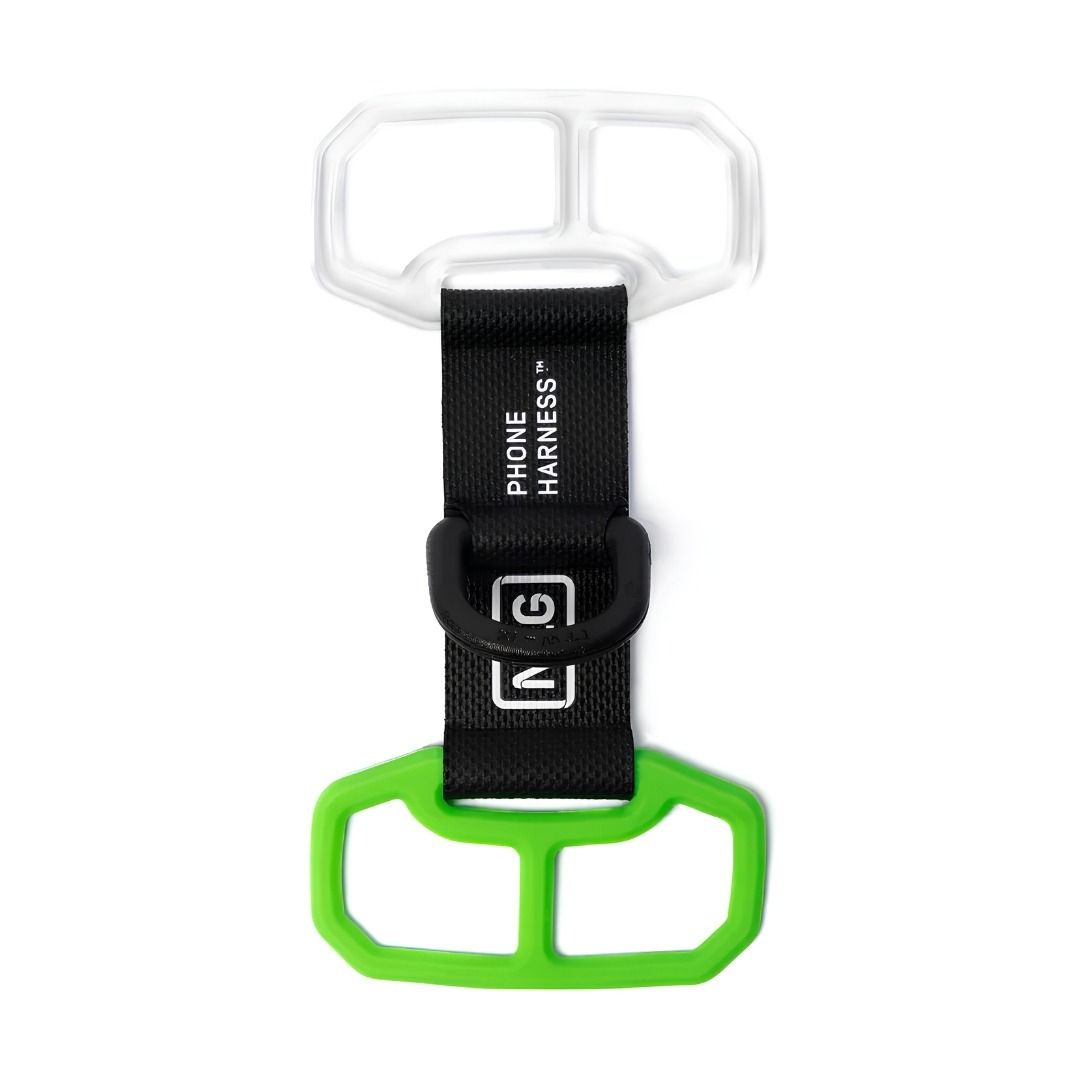
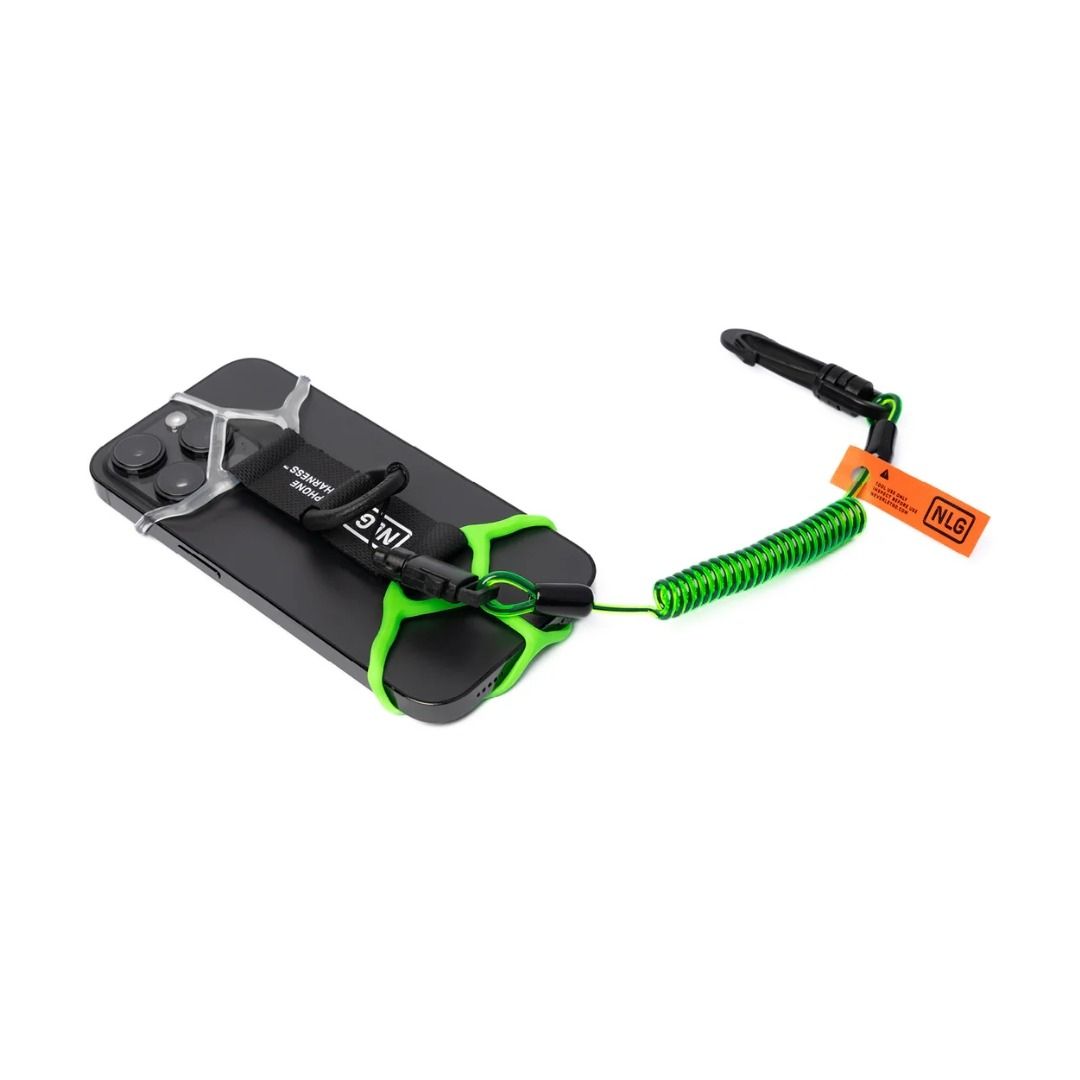
Smartphone tethering harness for construction operatives, telecoms engineers, and height workers who need their phone secure, accessible, and compliant with a dropped object prevention programme. Unlike pouch or case-based solutions, the NLG Phone Harness fits directly over any compatible smartphone using a two-point silicone cradle and Rivertex webbing spine, keeping the device tethered and fully functional without removal from use.
How self-tightening silicone prevents phone loss at height
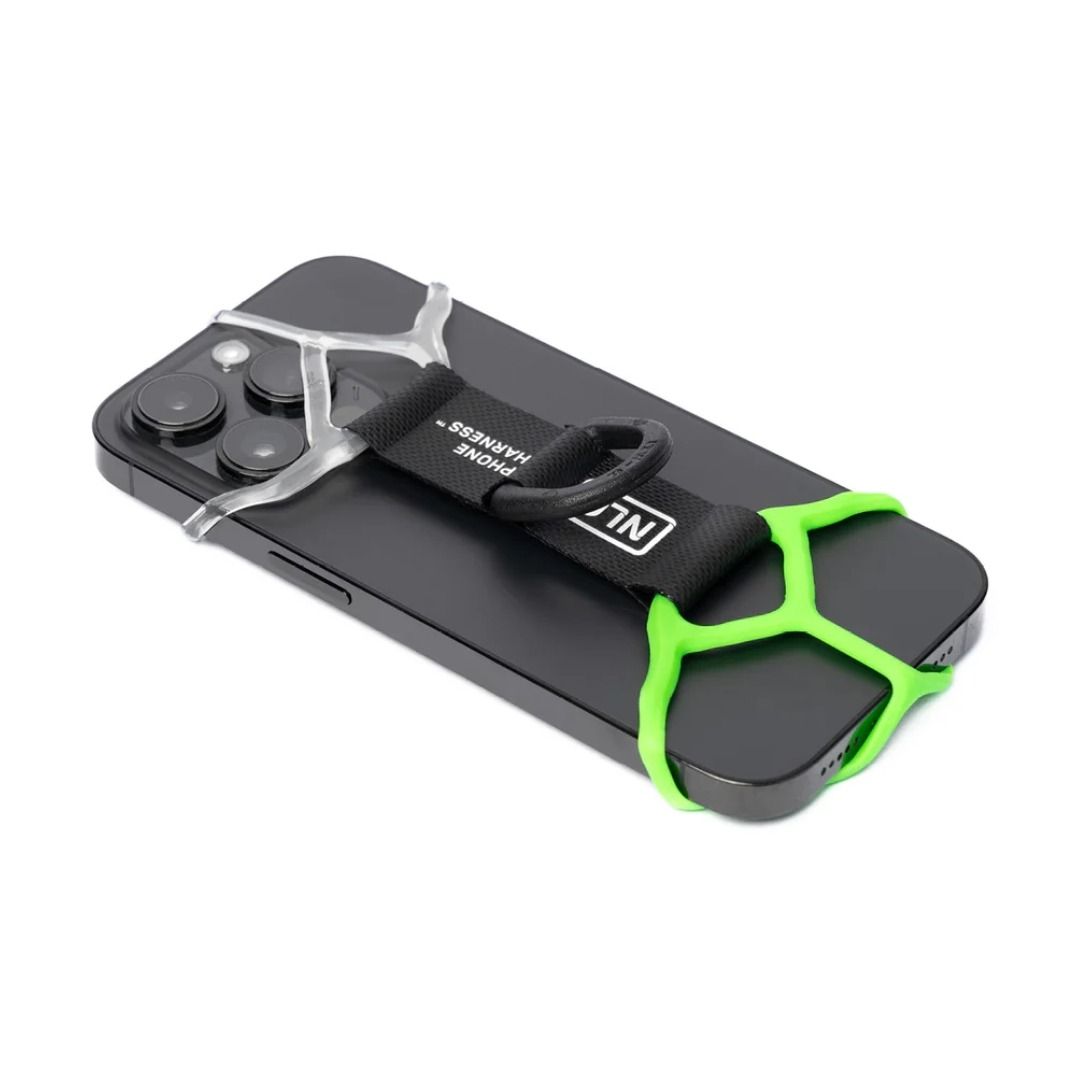
Standard phone holders attach at a single edge of the device, so a dropped phone swings outward on the lanyard before the load is caught. That pendulum action puts sudden shock load on the attachment point and can damage both holder and phone. The NLG Phone Harness uses a central D-ring combined with a two-point self-tightening silicone cradle that grips harder around the phone's corners as weight and drop distance increase, distributing load across both ends of the device and eliminating the swing entirely.
Key Features
-
Self-tightening silicone cradle: Patented two-point design grips harder as load increases. Retention improves with drop distance, not despite it.
-
Central D-ring attachment point: Centres the load on the device, eliminating the catapult effect found in holders with off-centre fixings.
-
Rivertex webbing spine: Military-grade Rivertex forms the structural core of the harness, providing rigidity without adding bulk to the phone.
-
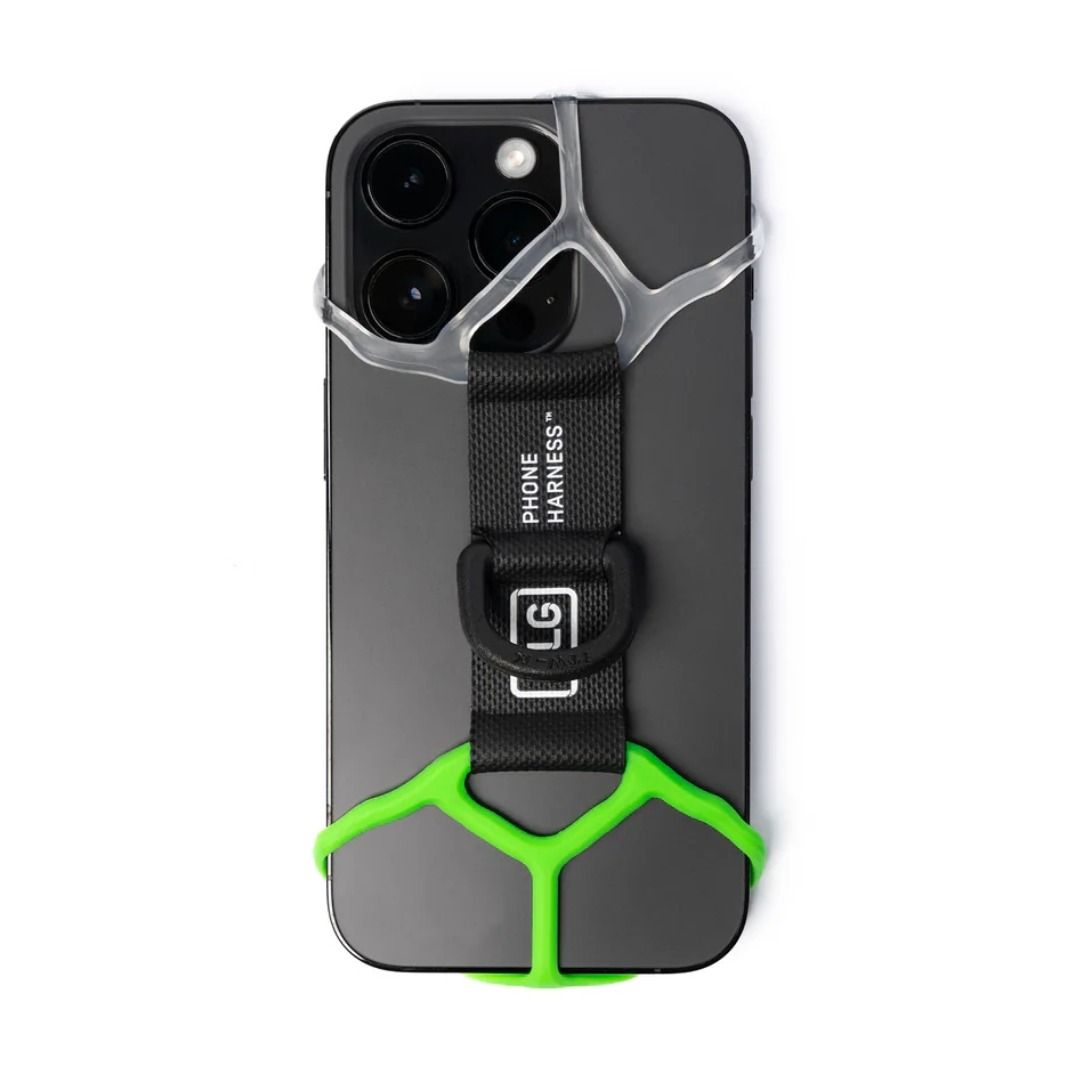
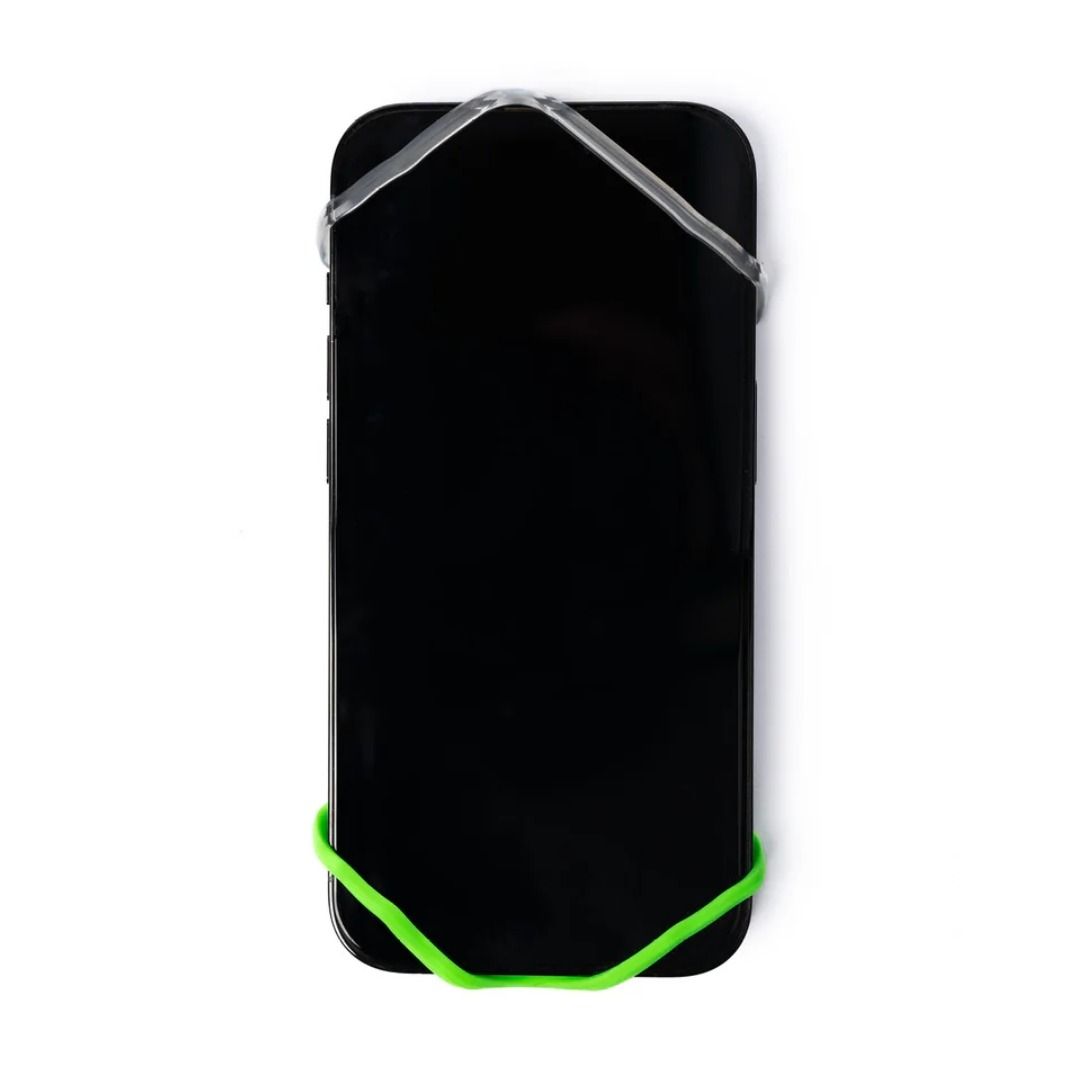
Fits without modification: Wraps directly over most phones in the supported size range. No permanent fixings. Camera, fingerprint reader, and charging ports remain fully accessible.
-
NLG ID serialised tag: Scan the orange NLG ID tag to access inspection certificates, installation videos, and log equipment condition records.
-
Third-party load tested: Independently certified to ANSI/ISEA 121-2023, CE and UKCA marked, NS 9611:2022+AC. Dynamic load tested at 2:1 safety factor.
Who is this for
Trades and roles:
-
Construction operatives
-
Telecoms and utilities engineers
-
Scaffolders
-
Wind turbine technicians
-
Industrial maintenance engineers
Industries:
-
Construction
-
Telecoms and utilities
-
Renewables and energy
-
Offshore and industrial plant
-
Facilities management
Specifications
| Specification | Detail |
|---|---|
| Product Name | NLG Phone Harness - 0.5kg Self-Tightening Smartphone Tethering |
| SKU | NLG101600 |
| Product Category | Smartphone Tethering Harness |
| Max Load | 0.5 kg (1.1 lbs) |
| Safety Standards | ANSI/ISEA 121-2023, CE, UKCA, NS 9611:2022+AC |
| Load Testing | Dynamic, 2:1 safety factor, third-party certified |
| Attachment Point | Central D-ring |
| Core Construction | Rivertex webbing spine |
| Cradle Material | Self-tightening silicone, two-point cradle |
| Compatible Phone Sizes | 130x60mm to 200x110mm |
| Dimensions | 115mm (L) x 60mm (W) |
| Max Lanyard Length | 120 cm (48 in) |
| Country of Origin | United Kingdom |
| Compliance Markings | CE, UKCA |
| Unit Weight | 10 g |
Compatibility
| Compatible With | Status |
|---|---|
| Smartphones 130x60mm to 200x110mm | Compatible |
| Phones in slim protective cases (verify overall dimensions) | Compatible |
| NLG Mini Coil Lanyard (NLG101371) | Compatible |
| Any rated lanyard with D-ring connection | Compatible |
| Standard PPE harness anchor points via rated lanyard | Compatible |
| Phones smaller than 130x60mm | Not recommended |
| Tablets and devices larger than 200x110mm | Not recommended |
| Devices exceeding 0.5kg total weight | Not recommended |
| Use without a rated lanyard attached to the D-ring | Not recommended |
Who is this for
Height workers who use a mobile phone as a working tool need a tethering solution that keeps the device accessible during use, not locked away in a pouch. This harness is used primarily by construction operatives, telecoms and utilities engineers, scaffolders, and wind turbine technicians who carry and operate smartphones actively while working at height on sites where a compliant dropped object prevention programme covers handheld devices.
Typical applications
-
Accessing digital drawings, BIM models, or site plans on a smartphone while working from a scaffold or elevated work platform.
-
Keeping a phone tethered during telecoms mast and tower installation at height, where dropped objects present risk to operatives and members of the public below.
-
Securing a mobile device during wind turbine inspection and maintenance at operational height.
-
Tethering a phone used for real-time site coordination, digital permits to work, or toolbox talk records during roofing and cladding installation.
-
Preventing phone loss during confined-space entry and maintenance work where a dropped device could injure operatives below or be unrecoverable.
-
Securing a smartphone during any elevated task under a site dropped object prevention programme that covers handheld devices.
How to use
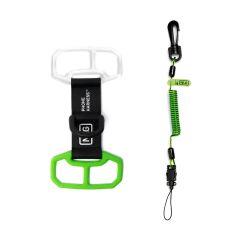
Step 1: Position the white silicone cradle over the top two corners of the phone, with the Rivertex webbing spine running down the back of the device.
Step 2: Stretch the webbing spine down the back of the phone and hold in place with a thumb.
Step 3: Stretch the green silicone cradle over the bottom two corners of the phone until it seats securely against the corners.
Step 4: Attach your rated lanyard to the central D-ring and confirm the connection is secure before beginning work.
Step 5: If the white silicone partially obstructs the camera lens, adjust its position slightly. The offset design permits minor repositioning without compromising retention.
Common mistakes
-
Using the harness without a rated lanyard connected to the D-ring. The harness secures the phone to the tether point but provides no protection if nothing is attached.
-
Fitting the harness to a phone outside the 130x60mm to 200x110mm size range. The silicone cannot seat correctly on incompatible devices and retention is compromised.
-
Returning a harness to service after a drop event without quarantine and inspection. Any drop may compromise silicone or Rivertex integrity even if no visible damage is present.
-
Pairing the harness with an unrated cord or cable. The harness is independently certified. The lanyard must carry an equivalent independent rating.
Safety
This product is certified to ANSI/ISEA 121-2023, CE, UKCA, and NS 9611:2022+AC. Maximum rated load is 0.5kg. Never exceed the rated load. After any drop, quarantine the harness immediately and inspect it using the NLG Inspection Checklist before returning to service. Increased silicone tension after a drop is normal behaviour. Inspect for cracking, tearing, or deformation before passing the unit for further use. This product is not a fall arrest device and provides no personal fall protection function.
Maintenance
Inspect the silicone cradles and Rivertex webbing before each use. Retire from service immediately if any component shows cracking, tearing, or deformation. Clean with a damp cloth. Store away from heat sources, solvents, and direct sunlight. Scan the orange NLG ID tag to access the NLG Inspection Checklist and log inspection records. All inspections should be conducted and recorded by a competent person.
Frequently Asked Questions
Q: How does the self-tightening mechanism actually work?
A: The harness uses two separate silicone cradles: one seats over the top corners of the phone and one over the bottom corners. Both are connected by the Rivertex webbing spine and a central D-ring. When load is applied or the phone is dropped, the geometry of the cradle converts downward force into inward grip pressure at the corners. The harder the phone is pulled downward, the more securely the silicone seats against the device corners.
Q: What safety standards does this phone harness meet?
A: The harness is certified to ANSI/ISEA 121-2023, the primary international standard for dropped object prevention tethering systems. It also meets NS 9611:2022+AC, the Norwegian standard for tool lanyards and tethering equipment, and carries both CE and UKCA markings. Load testing is dynamic at a 2:1 safety factor, independently verified by a third-party laboratory. Declarations of Conformity and load test certificates are available on request from the manufacturer.
Q: What is this harness NOT suitable for?
A: The harness is rated to 0.5kg maximum and is not suitable for tablets, large devices, or any device weighing more than 0.5kg. It must not be used with phones smaller than 130x60mm or larger than 200x110mm. It must not be used without a separately rated lanyard attached to the D-ring. It provides no personal fall arrest function and is not a substitute for a full height-safety system.
Q: How is this different from a phone pouch or case-based tether?
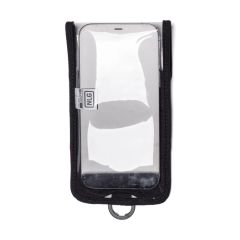
A: A phone pouch requires the device to be removed from its existing case and placed inside, then operated through a transparent screen or cutout. A case-based tether bonds an anchor to the phone case, typically off-centre, creating a catapult effect on a drop. The NLG Phone Harness fits over the phone directly, requires no case removal, uses a central D-ring to eliminate the catapult effect, and keeps all phone functions fully accessible during use.
Q: Do I need to remove my phone from its case to fit the harness?
A: In most situations, no. The harness fits directly over compatible smartphones including those in slim protective cases, provided the overall dimensions remain within 130x60mm to 200x110mm. Bulky or reinforced site phone cases may affect fit. Verify the overall dimensions of your phone with case in place before ordering.
Q: What should I do if the phone harness has been dropped?
A: Quarantine the harness immediately and remove it from service. Do not assume it is undamaged because it looks intact. Inspect the silicone cradles for cracking, tearing, or permanent deformation, and the Rivertex webbing for fraying or distortion. Scan the NLG ID tag to log the drop event and access the inspection checklist. If any component shows degradation, retire it from service.
Q: What lanyard should I pair with this harness?
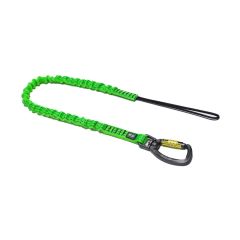
A: NLG recommend the Mini Coil Lanyard (NLG101371) as the companion piece, which extends to 120cm and connects directly to the D-ring. Any independently rated lanyard with a D-ring connection and a max load rating of at least 0.5kg is compatible. The lanyard must carry an independent third-party certification. Do not use an unrated cord or cable in place of a rated lanyard.