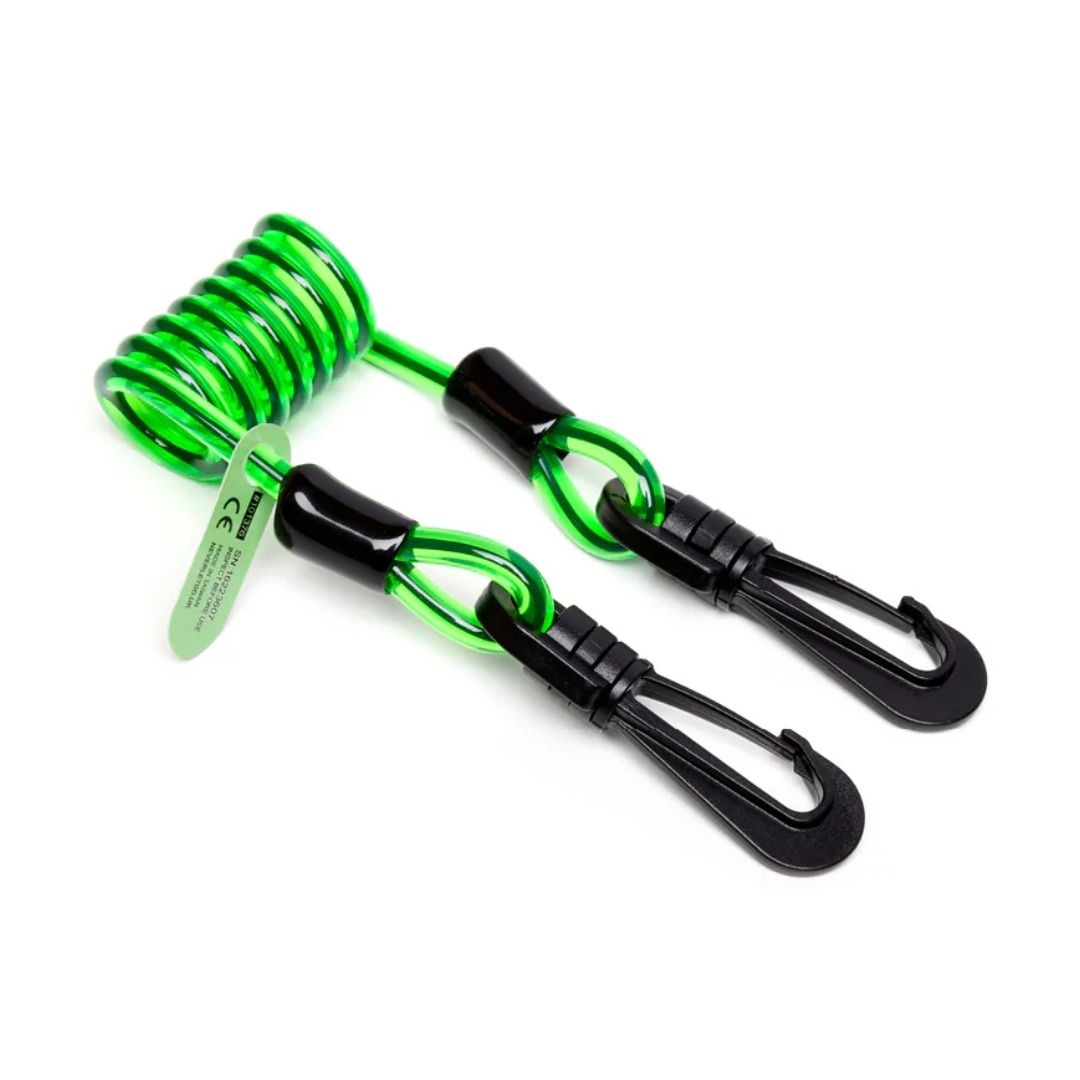
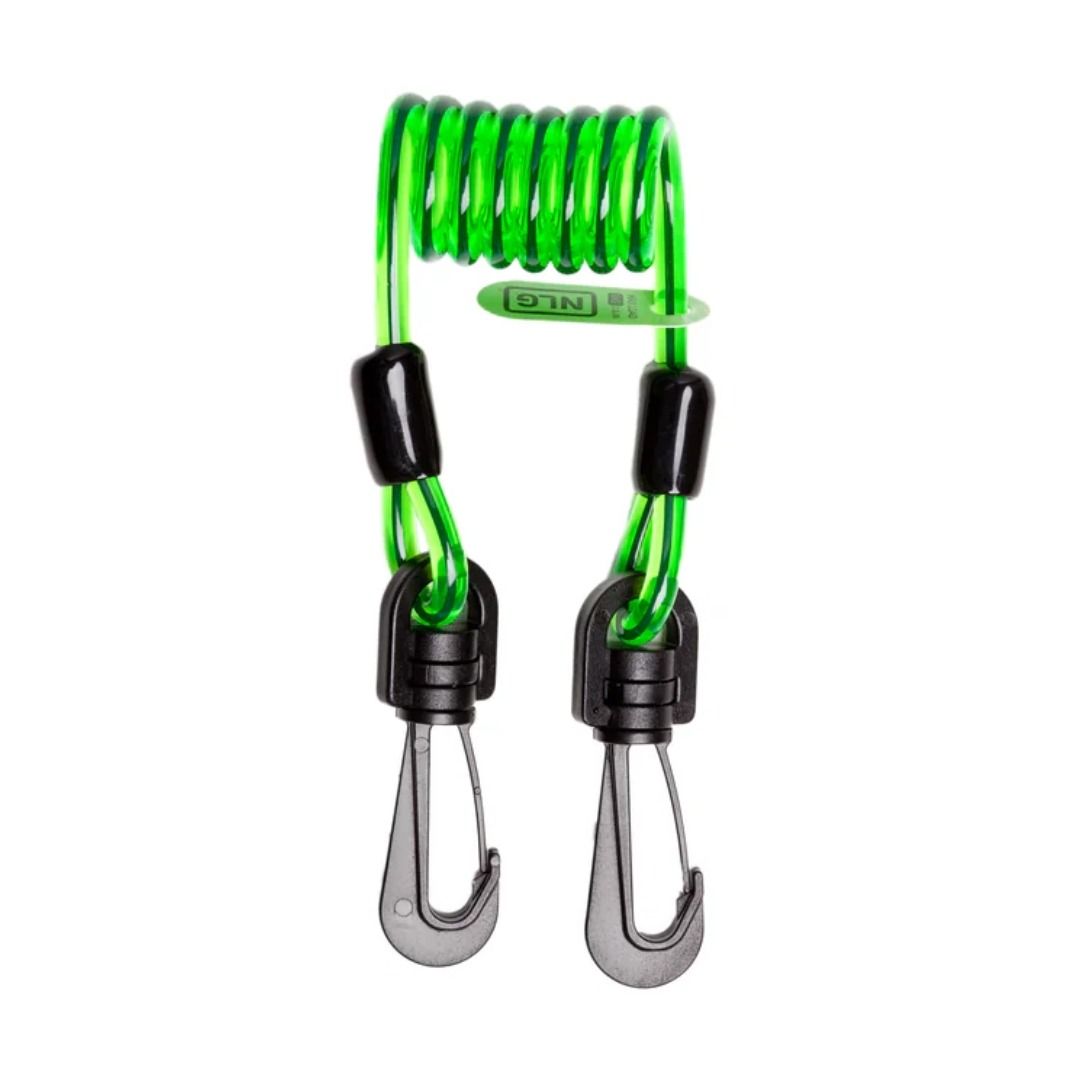
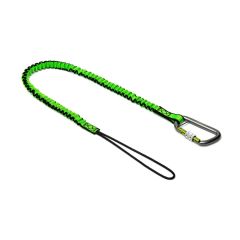
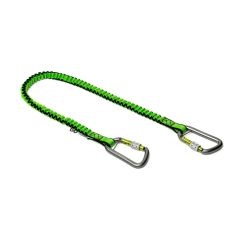
Non-conductive short coil tool lanyard rated to 1kg, for tethering hand tools in electrical, hygiene, and other metal-free environments.
- Max load 1kg (2.2lbs), dynamic load tested at 2:1 safety factor
- CE and UKCA marked, NS 9611:2022 compliant
- serial numbered
- Fully non-conductive, all-plastic rotating connectors, no metal in load path
- Compact coil extends 4cm to 70cm
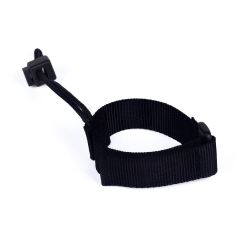
- pairs with NLG GO Wrist Lanyard
- Heat and puncture-resistant wipe-clean sleeve
- 30g,
- NLG ID scan tag included
Non-conductive short coil tool lanyard rated to 1kg, for tethering hand tools in electrical, hygiene, and other metal-free environments.
- Max load 1kg (2.2lbs), dynamic load tested at 2:1 safety factor
- CE and UKCA marked, NS 9611:2022 compliant
- serial numbered
- Fully non-conductive, all-plastic rotating connectors, no metal in load path
- Compact coil extends 4cm to 70cm
- pairs with NLG GO Wrist Lanyard
- Heat and puncture-resistant wipe-clean sleeve
- 30g,
- NLG ID scan tag included
- Buy 10 for £23.42 £19.52 each and save 6%
- Buy 20 for £22.06 £18.38 each and save 12%
| BULK DISCOUNT | 10 | 20 |
|---|---|---|
| Price | £19.52 £23.42 | £18.38 £22.06 |
Order 1x to earn 20 FASTPoints
Order to earn 20 FASTPoints
Log in to access trade discountsNLG Short Coil Tool Lanyard Non Conductive
Non-conductive short coil tool lanyard rated to 1kg, for tethering hand tools in electrical, hygiene, pharmaceutical, and nuclear environments where metal-free equipment is a requirement. The non-conductive reinforced core and fully plastic rotating connectors at both ends remove all metal from the load path between the anchor and the tool. The ultra-compact coil extends from 4cm to 70cm and is designed to pair with the NLG GO Wrist Lanyard, creating a close-body tethering solution suitable for confined spaces and restricted working positions.
Why Metal-Free Construction Matters in Electrical and Hygiene Environments
A standard coil or bungee tool lanyard uses metal carabiners and metal connector rings. In environments where live electrical equipment is present, any metal component in the load path between the operative and the tool creates a potential conductivity risk if the tool contacts a live surface or the operative works close to energised equipment. In hygiene-critical environments, food manufacturing, pharmaceutical production, clinical settings, metal components present a contamination risk that product safety protocols specifically exclude. The non-conductive reinforced core and plastic rotating connectors on this lanyard remove metal from the entire tether system, making it suitable for these environments where a standard lanyard cannot be used.
Key Features
-
Fully non-conductive construction: Reinforced non-conductive core with plastic rotating connectors at both ends. No metal anywhere in the load path, suitable for electrical work and metal-free facility requirements.
-
360° plastic rotating connectors: Both connectors rotate freely through a full 360°, preventing the coil from tangling when tools such as screwdrivers, ratchets, and small inspection instruments are in use.
-
Ultra-compact short coil: Extends from 4cm to 70cm. Designed to pair with the NLG GO Wrist Lanyard, creating a wrist-anchored tool tethering solution that stays close to the body and clear of confined space surroundings.
-
Heat and puncture-resistant wipe-clean sleeve: The outer sleeve resists heat and surface contact, and wipes down quickly with a damp cloth. Suitable for hygiene environments requiring clean-down procedures between tasks or zones.
-
CE and UKCA marked, serial numbered: Certified and dynamically load tested at a 2:1 safety factor. NLG ID scan tag and unique serial number for inspection traceability.
Who Is This For
Trades and roles:
-
Electricians and M and E trades working near live or energised equipment
-
Inspection and maintenance technicians in hygiene-critical facilities
-
Nuclear industry operatives requiring metal-free tool control
-
Confined space workers needing a compact wrist-mounted tethering solution
-
Safety officers specifying tool tethering for metal-free environments
Industries:
-
Electrical and M and E
-
Food and beverage manufacturing
-
Pharmaceutical and clinical
-
Nuclear
-
Utilities and facilities management
Specifications
| Specification | Detail |
|---|---|
| Product Name | NLG Short Coil Tool Lanyard Non Conductive - 1kg Electrical and Hygiene Tethering |
| SKU | 101376 |
| Product Category | Non-Conductive Tool Lanyard, Dropped Object Prevention |
| Max Load | 1kg (2.2lbs) |
| Construction | Non-conductive reinforced core, no metal in load path |
| Connector Type | Dual 360° rotating plastic connectors |
| Connector Material | Plastic, no metal |
| Tool Attachment | Rotating plastic connector to D-ring or clip-compatible point |
| Anchor Attachment | Rotating plastic connector to wristband loop or fixed anchor |
| Sleeve | Heat and puncture-resistant wipe-clean outer sleeve |
| Safety Standards | CE, UKCA, NS 9611:2022+AC |
| Testing | Dynamic load tested, 2:1 safety factor, third-party certified |
| Inspection System | NLG ID serialised scan tag |
| Serial Numbering | Unique serial number per unit |
| Extended Length | 4cm to 70cm |
| Colour | Hi-vis green |
| Unit Weight | 30g |
Compatibility
| Application or Condition | Status |
|---|---|
| Electrical work and live working environments requiring metal-free tethering | ✓ Compatible |
| Hygiene areas including food, pharmaceutical, and clinical environments | ✓ Compatible |
| Nuclear industry tool control | ✓ Compatible |
| Confined space use when paired with NLG GO Wrist Lanyard (101599) | ✓ Compatible |
| Small rotating tools up to 1kg including screwdrivers and inspection instruments | ✓ Compatible |
| Tools exceeding 1kg (2.2lbs) | ✗ Not suitable |
| Power tools of any weight | ✗ Not suitable |
| Fall arrest or personal safety applications | ✗ Not suitable |
| Replacement for EN354 or EN355 personal safety lanyard | ✗ Not suitable |
Who Is This For
Electricians, M and E maintenance engineers, and inspection technicians who work near live or energised electrical equipment and need a tool tethering solution that introduces no metal into the working environment. It is equally suited to operatives in food manufacturing, pharmaceutical production, clinical settings, and nuclear facilities where metal-free equipment requirements apply to all tools and their accessories. Site managers and safety officers specifying tool tethering for these environments can pair this lanyard with the NLG GO Wrist Lanyard to create a complete personal tethering system with no metal components from wrist to tool.
Typical Applications
-
Tethering a screwdriver or ratchet to a wrist lanyard during electrical installation, testing, and maintenance work near energised equipment where metal tethering hardware is a conductivity risk.
-
Keeping small inspection instruments, voltage testers, and measuring tools attached to a wrist anchor during live working operations in electrical substations and switchgear environments.
-
Tethering hand tools in food manufacturing facilities where metal detection systems are in use and metallic foreign body contamination is a critical control point.
-
Securing small hand tools in pharmaceutical manufacturing clean rooms and clinical environments where metal-free protocols apply to all equipment.
-
Using as a compact wrist-attached tether in confined spaces such as inspection chambers, plant rooms, and access voids where a standard bungee lanyard would be too long and a metal carabiner is excluded.
-
Part of a complete metal-free tool tethering kit in nuclear industry environments where every component of the operative's kit must meet metal-free requirements.
How to Use
Anchor end (wristband or fixed point):
Step 1: Connect the anchor-end rotating plastic connector to the NLG GO Wrist Lanyard loop or to a fixed anchor point. The plastic connector opens and clips without tools.
Step 2: Confirm the connector is secure with a gentle tug.
Tool end:
Step 3: Connect the tool-end rotating plastic connector to the tool's D-ring, captive hole, or clip attachment point.
Step 4: Confirm both ends are secure with a tug before beginning work. Both rotating connectors should turn freely through 360°.
Note: When pairing with the NLG GO Wrist Lanyard, attach this lanyard's anchor end to the wristband loop and the tool end directly to the tool. This creates a complete body-worn tethering system with no metal anywhere between the wrist and the tool.
Common Mistakes
-
Using for tools over 1kg: This is a 1kg-rated short lanyard for small hand tools. Screwdrivers, small ratchets, voltage testers, and inspection instruments are typically within the limit. Weigh the tool before attaching.
-
Using in non-electrical environments where a higher-rated lanyard is needed: The 70cm maximum extension makes this unsuitable as a general scaffold or construction tool lanyard. For longer-reach applications and higher loads, use the NLG Lightweight Coil Tool Lanyard (101493) or the bungee range.
-
Not wiping the sleeve after use in hygiene environments: In food and pharmaceutical facilities, clean-down between zones or after contact with product areas is typically required. Wipe the sleeve with a damp cloth after each task.
-
Forcing the plastic connectors: The plastic rotating connectors are not metal carabiners. Do not force or lever them open. Operate as designed, they open with a controlled action, not under load or by force.
-
Continuing to use after a drop event: Quarantine and inspect after any drop before returning to service.
Safety
This lanyard is rated to a maximum working load of 1kg (2.2lbs) for small hand tools only. It is not for fall arrest and must not be used in any personal safety application. The non-conductive construction removes metal from the tether load path but does not provide electrical insulation to any specific voltage standard, confirm suitability for specific live working voltage categories with your site safety officer before specifying for high-voltage environments. Inspect the coil, sleeve, and plastic rotating connectors before every use. Retire from service if any component is cracked, deformed, or damaged. Quarantine after any drop event.
Maintenance
Wipe the heat and puncture-resistant sleeve with a damp cloth after every use, particularly in hygiene environments where clean-down is required. Inspect the coil body for kinking, stretching, or surface damage. Check both plastic rotating connectors for cracking or deformation and confirm they rotate freely. Store away from direct sunlight, heat, and chemical contact. Log inspections via the NLG ID scan tag. Retire from service when any component shows deterioration or after any drop event.
Frequently Asked Questions
Q: What does non-conductive mean for a tool lanyard?
A: A non-conductive tool lanyard has no metal in its construction. Standard tool lanyards use metal carabiners, metal swivel rings, and metal connection hardware. This lanyard replaces all metal components with a non-conductive reinforced core and plastic rotating connectors, removing any conductive pathway from the anchor connection to the tool. In electrical environments, this means no metal bridge between the operative's anchor point and a tool that could contact a live surface.
Q: Is this suitable for live electrical working environments?
A: The non-conductive construction is designed for areas where metal-free equipment is required, including electrical work environments. However, this lanyard does not carry a rated voltage insulation class and is not a replacement for insulated tools or Class II electrical PPE. Confirm suitability for specific live working categories and voltage levels with your site safety officer or approved electrical safety scheme before specifying for high-voltage operations.
Q: What industries require metal-free tool tethering?
A: Electrical and M and E maintenance (where metal components near live equipment present a conductivity risk), food and beverage manufacturing (where metal detection systems and foreign body contamination protocols apply), pharmaceutical and clinical environments (where metallic contamination is a critical control point), and nuclear facilities (where metal-free equipment requirements are typically written into site-specific safety cases). The plastic rotating connectors and non-conductive core address all of these requirements in a single, compact lanyard.
Q: What is this lanyard not suitable for?
A: It must not be used with tools exceeding 1kg (2.2lbs) or with power tools. It is not for fall arrest and must never replace a rated personal safety lanyard. The 70cm maximum extension makes it unsuitable as a scaffold or general construction tool lanyard — for those applications, use the NLG Lightweight Coil Tool Lanyard (101493). The plastic connectors are not rated to the same load profile as metal carabiners in higher-load bungee lanyards.
Q: How does this work with the NLG GO Wrist Lanyard?
A: The NLG GO Wrist Lanyard (101599) is the primary anchor for this coil lanyard. Attach the anchor-end plastic connector to the wristband loop on the GO Wrist Lanyard, and the tool-end connector directly to the tool D-ring or captive attachment. This creates a complete body-worn tethering system with no metal between the wrist and the tool. The compact 70cm maximum extension keeps the tool close to the body, suitable for confined spaces and restricted working positions where a longer lanyard would snag or trail.
Q: How does the wipe-clean sleeve perform in hygiene environments?
A: The heat and puncture-resistant outer sleeve can be wiped down with a damp cloth between tasks, between production zones, or during end-of-shift clean-down. Do not use abrasive or solvent-based cleaners that could degrade the sleeve material. In facilities where the lanyard must pass through an autoclave or chemical decontamination process, confirm compatibility with the specific process before use.
Q: How do I inspect this lanyard before use?
A: Check the coil body for kinking, stretching, and surface damage along its full length. Inspect the plastic rotating connectors for cracking, deformation, or stiffness, both should turn freely through 360°. Check the sleeve for splits, cuts, or areas where the non-conductive core is exposed. If any component fails the check, retire the lanyard from service immediately. Log the inspection via the NLG ID scan tag.
Q: What certifications does this carry?
A: CE and UKCA marking, and NS 9611:2022+AC compliance. Dynamically load tested at a 2:1 safety factor by an independent third-party laboratory. Each unit carries a unique serial number and NLG ID scan tag for inspection traceability.