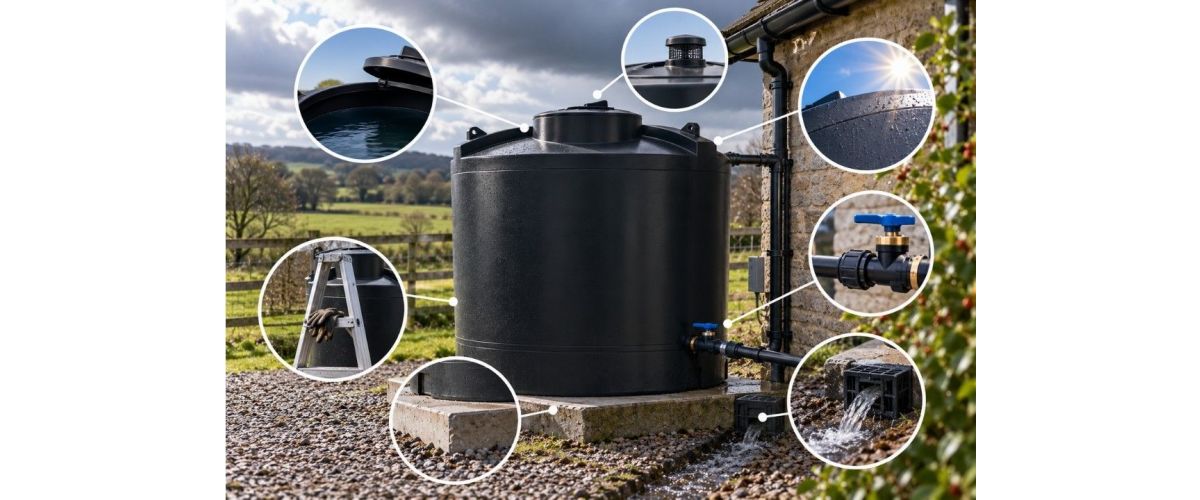
Water Tank Safety and Maintenance: What UK Sites Need to Know
A water tank is easy to install and easy to forget about once it's full. That's usually when problems start. Most issues with stored water, whether it's contamination, structural damage or a tank that fails early, come down to a handful of things that are simple to check but easy to overlook. This guide covers what actually matters.
Water Hygiene and Legionella Risk
Still water that sits warm and undisturbed is exactly where Legionella bacteria can take hold. It's the single most important safety issue with any stored water tank, and the one most often missed, because a tank can look perfectly fine on the outside while conditions inside encourage bacterial growth.
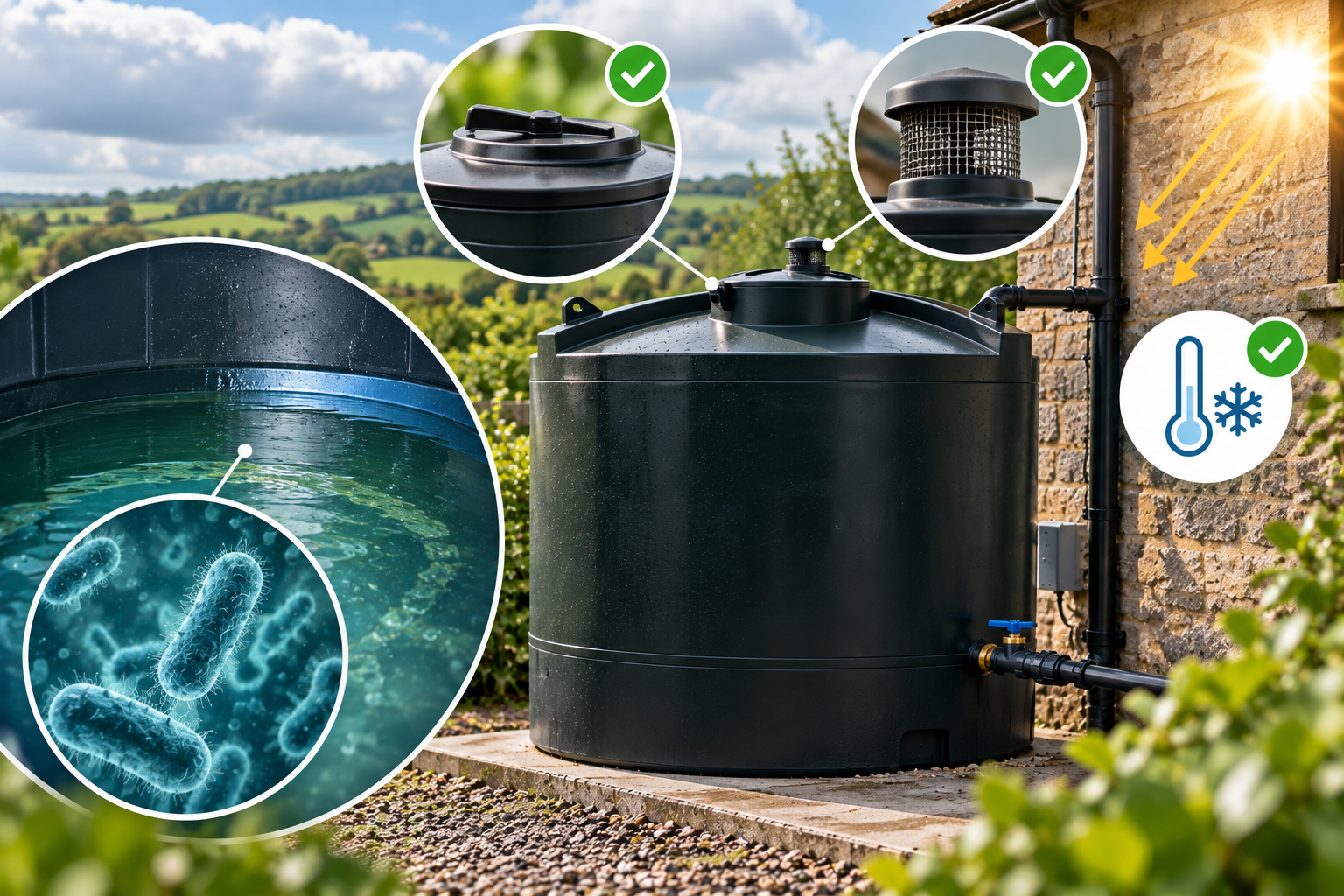
HSE guidance (HSG274) sets out what reduces that risk. A tightly fitted lid keeps out debris, insects and sunlight, all of which feed bacterial growth. Any vent or overflow open to the atmosphere should have an insect and vermin screen fitted. Where practical, stored water should stay below 20 degrees Celsius, which is why shade or insulation matters more than it might seem for a tank that's constantly in direct sun.
Before first use, or after a tank has sat empty or unused for an extended period: flush the tank through with clean water before drawing water for use, and check the lid and any screens are properly seated.
Ground and Structural Safety
Water is heavy. A full tank puts far more load on the ground than most people expect, and that load only becomes obvious once something has already gone wrong.
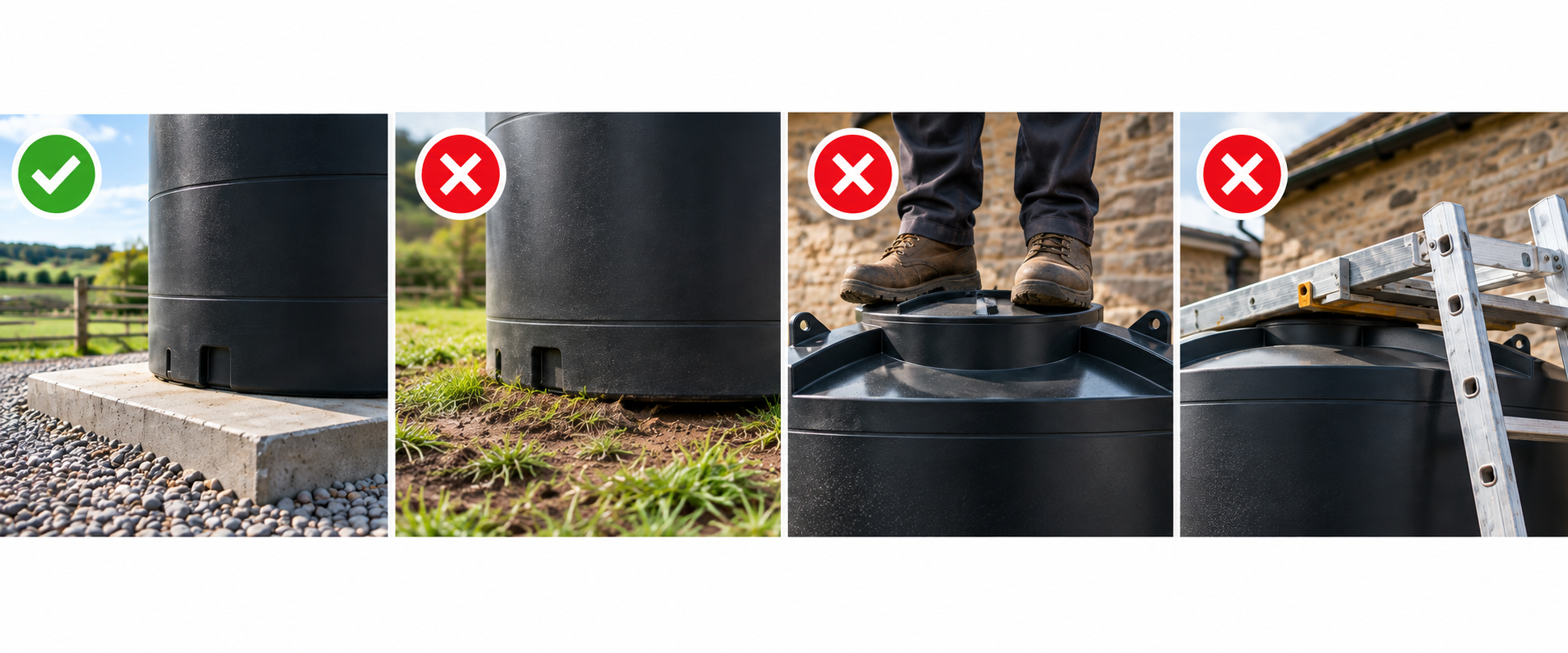
- The base needs to be firm, level and genuinely load bearing, not just visually flat. Soft or made up ground can settle unevenly once the tank is full, stressing the base.
- A concrete pad or compacted hardcore base is worth the extra step for anything above a few hundred litres, particularly on sites with soft or disturbed ground.
- Tanks are not designed to be walked on, stood on, or used as a support for other equipment, regardless of how solid the lid looks.
This matters more as capacity increases, but it applies to every tank on this list, not just the largest ones.
Weather and Environmental Exposure
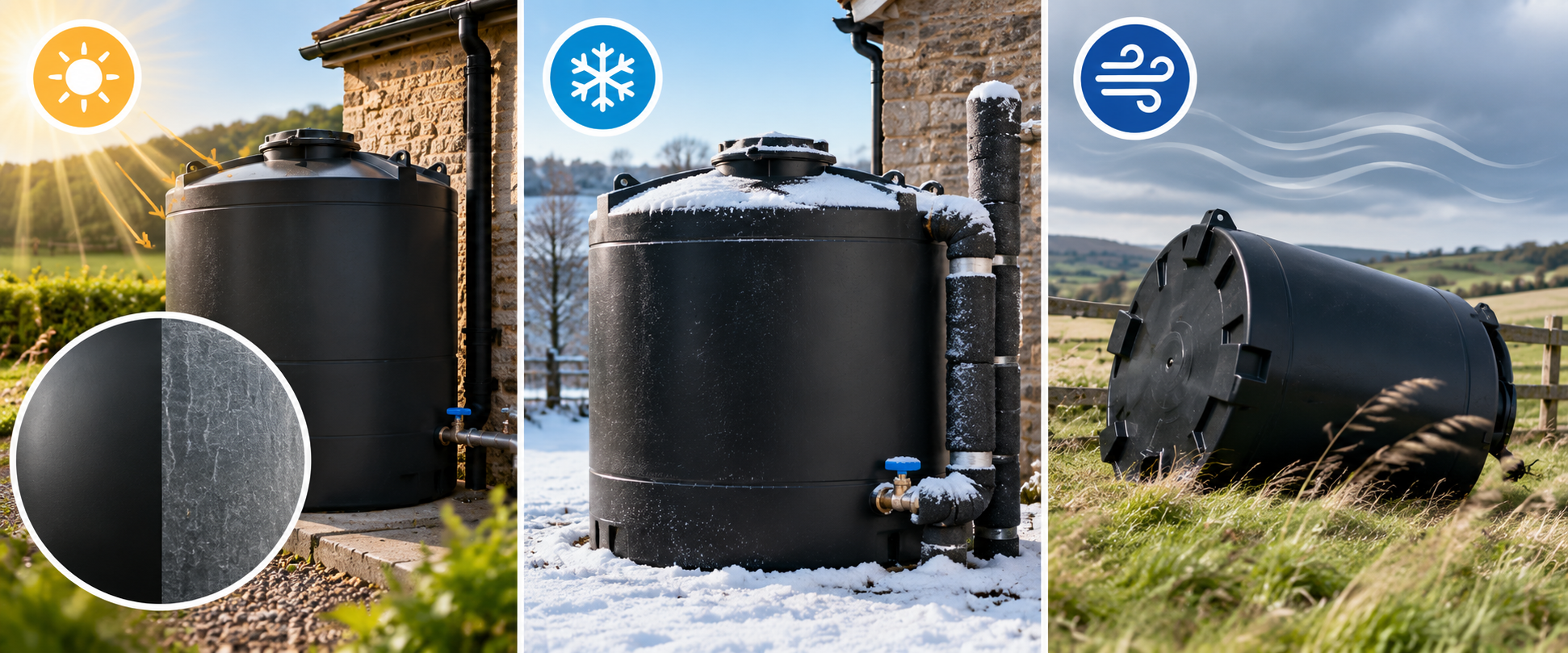
UV exposure
Permanent outdoor installation means constant sun exposure, which is why UV stabilised material matters. Without it, plastic tanks can fade, become brittle and eventually crack after a few years outdoors. This is a genuine, verifiable material property, not a marketing claim, and it's worth confirming on any tank spec before buying.
Freezing
Water expands as it freezes. A tank or pipework that freezes solid can crack, particularly around fittings and connection points where the material is already under some stress. Anything staying in use through winter benefits from insulation or lagging, especially in an exposed location.
Wind
An empty tank is far lighter than a full one, and in an exposed or windy location it can shift or blow over before it's connected and filled. Worth thinking about at the point of delivery and installation, not just once the tank is in use.
Cross-Contamination and Correct Fittings
A tank rated for potable water only stays safe if everything connected to it is too.
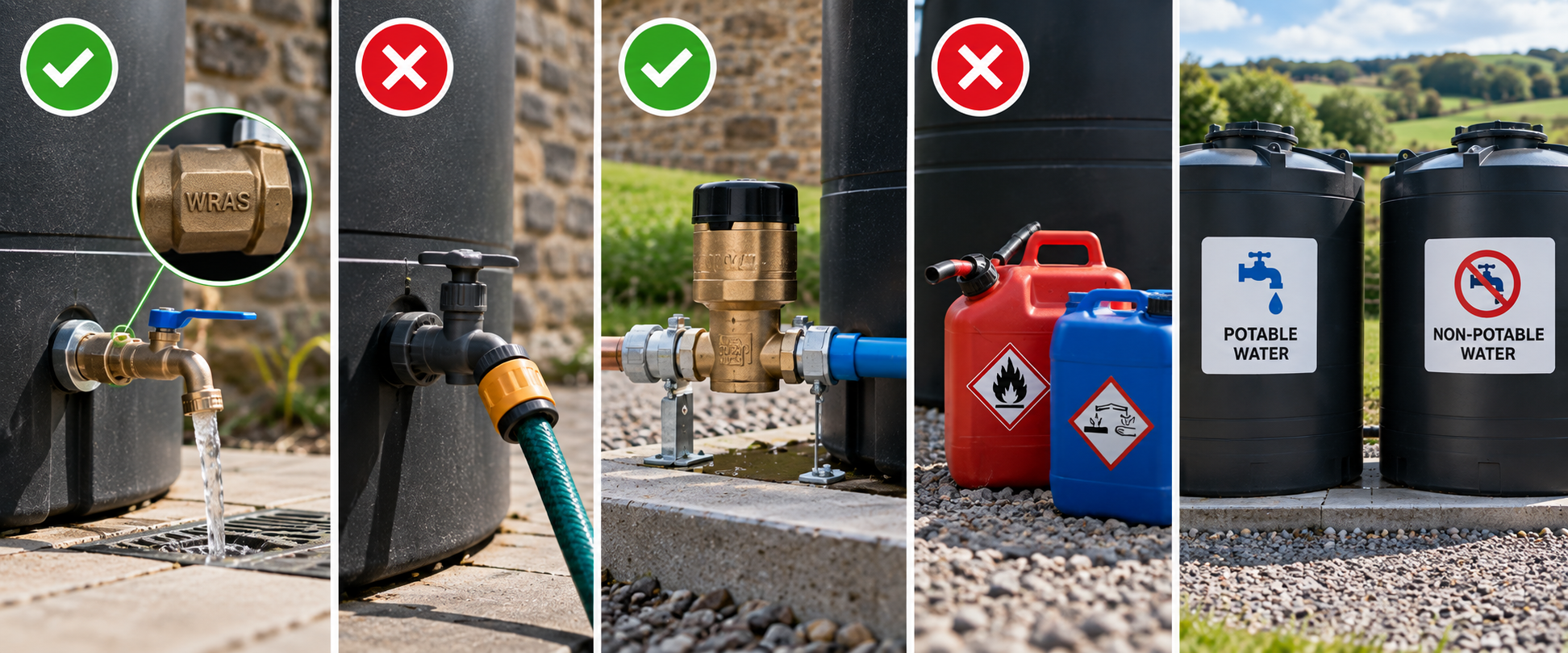
- Any tap, connector or pipework fitted to a potable tank should be WRAS approved, not just the tank itself. A single wrong fitting at the joint can undo the rest of the system.
- Where a tank connects to a mains supply, a proper air gap or backflow prevention device is needed to stop water running back into the mains and contaminating it.
- Never use a tank for chemicals, fuel or anything outside its intended water storage purpose, even temporarily. Residue is very difficult to fully remove afterwards.
- On any site running both potable and non-potable tanks side by side, label them clearly. It's a simple step that prevents someone drawing drinking water from the wrong tank.
Access and Ongoing Maintenance
Routine maintenance is straightforward, but it needs to actually happen on a schedule rather than only when something looks wrong.
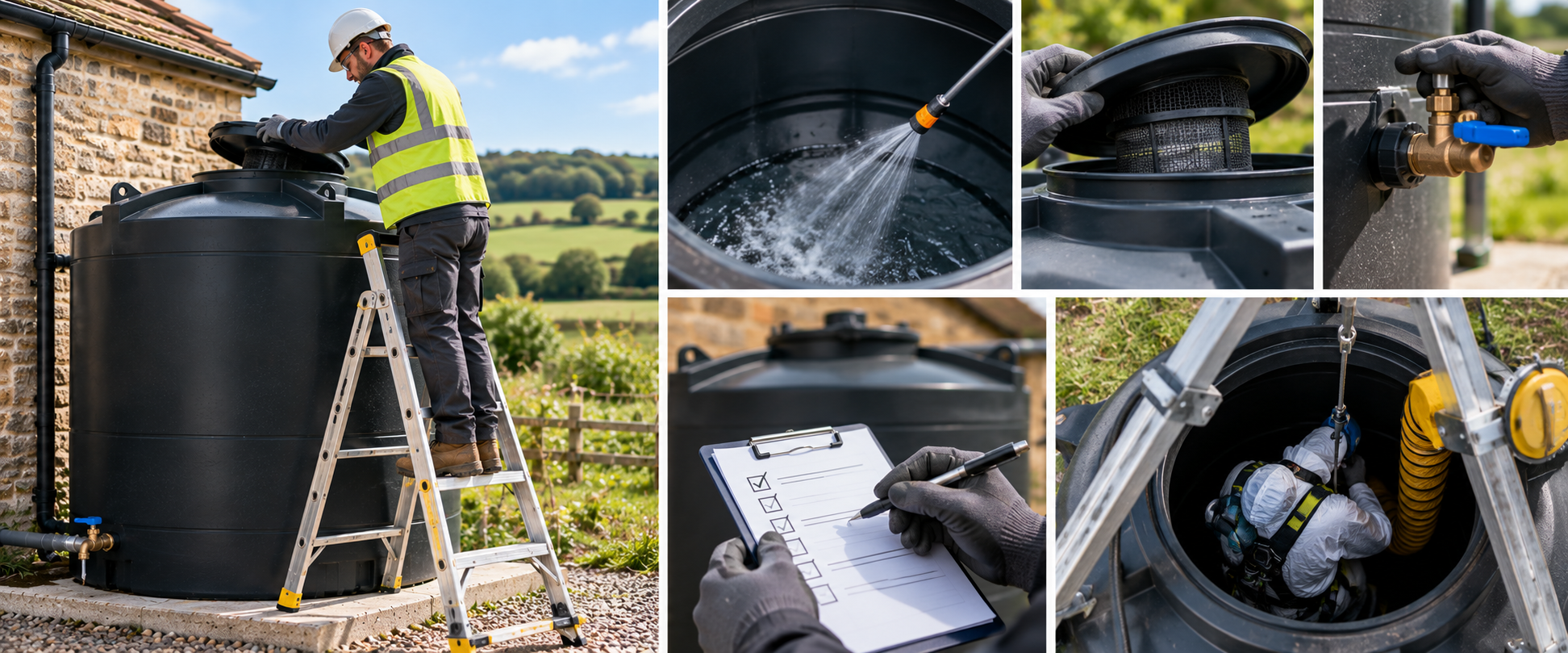
- Rinse the interior periodically to remove sediment, particularly on tanks collecting rainwater, since built up debris accelerates algae growth.
- Check the lid seal, any insect screens, and fitted taps or pipework for wear every few months.
- HSE guidance recommends a full inspection at least annually for cold water storage tanks.
- Larger tanks often need working at height to reach the lid. Use appropriate access equipment rather than improvising.
- Entering a tank to clean it should follow confined space precautions, not just climbing in. Even a tank that looks open and airy can present a genuine risk once someone is inside it.
Overflow and Venting
Two things that rarely get attention until they cause a problem.

Overflow: without a properly sized overflow, water escaping an overfilled tank has nowhere controlled to go. Over time that erodes the ground around the base and can undermine the footing the tank depends on.
Venting: a tank being drawn down quickly by a pump needs adequate venting. Without it, a vacuum can form inside the tank as the water level drops, which can deform or collapse the tank walls. This is more relevant on larger tanks feeding irrigation systems or industrial processes than on a small garden tank filled by gravity alone.
What to Do If a Tank Is Leaking or Damaged
Not every mark on a tank is a problem, but a genuine leak or crack needs dealing with properly, not just monitored.

- Surface scuffs, scratches or fading from UV exposure on their own don't usually compromise the tank, and are normal after a few years outdoors.
- A crack that goes through the wall, a slow drip at a seam or fitting, or a damp patch that keeps reappearing on the ground beneath the tank all point to a genuine structural failure.
- Stop drawing water from a damaged potable tank immediately if there's any doubt about where the crack is or how deep it goes. Contamination risk isn't worth guessing about.
- Polyethylene tanks aren't generally repairable in a way that reliably restores their original strength or WRAS approved status. A patch or sealant might slow a leak temporarily, but it isn't a long term fix, particularly for a tank storing drinking water.
If in doubt, treat it as a replace rather than repair situation. This applies especially to potable tanks, where a compromised repair risks contaminating stored water rather than just holding less of it. Browse replacement tanks if it's time to swap one out.
Quick Reference Checklist
| Task | Recommended Frequency |
|---|---|
| Visual check for cracks, discolouration or a loose lid | Every 3 months |
| Check lid seal and insect or vermin screens | Every 6 months |
| Check overflow and vent are clear and unobstructed | Every 6 months |
| Rinse interior to remove sediment | Before winter, or after heavy use |
| Full inspection per HSE HSG274 guidance | At least annually |
| Confirm the base hasn't settled or shifted | Annually, and shortly after first installation |
Frequently Asked Questions
What is Legionella and why does it matter for a water tank?
Legionella is a bacteria that can multiply in still water that is warm, contaminated with debris, or left stagnant for long periods. A water storage tank left uncovered or with a poorly fitted lid gives it exactly the conditions it needs. HSE guidance (HSG274) recommends a tightly fitted lid, insect and vermin screens on any vents, and keeping stored water below 20 degrees Celsius where practical.
How often should a water tank be inspected?
HSE guidance recommends a full inspection at least once a year for cold water storage tanks. Between annual inspections, a quick visual check every few months for cracking, discolouration, a loose lid or debris around the inlet catches most problems early. Larger tanks used for potable water benefit from more frequent checks given the higher risk if something goes wrong.
Does a water tank need an overflow pipe?
Yes. Without a properly sized overflow, water escaping an overfilled tank has nowhere controlled to go, which erodes the ground around the base and can undermine the tank's footing over time. A tank drawn down quickly by a pump also needs adequate venting, without it a vacuum can form inside the tank and deform the walls.
Can a water tank be damaged by freezing?
Yes. Water expands as it freezes, and a tank or pipework that freezes solid can crack, particularly around fittings and connections. Tanks that stay in use through winter benefit from insulation or lagging, especially on exposed sites or anywhere the water source itself might also be prone to freezing.
What fittings should be used with a water tank to avoid contaminating the water?
Any tap, pipework or connector fitted to a potable water tank should be WRAS approved, not just the tank itself. A WRAS approved tank connected with the wrong fitting can still introduce contamination at that joint. Where a tank connects to a mains supply, a proper air gap or backflow prevention device is needed to stop water running back into the mains.
Can a leaking or cracked water tank be repaired?
Small surface marks or fading from UV exposure don't need repair. A genuine crack through the tank wall is a different matter, polyethylene tanks aren't reliably repairable in a way that restores their original strength, and a patch is at best a temporary fix. For a potable tank especially, replacing it is the safer option rather than risking a compromised repair.
Browse the full range of water containers and storage tanks
View our full range of water containers →