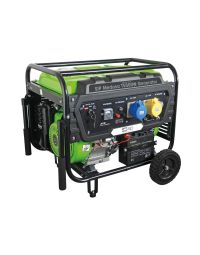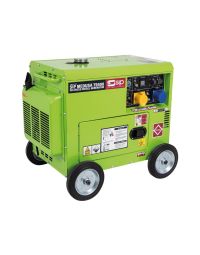

An inverter generator uses electronics to turn the engine's raw output into clean, stable power. That makes it the right choice for laptops, chargers, controls and AV equipment, and lets it run quieter and use less fuel at light loads.
This guide explains how inverter generators work, what pure sine wave output means, how quiet they really are, and when a conventional petrol or diesel generator is still the better buy. It finishes with our SIP Medusa silent inverter generators compared.
Quick answer
- An inverter generator converts the engine's output to DC, then back to clean AC electronically, so the voltage and frequency stay steady.
- The result is a pure sine wave with low distortion, which suits laptops, chargers, control panels and AV equipment.
- Because the electronics set the frequency, the engine can slow down at light loads. That cuts fuel use and noise.
- Enclosed cases make them quieter than open frame generators of a similar size.
- For three phase machinery or very long heavy shifts, a diesel generator is usually the better choice.
What is an inverter generator?
An inverter generator is a portable generator that uses inverter electronics to produce its AC output, instead of taking it straight from the alternator. The engine and alternator make power, the electronics clean and stabilise it, and the sockets deliver a steady 50Hz supply.
A conventional generator has to run its engine at a fixed speed to hold 50Hz, whatever the load. An inverter generator does not, because the frequency is set by the electronics. That one difference explains most of the benefits: cleaner power, lower noise at light loads and better fuel economy.
How an inverter generator works
- Stage 1Engine and alternator
The petrol engine drives an alternator, which produces raw AC power.
- Stage 2Converted to DC
The raw AC is rectified into direct current (DC).
- Stage 3Inverted to clean AC
The inverter rebuilds a smooth 50Hz sine wave at the right voltage.
- Stage 4Engine speed follows load
At light loads the engine slows down, saving fuel and reducing noise.
Pure sine wave and THD explained
Mains electricity follows a smooth, regular wave called a sine wave. Total harmonic distortion (THD) measures how far a supply strays from that perfect shape. The lower the THD, the cleaner the power.
Electronic equipment, such as laptops, battery chargers, LED drivers, control panels, card terminals and AV kit, works best on clean power. A distorted supply can make chargers trip, displays flicker or equipment run hot.
Not every generator sold as an "inverter" gives the same quality of output, so check that the specification says pure sine wave and quotes a THD figure. Both SIP Medusa inverter generators below give a pure sine wave output with THD under 3%.
Are inverter generators quiet?
Yes, inverter generators are usually quieter than open frame generators of a similar size, for two reasons. Their engines sit inside a sound-reducing enclosed case, and their engines slow down when the load is light.
When you compare noise, look for the right figure. Sound pressure (LpA) is what you hear at a set distance, often 7m, and is the best guide to how loud a generator will seem on site. Sound power (LwA) is the total noise the machine produces, and is the figure used for UK noise regulations.
| Silent inverter generator | Sound pressure at 7m (25% load) | Guaranteed sound power (LwA) |
|---|---|---|
| SIP Medusa ISG5800 | 64dB(A) | 97dB(A) |
| SIP Medusa ISG8800 | 63dB(A) | 97dB(A) |
Figures from SIP product data and the UK Declarations of Conformity. Always check local noise limits for your site, and wear hearing protection when working close to any generator.
Fuel use and eco mode
Most inverter generators have an eco or low idle mode. It lets the engine slow down to match the load, then speed up again when you plug more in. SIP's manuals say this reduces fuel use and noise and extends engine life.
Use eco mode only when the load is under 75% of the rated output. Switch it off before starting motors or other heavy loads, because the engine needs full speed to supply them.
Choose a load level to see the published eco mode runtimes from a full tank:
ISG5800: 14 hours at 25% load, 6.5 hours at 75% load. ISG8800: 18 hours at 25% load, 7.5 hours at 75% load. Figures from SIP user manuals.
Inverter vs conventional generator
| Feature | Inverter generator | Conventional (open frame) generator |
|---|---|---|
| How the output is made | Electronically, AC to DC to clean AC | Directly from the alternator, steadied by an AVR |
| Output quality | Pure sine wave, low THD | Suitable for tools and lighting; check the specification for sensitive electronics |
| Engine speed | Varies with load in eco mode | Fixed speed to hold 50Hz |
| Noise | Lower, enclosed case | Higher, open frame |
| Fuel use at light loads | Lower, engine slows down | Higher, engine runs at full speed |
| 110V and 230V together | Yes on the SIP Medusa ISG models | Often one voltage at a time on dual voltage models |
| Best for | Electronics, events, housing, mixed loads | Rough site work, tools and lighting |
Do I need an inverter generator? Quick check
Tick everything that applies to your job.
Our SIP Medusa silent inverter generators
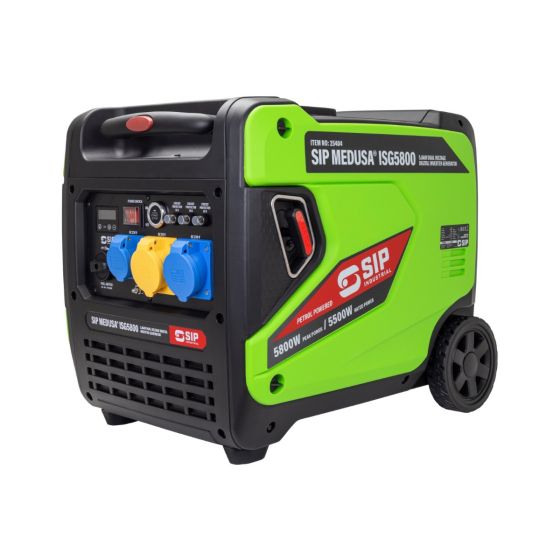
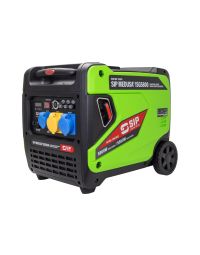
SIP Medusa ISG5800 Digital Inverter Generator
5800W 110V 230V, silent
- Peak / rated
- 5800W / 5500W
- Sockets
- 16A and 32A 230V, 32A 110V, all at once
- Output
- Pure sine wave, THD under 3%
- Noise
- 64dB(A) at 7m, 25% load
- Runtime
- 14 hours at 25% load (eco)
- Weight
- 58.5kg, wheels and trolley handle
Best for: mixed tools and electronics where the generator moves often.
View generator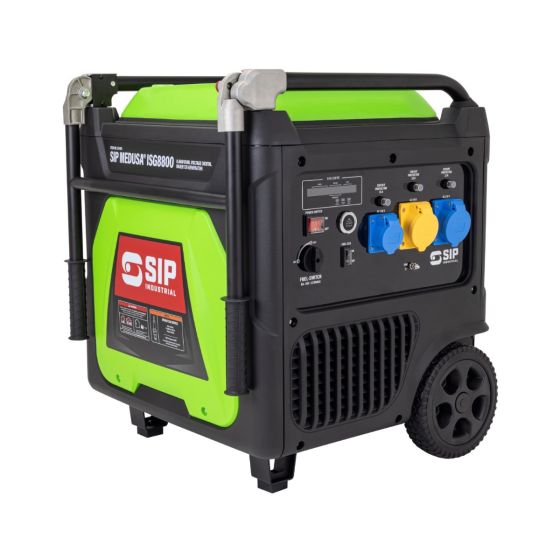
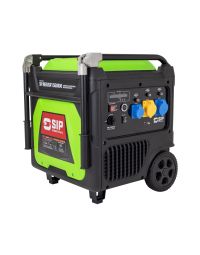
SIP Medusa ISG8800 Digital Inverter Generator
8800W 110V 230V, silent
- Peak / rated
- 8800W / 8200W
- Sockets
- 16A and 32A 230V, 32A 110V, all at once
- Output
- Pure sine wave, THD under 3%
- Noise
- 63dB(A) at 7m, 25% load
- Runtime
- 18 hours at 25% load (eco)
- Weight
- 96kg, wheels and folding handles
Best for: busy sites and events running several heavy loads at once.
View generatorISG5800 vs ISG8800: which one?
Both give clean, silent power from three industrial sockets at once. The main differences are output, socket protection, runtime and weight.
| Specification | SIP Medusa ISG5800 | SIP Medusa ISG8800 |
|---|---|---|
| Rated output | 5500W | 8200W |
| Peak output | 5800W | 8800W |
| Output waveform | Pure sine wave, THD under 3% | Pure sine wave, THD under 3% |
| Sockets | 16A 230V, 32A 230V, 32A 110V | 16A 230V, 32A 230V, 32A 110V |
| Circuit protection on the 32A sockets | 24A | 32A |
| 110V and 230V together | Yes, within the rated output | Yes, within the rated output |
| Engine | 322cc petrol | 459cc petrol |
| Fuel tank | 13.5L | 27L |
| Runtime, eco mode | 14h at 25%, 6.5h at 75% load | 18h at 25%, 7.5h at 75% load |
| Sound pressure at 7m (25% load) | 64dB(A) | 63dB(A) |
| Start | Push-button electric, recoil backup | Push-button electric, recoil backup |
| Net weight | 58.5kg | 96kg |
| Warranty | SIP 2-year (register within 30 days) | SIP 2-year (register within 30 days) |
- Choose the ISG5800 if your running load stays under about 5kW and the generator moves often. It is the lighter of the two.
- Choose the ISG8800 if you run several heavy loads together, need the full 32A from the 32A sockets, or want the longest runtime.
When to choose something else
An inverter generator is not the right answer for every job. These are the cases where another type fits better.
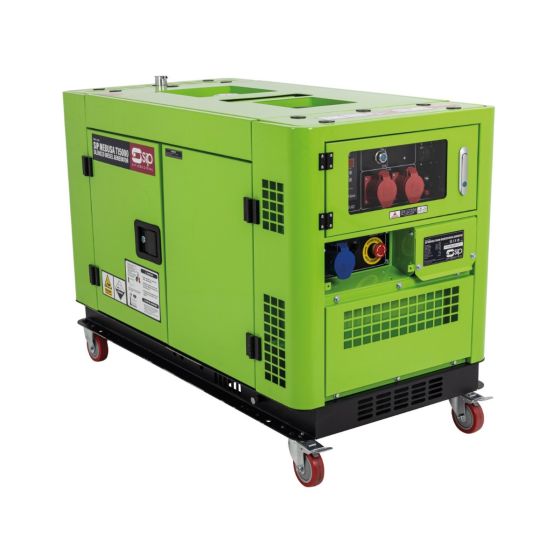
You need three phase 400V
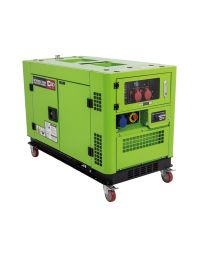
SIP Medusa T15000 Three Phase Silenced Diesel Generator
Inverter generators in this range are single phase. For three phase mixers, pumps and saws, choose a three phase diesel generator.
View generator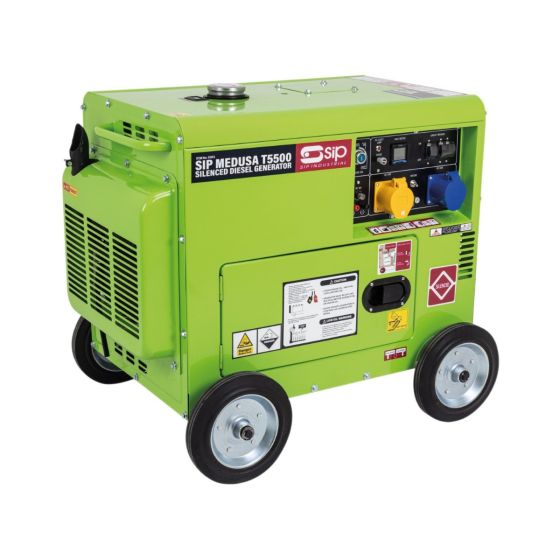
You run full shifts on diesel
SIP Medusa T5500 Silenced Diesel Generator
Where diesel is already on site and the generator runs heavy loads all day, a silenced diesel generator is a practical choice.
View generator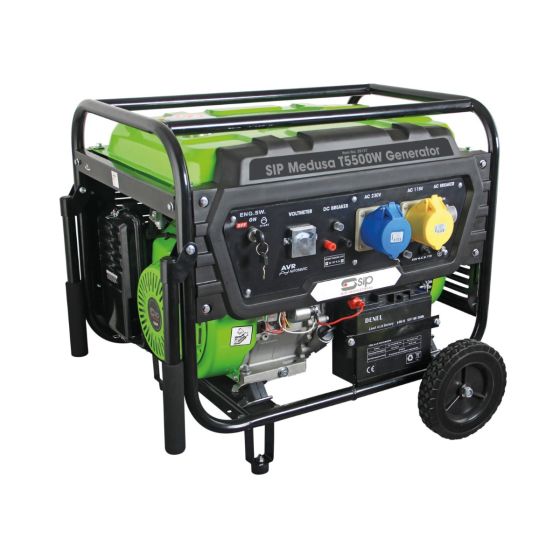
You only need site tools
SIP Medusa T5500W Petrol Generator
For 110V tools and lighting on rough sites, with no sensitive electronics, an open frame petrol generator with AVR does the job.
View generatorNot sure what size you need? Read our guide, What Size Generator Do I Need?
Frequently asked questions
What is an inverter generator?
An inverter generator converts the engine's raw AC output to DC, then back to clean AC using inverter electronics. This gives a steady voltage and frequency with a pure sine wave, and lets the engine slow down at light loads to save fuel and reduce noise.
Are inverter generators quiet?
Inverter generators are usually quieter than open frame generators of a similar size, because the engine sits in an enclosed case and slows down at light loads. The SIP Medusa ISG5800 and ISG8800 publish 64dB(A) and 63dB(A) at 7m on a 25% load.
Are all inverter generators pure sine wave?
Not always, so check the specification. Look for the words pure sine wave and a THD figure. Both SIP Medusa inverter generators give a pure sine wave output with THD under 3%.
Is an inverter generator better than a normal generator?
It is better for sensitive electronics, noise-sensitive sites and light loads, thanks to clean output, lower noise and eco mode. A conventional open frame generator is simpler and suits rough site work with tools and lighting. For three phase machinery, choose a three phase diesel generator.
Can I run 110V site tools from an inverter generator?
Yes, if it has a 110V outlet. The SIP Medusa ISG5800 and ISG8800 both have a 32A 110V socket that runs at the same time as their 230V sockets. If your site requires a centre-tapped earth supply, confirm the generator provides it or use a 110V site transformer.
Can you run an inverter welder off an inverter generator?
Yes, as long as the generator's rated output covers the welder's input power, which is shown on the welder's rating plate. A pure sine wave supply suits the electronics in inverter welders. Switch eco mode off before welding, because the engine needs full speed for heavy loads.
Can an inverter generator power a house?
Only through a changeover switch fitted by a qualified electrician. Connecting a generator straight into building wiring can feed power back into the supply and is dangerous.
How long does an inverter generator run on a tank?
It depends on the tank size and load. In eco mode, the SIP Medusa ISG5800 runs about 14 hours at 25% load and 6.5 hours at 75% load. The ISG8800 runs about 18 hours at 25% load and 7.5 hours at 75% load.
Can I use an inverter generator in the rain?
No. SIP's manuals say these generators must be used outdoors on a dry, level surface and not in rain or damp conditions. Keep at least 1m clear on all sides, and earth the generator as the manual directs before use.
Need clean, quiet power on site?
Tell us what you need to run and our team will help you choose the right generator. Call 020 8311 1144 or email sales@cmt.co.uk.