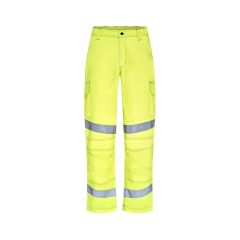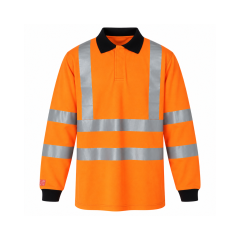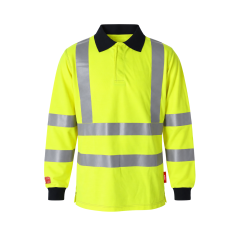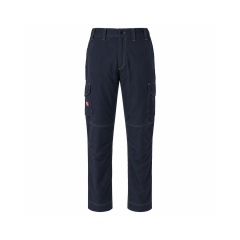
How to choose arc flash clothing in the UK: what ELIM, ATPV and APC ratings mean, which standards to check on the label, and how to layer FR clothing safely, with the MAXFR range compared.
Loading...
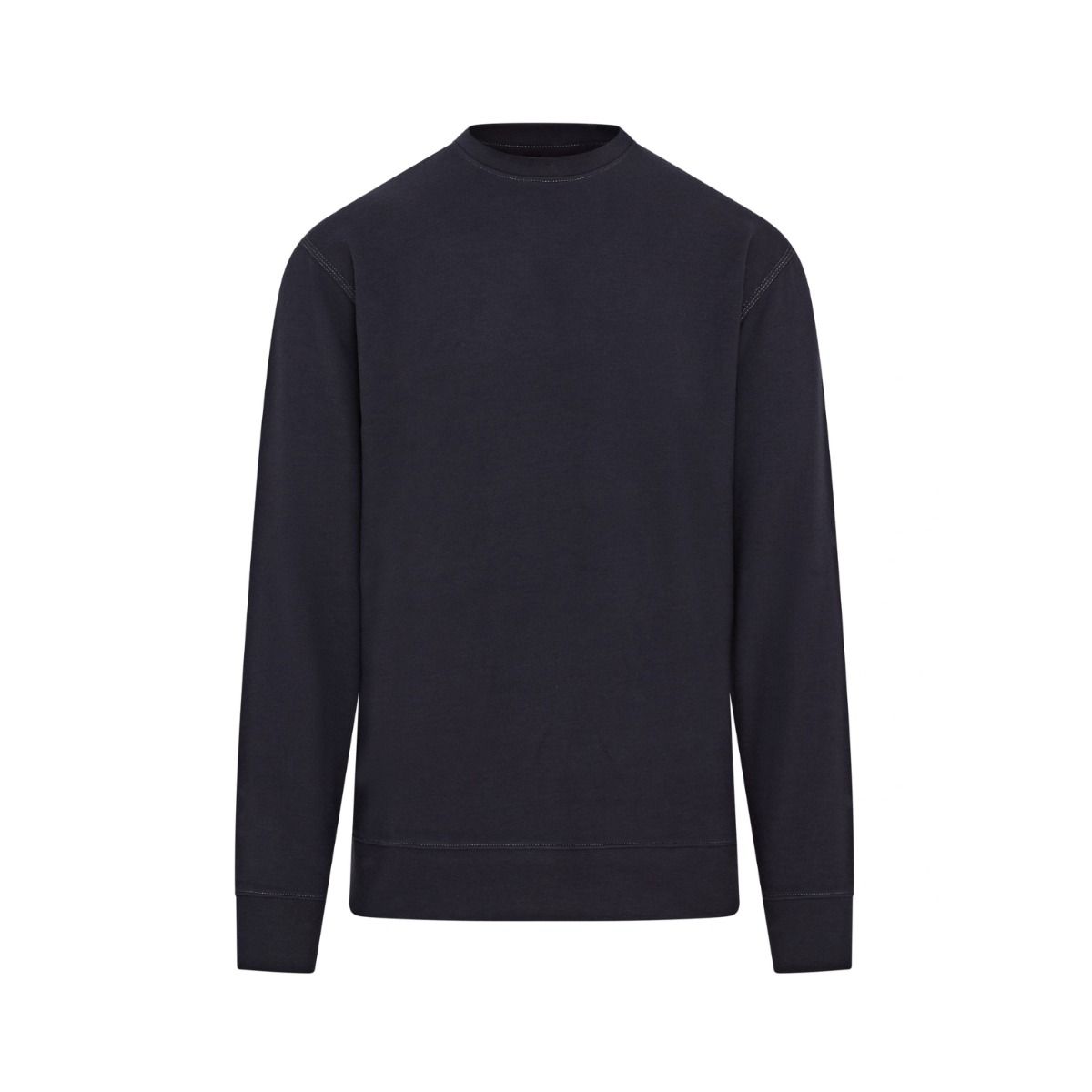
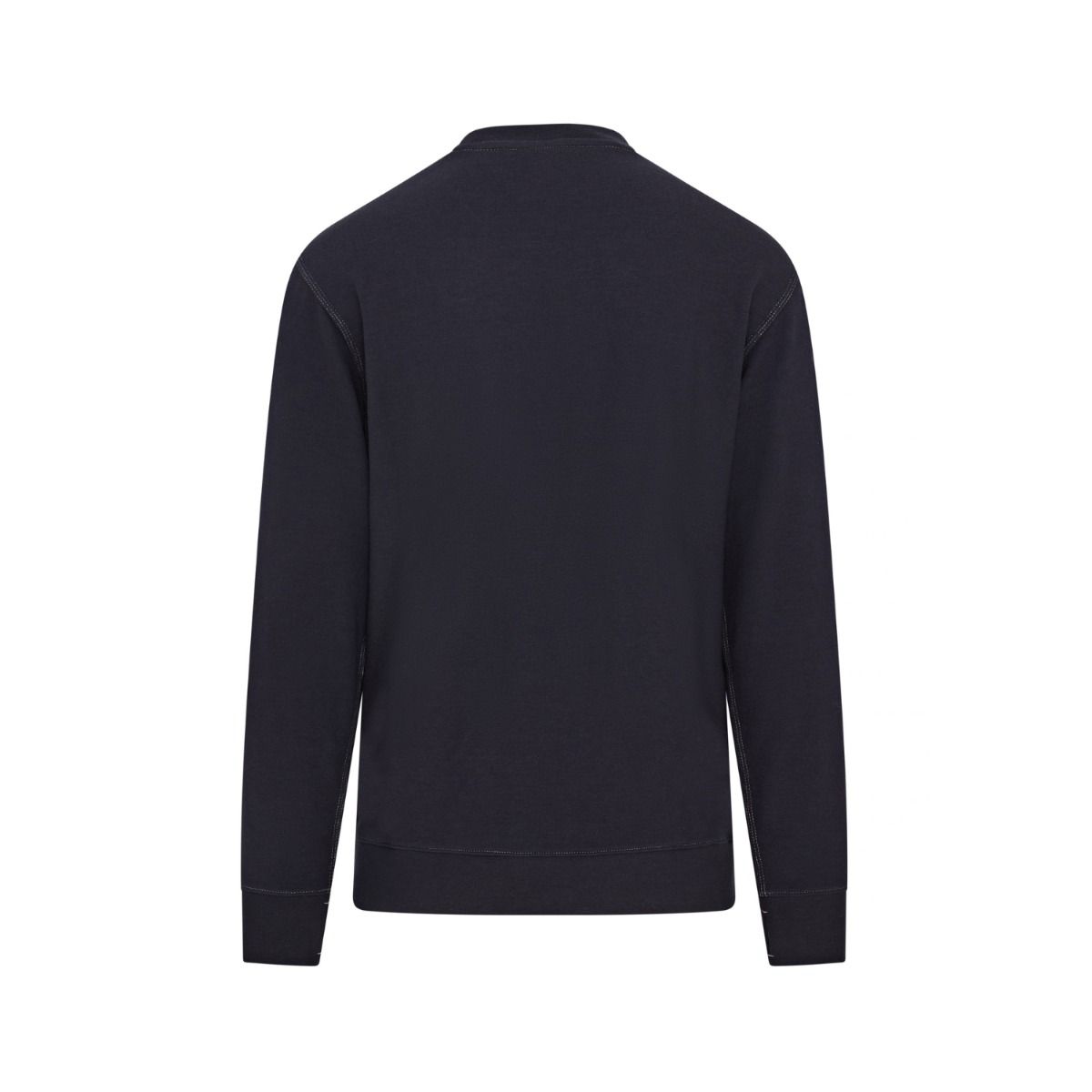
Navy flame retardant arc flash sweatshirt with a brushed inner face, for electrical and industrial workers who need warm FR, anti-static and arc protection.
Navy flame retardant arc flash sweatshirt with a brushed inner face, for electrical and industrial workers who need warm FR, anti-static and arc protection.
Navy flame retardant arc flash sweatshirts give electrical and industrial workers flame, heat, static and arc protection with the warmth of a brushed fleece. This round-neck sweatshirt is made from 320 g/m2 inherent flame retardant modacrylic fabric, brushed on the inside for cold-weather comfort. Thumb loops and a ribbed hem keep it in place when reaching and bending.
Sleeves on a standard sweatshirt ride up when the arms reach forward, leaving a gap between the cuff and the glove. On site, that gap exposes the wrist at the moment the hands are closest to live equipment. Thumb loops on this sweatshirt hold the arc-rated cuffs over the wrists, so protection runs unbroken from sleeve to glove.
High arc rating: ELIM 11 cal/cm2 and ATPV 13 cal/cm2 in open arc testing, with APC 1 in the box test.
Thumb loops on arc-rated cuffs: keep the sleeves over the wrists to meet the gloves when reaching forward.
Inherent flame retardant modacrylic: flame resistance comes from the fibre, not an applied finish.
Brushed inner face: 320 g/m2 fabric brushed on the inside for warmth in cold conditions.
Triple-stitched core seams: reinforced main seams for hard daily wear.
Anti-static to EN 1149-5: dissipates static charge when the wearer is earthed, reducing spark risk.
Ribbed round neck and hem: hold their shape and sit neatly under an FR jacket.
Trades and roles
Electricians
Electrical engineers
Substation engineers
Cable jointers
Maintenance engineers
Plant operators
Industries
Electricity transmission and distribution
Power generation
Utilities
Petrochemical and process
Industrial manufacturing
Facilities management
| Specification | Detail |
|---|---|
| Product name | MAXFR Navy Flame Retardant Arc Flash Sweatshirt - Thumb Loops |
| Product code | CL010009 |
| Garment type | Round-neck sweatshirt with thumb loops |
| Fabric | Inherent flame retardant modacrylic, brushed inner face |
| Fabric weight | 320 g/m2 |
| Protection | Flame retardant, anti-static, electric arc |
| Electric arc standard | EN 61482-2:2020 |
| Open arc test (EN 61482-1-1) | ELIM 11 cal/cm2, ATPV 13 cal/cm2 |
| Box test (EN 61482-1-2) | APC 1 (4 kA) |
| Heat and flame | EN ISO 11612:2015, A1+A2, B1, C2, F1 |
| Electrostatic | EN 1149-5:2018 |
| General requirements | EN ISO 13688:2013 + A1:2021 |
| Seams | Triple-stitched core seams |
| Cuffs | Arc-rated, with thumb loops |
| Neck and hem | Ribbed |
| High visibility | Not a hi-vis garment |
| Brand | MAXFR |
| Colour | Navy |
| Product code | Size | Size label | To fit chest |
|---|---|---|---|
| CL010009-S | S | Small | 88 to 94 cm (35 to 37 in) |
| CL010009-M | M | Medium | 94 to 102 cm (37 to 40 in) |
| CL010009-L | L | Large | 102 to 110 cm (40 to 43 in) |
| CL010009-XL | XL | Extra Large | 110 to 115 cm (43 to 45 in) |
| CL010009-2XL | 2XL | 2 Extra Large | 115 to 124 cm (45 to 49 in) |
| CL010009-3XL | 3XL | 3 Extra Large | 124 to 131 cm (49 to 52 in) |
| Product code | Description | Size label | To fit chest |
|---|---|---|---|
| CL010009-XS | Size XS | Extra Small | 86 to 90 cm (34 to 35 in) |
| CL010009-4XL | Size 4XL | 4 Extra Large | 131 to 138 cm (52 to 54 in) |
| CL010009-5XL | Size 5XL | 5 Extra Large | 138 to 145 cm (54 to 57 in) |
| Base material, tool or condition | Suitability |
|---|---|
| Assessed arc risk up to 11 cal/cm2 and APC 1 | Suitable as part of a full arc-rated outfit |
| Arc risk above 11 cal/cm2 or requiring APC 2 | Not recommended, use clothing rated for the assessed incident energy |
| Cold weather and outdoor work | Suitable, brushed inner face for warmth |
| Over an FR polo or T-shirt | Suitable, with FR or natural-fibre base layers only |
| Under an FR arc-rated jacket | Suitable, as long as every outer layer is also FR |
| Areas where static build-up must be controlled | Suitable when worn over other layers with anti-static footwear |
| Roadside, rail or plant work needing hi-vis | Not recommended, navy is not hi-vis, use a hi-vis FR garment |
| Polyester or nylon base layers | Not recommended, they can melt, use FR or natural-fibre layers |
| Welding and molten metal splash | Not recommended, no EN ISO 11611 rating, use welding-rated clothing |
| Chemical splash | Not recommended, no EN 13034 rating |
| Firefighting | Not recommended, this is industrial heat and flame clothing |
Electrical maintenance teams, plant operators and network engineers wear this sweatshirt through the colder months, indoors and out. It suits substations, switch rooms, plant rooms and process sites where hi-vis is not required. Wearers are usually trained electrical or industrial staff working under an arc flash risk assessment.
Switching and isolation in substations where the assessed incident energy is within the garment’s rating.
Electrical maintenance on industrial plant during winter shutdowns.
Cable jointing in unheated substations and cable tunnels.
Process plant maintenance where flame and static risks must be controlled.
Electrical work in plant rooms and data centres for facilities teams.
Layering over an FR polo on cold early shifts.
Step 1: Check that the incident energy in your arc flash risk assessment is within the garment’s ELIM of 11 cal/cm2.
Step 2: Wear an FR or natural-fibre base layer underneath, never polyester or nylon.
Step 3: Put your thumbs through the thumb loops so the cuffs sit over the wrists.
Step 4: Wear it with arc-rated FR trousers so the lower body is also covered.
Step 5: Add arc-rated gloves over the cuffs, face protection and anti-static footwear as your risk assessment requires.
Step 6: Check the sweatshirt before each shift for holes, worn seams or contamination.
Wearing the navy sweatshirt on sites that require hi-vis clothing.
Leaving the thumb loops unused, so the sleeves ride up during work.
Wearing a non-FR jacket or fleece over the top in cold weather.
Wearing a synthetic thermal base layer underneath.
Relying on the sweatshirt alone without arc-rated trousers, gloves and face protection.
Isolation comes first: the Electricity at Work Regulations 1989 only allow live work where it is unreasonable to make equipment dead. Arc-rated clothing then reduces the risk of burns if an arc flash happens. Choose the outfit from a documented arc flash risk assessment, and check every layer, including base layers and outerwear.
Wash at up to 40 degrees C, inside out and separately from ordinary clothing, using detergent rather than soap-based products. Rinse thoroughly, then tumble dry on low or dry away from direct sunlight. Iron at up to 110 degrees C, avoiding printed areas. Do not bleach, boil or dry clean. Store clean and dry, and always follow the care label on the garment.
Q: What arc rating does this sweatshirt have?
A: In open arc testing to EN 61482-1-1 it has an ELIM of 11 cal/cm2 and an ATPV of 13 cal/cm2. ELIM is the incident energy at which no second-degree burn is predicted, while ATPV is the point at which there is a 50% chance of one. In the box test to EN 61482-1-2 it reaches APC 1 at 4 kA. Use the ELIM when matching it to the incident energy in your risk assessment.
Q: What does 2XL mean on a sweatshirt size?
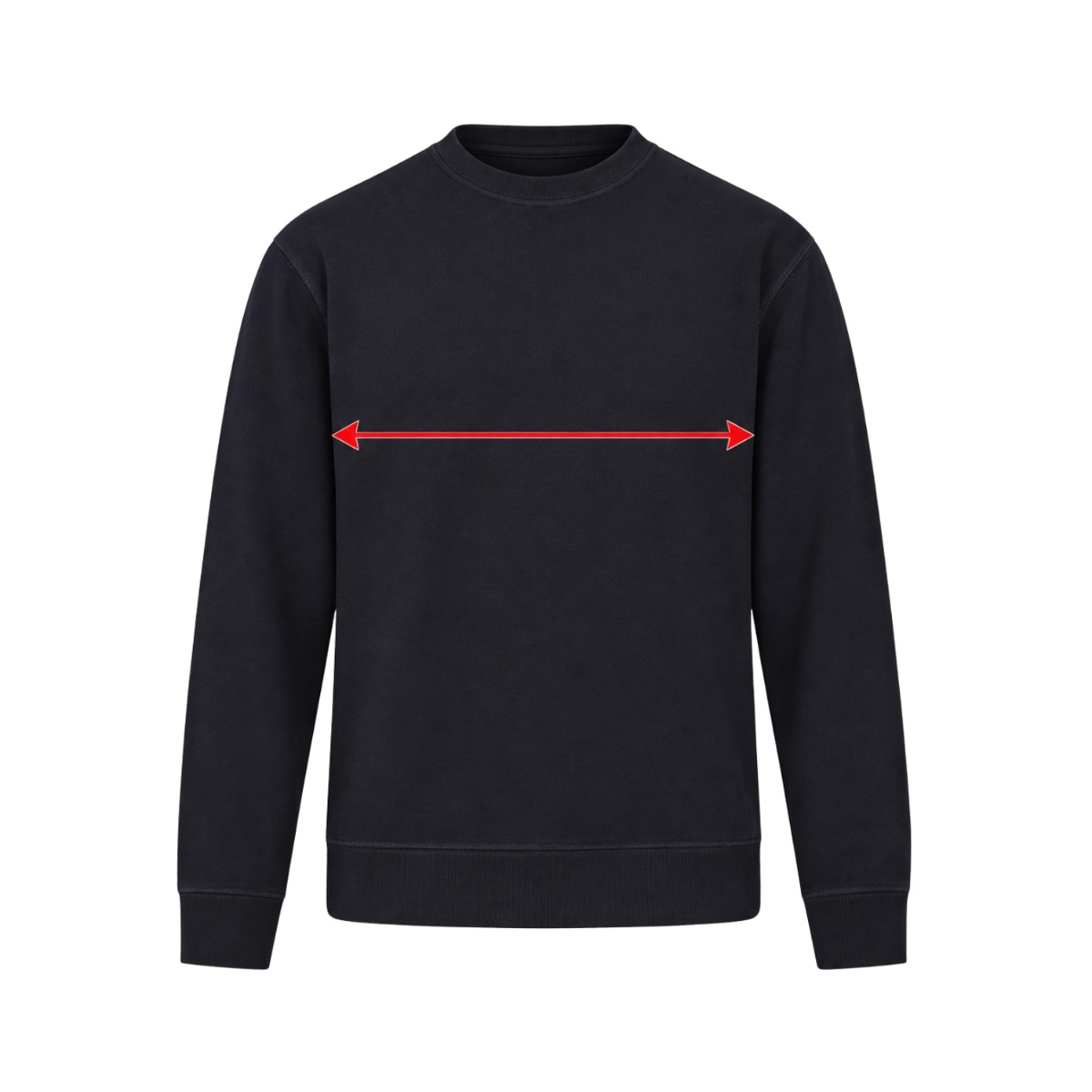
A: 2XL stands for 2 Extra Large, the size above XL. It fits a chest of 115 to 124 cm (45 to 49 in). Measure around the fullest part of the chest and pick the size whose range covers it. If you plan to wear a polo underneath, choose the larger size when you are between two.
Q: What do A1+A2, B1, C2 and F1 mean under EN ISO 11612?
A: A1 and A2 mean the fabric limits flame spread when a flame touches its surface (A1) and its edge (A2). B1 is protection against convective heat, such as hot gases, at level 1. C2 is protection against radiant heat at level 2, one level above the minimum. F1 is protection against contact heat at level 1.
Q: What is this sweatshirt not suitable for?
A: It is not a hi-vis garment, so it is not suitable for roadside, rail or plant areas that require hi-vis clothing. It is not designed for welding, molten metal splash or chemical splash. It is not firefighting clothing. It is not suitable where the assessed arc incident energy is above 11 cal/cm2 or calls for APC 2.
Q: How is this different from a hi-vis orange FR sweatshirt?
A: This navy sweatshirt is for sites where hi-vis is not required, such as substations and plant rooms. It has a higher arc rating, a brushed inner face for warmth and thumb loops to keep the cuffs in place. The hi-vis orange version is for rail and trackside work, where visibility to RIS-3279-TOM matters most.
Q: Can I wear it over an FR polo shirt?
A: Layering over an FR polo is a good way to add warmth on cold shifts. Make sure every layer is flame retardant or natural fibre, because polyester and nylon can melt. Any jacket worn over the top should also be FR and arc rated.
Q: Is it warm enough for winter work?
A: The 320 g/m2 fabric is brushed on the inside, which traps warmth better than a plain knit. For cold or wet outdoor work, add an FR and arc-rated waterproof jacket over the top. That keeps the full outfit protected while staying dry.