How to choose arc flash clothing in the UK: what ELIM, ATPV and APC ratings mean, which standards to check on the label, and how to layer FR clothing safely, with the MAXFR range compared.
Loading...
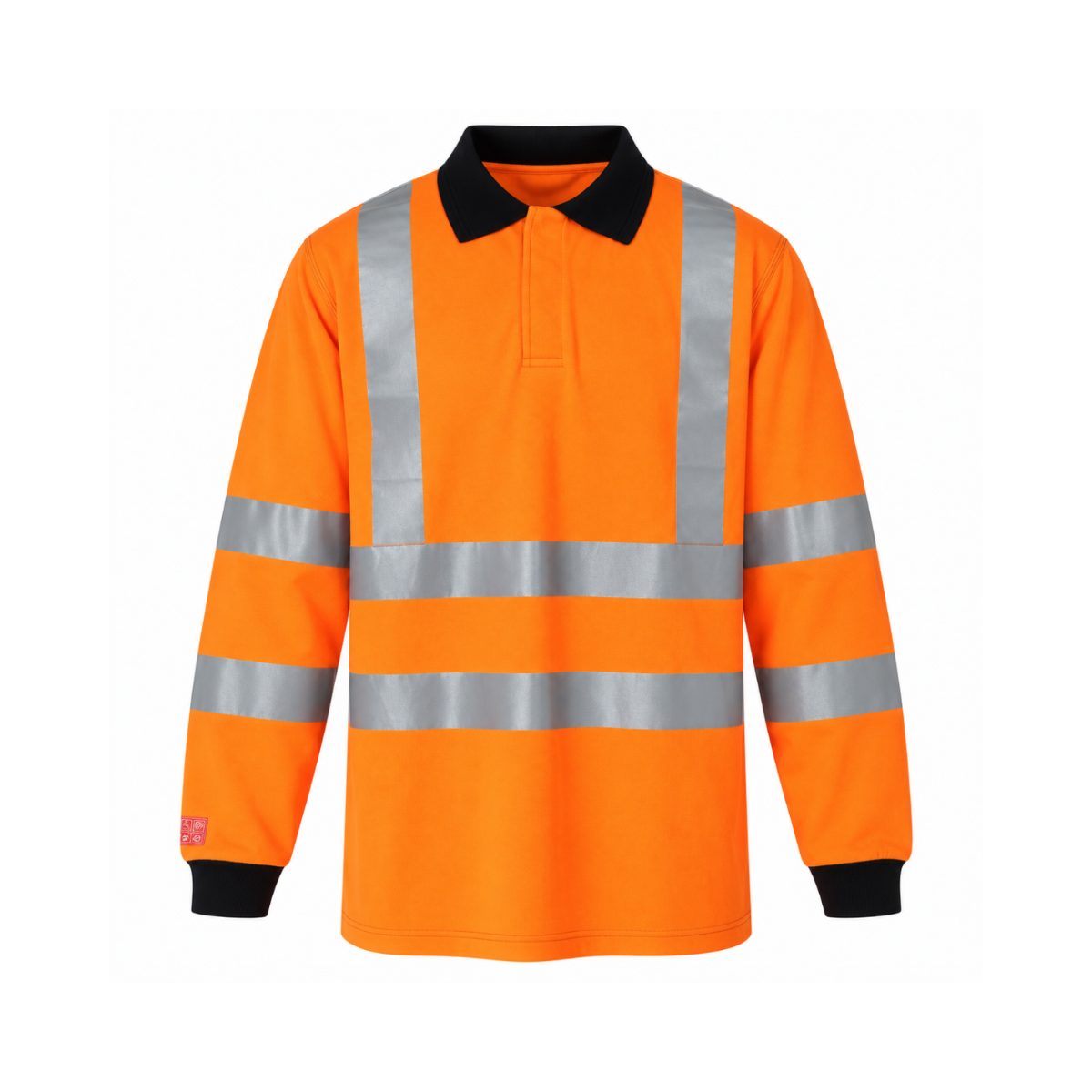
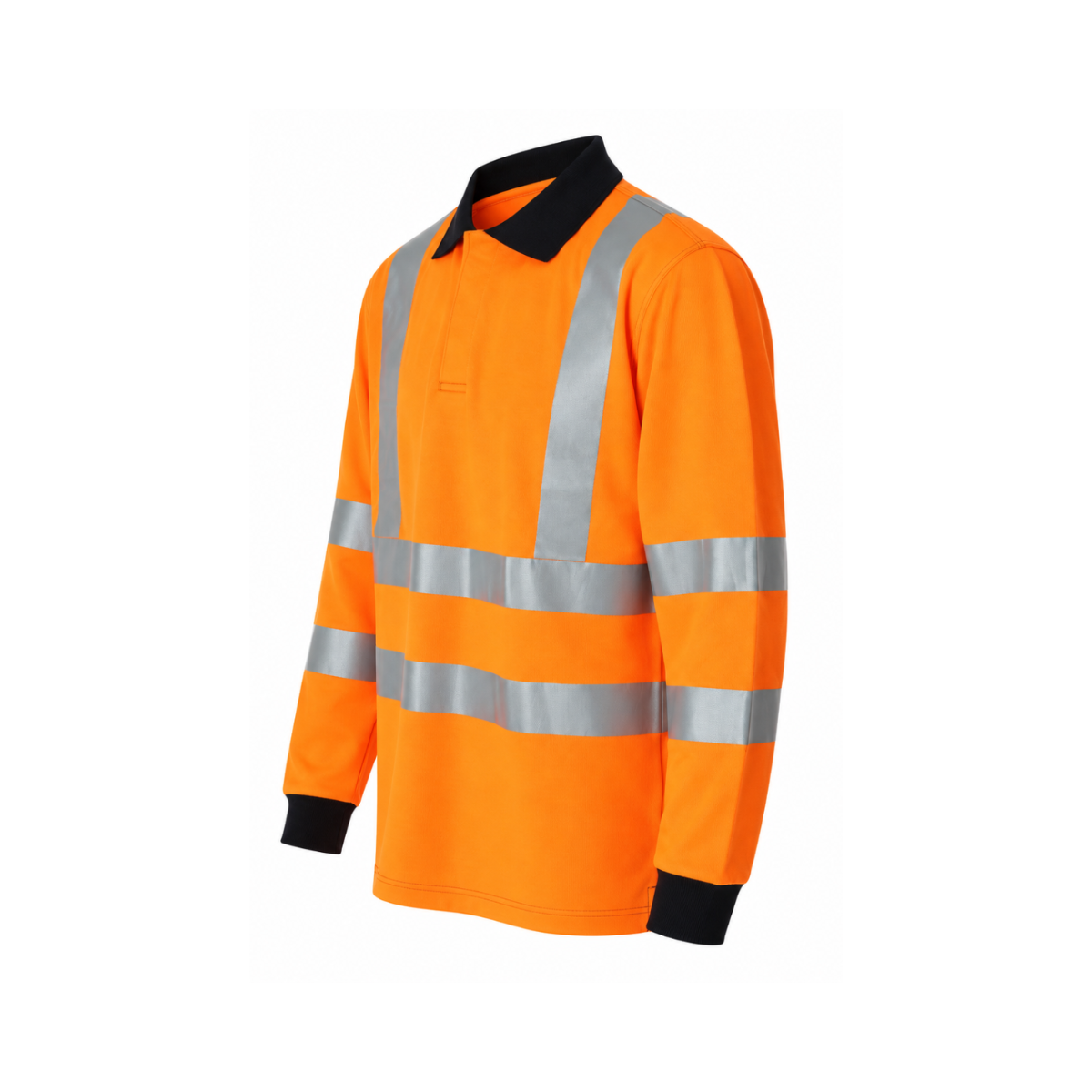
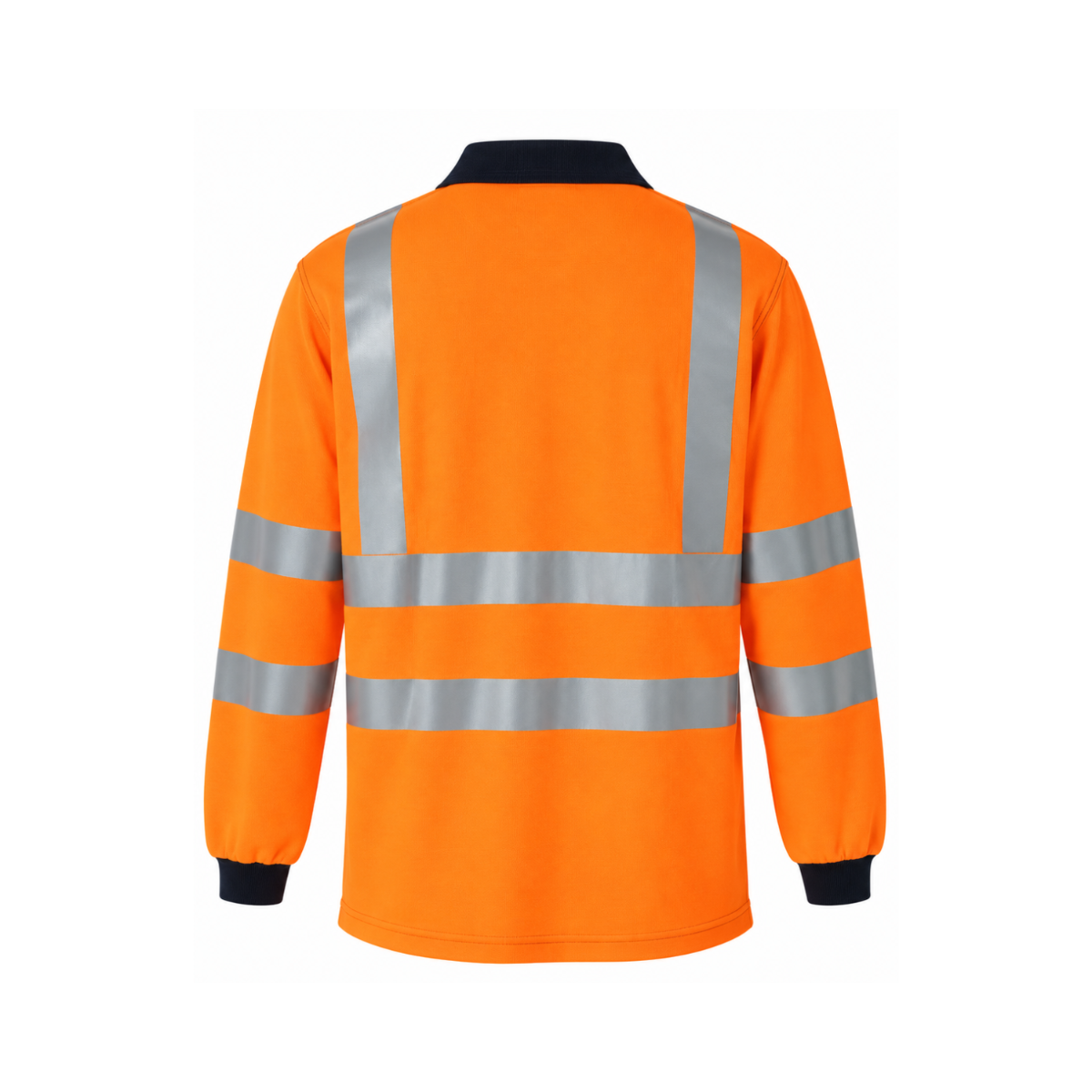
Hi-vis orange flame retardant arc flash polo shirt with long sleeves, for rail and electrical workers who need RIS-3279-TOM visibility with FR and arc protection.

Hi-vis orange flame retardant arc flash polo shirt with long sleeves, for rail and electrical workers who need RIS-3279-TOM visibility with FR and arc protection.
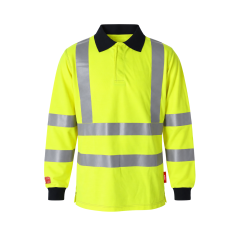
Hi-vis orange flame retardant arc flash polo shirts give rail and electrical workers a lightweight top that meets the rail orange standard and protects against flame, static and electric arc. This long sleeved polo is made from a 210 g/m2 inherent flame retardant knit, with solid heat-seal reflective tape for Class 3 visibility. A collar with a three-button placket gives a smart finish for track, depot and substation work.
In summer, rail crews often swap a heavy FR sweatshirt for a standard hi-vis polo, which is usually polyester and not arc rated. On site, that leaves workers near overhead lines and lineside electrical equipment with no FR or arc protection on the upper body. This polo meets RIS-3279-TOM and Class 3 in a lightweight 210 g/m2 knit, so crews stay protected and compliant through warm shifts.
Rail orange to RIS-3279-TOM: meets the rail industry hi-vis standard for work on or near the line.
Class 3 in one garment: the highest class under EN ISO 20471, with no need for a vest over the top.
Arc rated with APC 1: ELIM 5.1 cal/cm2 and ATPV 5.9 cal/cm2 in open arc testing, for assessed arc risks.
210 g/m2 inherent FR knit: lightweight, with flame resistance built into the fibre.
Solid heat-seal reflective tape: bonded flat to the fabric rather than sewn on.
Anti-static to EN 1149-5: dissipates static charge when the wearer is earthed, reducing spark risk.
Collar with three-button placket: opens for ventilation and closes for a neat finish.
Trades and roles
Track maintenance operatives
Overhead line engineers
Signalling and telecoms technicians
Depot and station maintenance staff
Electricians
Cable jointers
Industries
Rail
Electricity transmission and distribution
Utilities
Infrastructure maintenance
Power generation
| Specification | Detail |
|---|---|
| Product name | MAXFR Hi-Vis Orange Flame Retardant Arc Flash Long Sleeved Polo Shirt - Rail Spec |
| Product code | CL010001 |
| Garment type | Long sleeved polo shirt, three-button placket |
| Fabric | Inherent flame retardant knit |
| Fabric weight | 210 g/m2 |
| Protection | Flame retardant, anti-static, electric arc, high visibility |
| Rail standard | RIS-3279-TOM Issue 2:2019 |
| High visibility | EN ISO 20471:2013 + A1:2016, Class 3 |
| Electric arc standard | EN 61482-2:2020 |
| Open arc test (EN 61482-1-1) | ELIM 5.1 cal/cm2, ATPV 5.9 cal/cm2 |
| Box test (EN 61482-1-2) | APC 1 (4 kA) |
| Heat and flame | EN ISO 11612:2015, A1+A2, B1, C1, F1 |
| Electrostatic | EN 1149-5:2018 |
| General requirements | EN ISO 13688:2013 + A1:2021 |
| Certification | AITEX EU type-examination 26/10452/00/0161/B, valid 23/09/2026 to 03/04/2030 |
| Reflective tape | Solid heat-seal |
| Collar | Three-button placket |
| Cuffs | Ribbed, no thumb loops |
| Brand | MAXFR |
| Colour | Hi-vis orange |
| Product code | Size | Size label | To fit chest |
|---|---|---|---|
| CL010001-S | S | Small | 88 to 94 cm (35 to 37 in) |
| CL010001-M | M | Medium | 94 to 102 cm (37 to 40 in) |
| CL010001-L | L | Large | 102 to 110 cm (40 to 43 in) |
| CL010001-XL | XL | Extra Large | 110 to 115 cm (43 to 45 in) |
| CL010001-2XL | 2XL | 2 Extra Large | 115 to 124 cm (45 to 49 in) |
| CL010001-3XL | 3XL | 3 Extra Large | 124 to 131 cm (49 to 52 in) |
| CL010001-4XL | 4XL | 4 Extra Large | 131 to 138 cm (52 to 54 in) |
| Product code | Size | Size label | To fit chest |
|---|---|---|---|
| CL010001-5XL | 5XL | 5 Extra Large | 138 to 145 cm (54 to 57 in) |
| Base material, tool or condition | Suitability |
|---|---|
| Work on or near the railway | Suitable, rail orange to RIS-3279-TOM Issue 2:2019 |
| Assessed arc risk up to 5.1 cal/cm2 and APC 1 | Suitable as part of a full arc-rated outfit |
| Arc risk above 5.1 cal/cm2 or requiring APC 2 | Not recommended, use clothing rated for the assessed incident energy |
| Warm weather work as the outer layer | Suitable, lightweight 210 g/m2 knit |
| Under an FR sweatshirt or jacket | Suitable, as long as every outer layer is also FR |
| Night work and low light | Suitable, Class 3 with retroreflective tape |
| Areas where static build-up must be controlled | Suitable when fastened, covering other layers, with anti-static footwear |
| Polyester or nylon base layers | Not recommended, they can melt, use FR or natural-fibre layers |
| Welding and molten metal splash | Not recommended, no EN ISO 11611 rating, use welding-rated clothing |
| Chemical splash | Not recommended, no EN 13034 rating |
| Firefighting | Not recommended, this is industrial heat and flame clothing |
Rail contractors, depot teams and electrical crews wear this polo on track maintenance, overhead line work and lineside electrical jobs. It suits warm weather and indoor depots, where a sweatshirt is too heavy but rail orange and arc protection are still required. Wearers are usually trained rail or electrical staff working to site PPE rules and an arc flash risk assessment.
Track inspection and maintenance during summer shifts.
Overhead line equipment maintenance during possessions.
Lineside signalling and telecoms cabinet work.
Depot and station maintenance where rail orange is required.
Trackside electrical work where an arc risk has been assessed.
Wearing under an FR rail sweatshirt on cool mornings.
Step 1: Check that the incident energy in your arc flash risk assessment is within the garment’s ELIM of 5.1 cal/cm2.
Step 2: Choose the size by chest measurement using the Size Selection table.
Step 3: Wear an FR or natural-fibre base layer underneath if one is needed, never polyester or nylon.
Step 4: Fasten the placket and keep the sleeves down to the wrists.
Step 5: Wear it with arc-rated FR trousers in rail orange, plus gloves, face protection and anti-static footwear as your risk assessment requires.
Step 6: Check the polo before each shift for holes, contamination or cracked tape.
Wearing a non-FR hi-vis vest over the polo.
Swapping to a standard polyester polo on hot days.
Pushing the sleeves up when working near electrical equipment.
Wearing a synthetic sports base layer underneath.
Choosing the polo for tasks where the assessed incident energy is above its ELIM.
Follow the principal contractor’s PPE rules for any work on or near the line. For electrical tasks, the Electricity at Work Regulations 1989 put isolation first, and arc-rated clothing reduces burn injury only if an arc happens. Choose every layer of the outfit from a documented arc flash risk assessment.
Wash at up to 40 degrees C, inside out and separately from ordinary clothing, using detergent rather than soap-based products. Fasten the placket before washing and rinse thoroughly. Tumble dry on low or dry away from direct sunlight. Iron at up to 110 degrees C, avoiding the reflective tape and printed areas. Do not bleach, boil or dry clean, and always follow the care label on the garment.
Q: What arc rating does this polo shirt have?
A: In open arc testing to EN 61482-1-1 it has an ELIM of 5.1 cal/cm2 and an ATPV of 5.9 cal/cm2. ELIM is the incident energy with no predicted second-degree burn, while ATPV is the point with a 50% chance of one. In the box test to EN 61482-1-2 it reaches APC 1 at 4 kA. Plan with the ELIM figure when checking it against your risk assessment.
Q: What does 2XL mean on a polo shirt size?
A: 2XL stands for 2 Extra Large, the size above XL. It fits a chest of 115 to 124 cm (45 to 49 in). Measure around the fullest part of the chest and choose the size whose range covers it.
Q: What does RIS-3279-TOM mean for this polo?
A: RIS-3279-TOM is the GB rail industry standard for high-visibility clothing worn on or near the line, published by RSSB. It sets the orange colour and visibility requirements that rail contractors build into their PPE rules. This polo meets Issue 2:2019 and is certified to EN ISO 20471 Class 3. Always check the specific PPE rules for your site.
Q: What is this polo shirt not suitable for?
A: It is not designed for welding, molten metal splash or chemical splash, and it is not firefighting clothing. It is not suitable where the assessed arc incident energy is above 5.1 cal/cm2 or calls for APC 2. For colder or higher-energy work, a heavier arc-rated layer is needed.
Q: Should I choose the polo or an FR sweatshirt for rail work?
A: Both meet RIS-3279-TOM and Class 3, so the choice comes down to weather and arc rating. The polo is a lighter 210 g/m2 knit for warm shifts, with an ELIM of 5.1 cal/cm2. A rail spec FR sweatshirt adds warmth and usually a higher arc rating for colder work. Many crews keep both and layer them on cool mornings.
Q: Can I wear an FR sweatshirt over this polo?
A: An FR outer layer works well over this polo, as long as it is arc rated and, for rail, in RIS-3279-TOM orange. Never wear a non-FR fleece, jacket or hi-vis vest over the top, because it can ignite or melt in an arc. Keep the outer layer’s ELIM in mind when checking the outfit against your risk assessment.
Q: Why does the polo use heat-seal tape instead of stitched tape?
A: Solid heat-seal tape is bonded to the fabric rather than sewn on, so there are no stitch lines through the tape. It sits flat against the knit through a long shift. Check the tape at each inspection and replace the polo if it cracks, peels or loses its shine in torchlight.