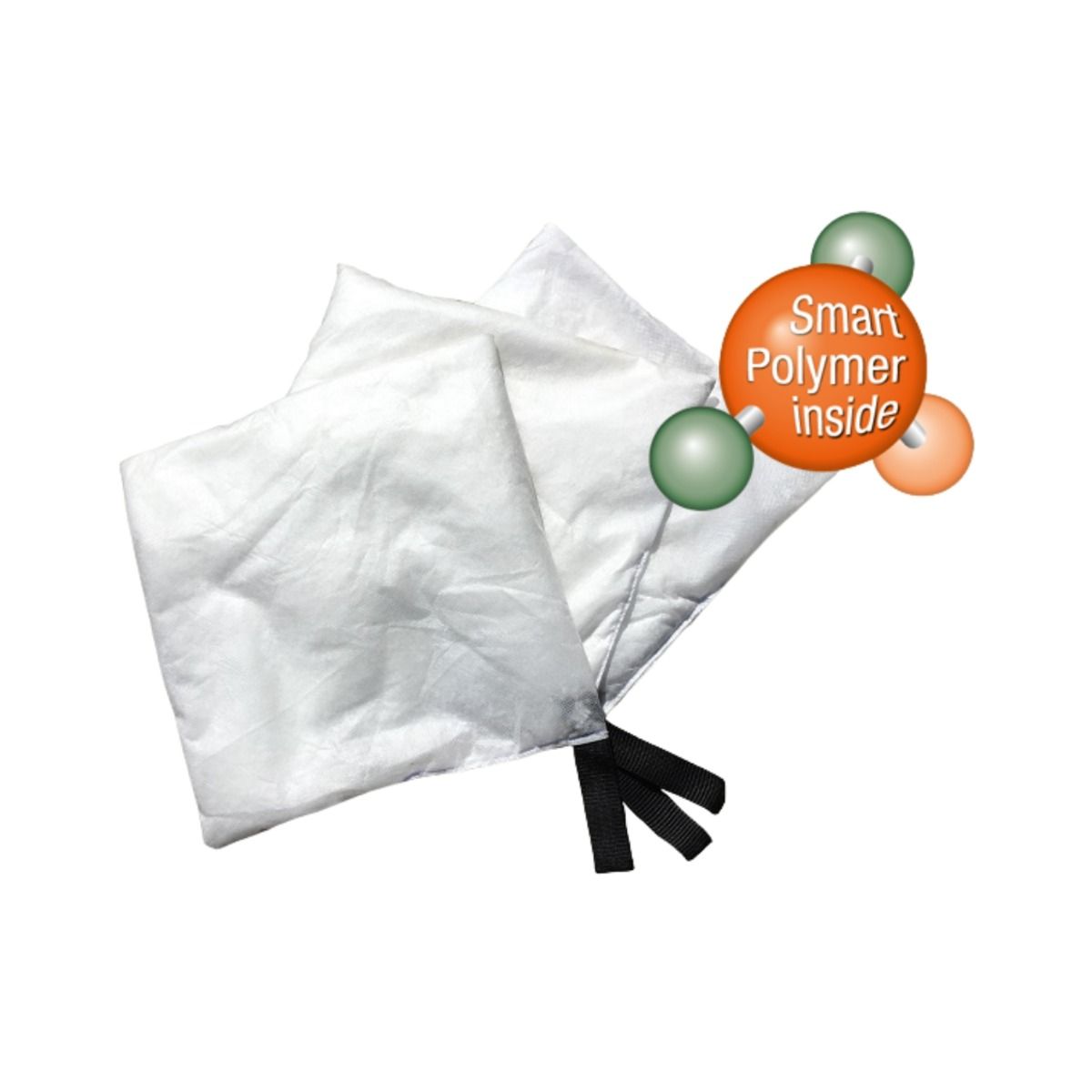


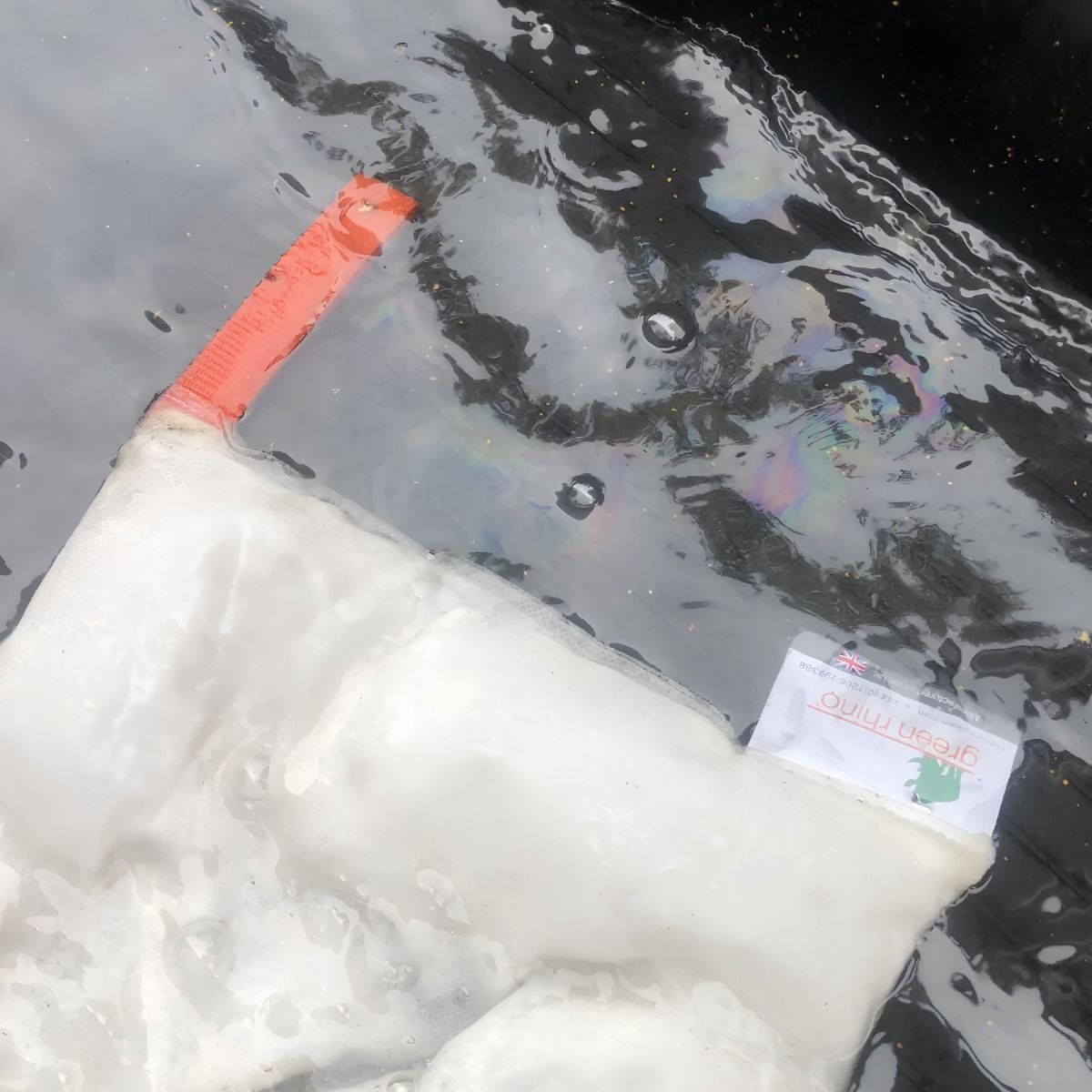

Oil retention pillows with a solidifying polymer that absorbs oil and fuel from standing water, for groundworkers, utility contractors and site environmental teams.
- Turns oil and fuel into a solid
- No drip-back when lifted or wrung out
- Floats on standing water
- Reusable until full
- Made in the UK
- Available in multiple sizes (The first figure is the maximum oil capacity in litres. The second is the pillow’s length x width.)
Green Rhino Oil Retention Pillows - Solidifying Polymer
Oil retention pillows with a solidifying polymer that absorbs oil and fuel from standing water, for groundworkers, utility contractors and site environmental teams.
- Turns oil and fuel into a solid
- No drip-back when lifted or wrung out
- Floats on standing water
- Reusable until full
- Made in the UK
- Available in multiple sizes (The first figure is the maximum oil capacity in litres. The second is the pillow’s length x width.)
Green Rhino Oil Retention Pillows
Oil retention pillows soak up oil, fuel and other hydrocarbons from standing water and lock them inside. Each pillow is filled with polymer granules that react only with hydrocarbons, turning them into a solid, rubber-like mass. They are used to clean contaminated water in excavations, tanks, bunds, sumps and bilges.
How a Solidifying Polymer Stops Oil Draining Back into the Water
Standard oil absorbent pillows hold oil like a sponge, and every sponge leaks once it is saturated. On site, oily water runs back into the excavation as the pillow is lifted, and the bagged waste includes contaminated water as well as the pillow. A solidifying polymer sets the oil into a solid inside the pillow, so only water drains out when it is lifted or wrung out.
Key Features
-
Solidifying polymer: turns oil and fuel into a rubber-like solid, so it stays inside the pillow.
-
No drip-back: only water drains out when the pillow is lifted, so cleaned water is not recontaminated.
-
Wring-out cover: water can be squeezed out by hand, cutting the weight and volume of waste.
-
Hydrocarbon-only reaction: the polymer does not react with water, so its full capacity goes on oil and fuel.
-
Visible full point: loose white granules thicken as they absorb, and a pillow with no loose granules left is full.
-
Reusable until full: part-used pillows can be stored and put back to work on the next job.
-
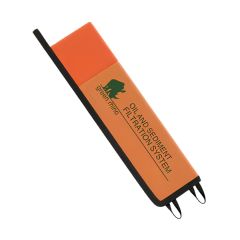
Orange corner tab: a bright tab at one corner makes each pillow easy to spot and pick up.
Who is this for
Trades and roles
-
Groundworkers
-
Utility contractors
-
Site managers
-
Environmental and compliance managers
-
Plant fitters and operators
-
Boatyard and marine maintenance teams
Industries
-
Construction
-
Civil engineering
-
Utilities
-
Plant hire
-
Highways
-
Marine and boatyards
-
Facilities management
Specifications
| Specification | Detail |
|---|---|
| Product name | Green Rhino Oil Retention Pillows - Solidifying Polymer |
| Product code | GRR0250 |
| Product type | Oil retention pillow, oil-only absorbent |
| Absorbent | Smart polymer granules that solidify hydrocarbons |
| Absorbs | Hydrocarbons only, no reaction with water |
| Suitable liquids | Petrol, diesel, engine oil, hydraulic fluid, lubricants, transformer fluid |
| Use on | Standing and contained water |
| Hydrocarbon retention | 100%, even when wrung out (manufacturer statement) |
| Full indicator | No loose granules left inside the pillow |
| Reuse | Reusable until capacity reached |
| Disposal | Hazardous waste bin |
| Standards | None stated |
| Country of manufacture | United Kingdom |
| Packaging | 100% recyclable (manufacturer statement) |
| Brand | Green Rhino |
| Capacities | 1L, 4L, 8L |
| Colour | White cover, orange corner tab |
Size Selection
| Product code | Capacity | Size (length x width) | Weight |
|---|---|---|---|
| GRR025001PILL | Up to 1L oil | 300mm x 300mm | 0.25kg |
| GRR025004PILL | Up to 4L oil | 600mm x 600mm | 1kg |
| GRR025008PILL | Up to 8L oil | 1000mm x 720mm | 2kg |
Compatibility
| Location, liquid or condition | Suitability |
|---|---|
| Water in excavations and trenches | Suitable, clears hydrocarbons before the water is pumped out |
| Tanks | Suitable, cleans contaminated water before pumping out |
| Bunds, sumps and bilges | Suitable, can be left in place to catch contamination before water overflows or drains out |
| Petrol and diesel | Suitable, less viscous fuels solidify fastest |
| Engine oil, hydraulic fluid and lubricants | Suitable |
| Transformer fluid | Suitable |
| Open water such as rivers, lakes or the sea | Not recommended, the spill can spread around the pillow, use oil absorbent booms |
| Chemical spills | Not recommended, use a chemical spill kit |
| Water-based liquids such as milk or paint | Not recommended, the polymer reacts with hydrocarbons only |
Typical Users and Projects
Groundworks, utility and civil engineering teams use oil retention pillows on excavations, trenches and plant compounds where rainwater collects and picks up fuel or oil. Facilities and marine maintenance teams also leave them in bunds, sumps and bilges as a standing control. No specialist training is needed, but users should know their site’s spill and discharge procedures.
Typical applications
-
Clearing an oil sheen from rainwater in an excavation before it is pumped out.
-
Removing diesel from water that has collected in a trench after a plant leak.
-
Cleaning contaminated water in a tank before it is pumped out.
-
Leaving a pillow in a fuel tank bund to catch hydrocarbons before rainwater overflows.
-
Placing pillows in sumps to capture oil before water drains away.
-
Keeping a pillow in a bilge to absorb oil and fuel from bilge water.
How to use
Step 1: Put on protective gloves.
Step 2: Place the pillow on the surface of the contaminated water. Use more than one pillow for larger spills.
Step 3: Move the pillow around to mop up the sheen. Squeeze it by hand so all the polymer comes into contact with the oil.
Step 4: Watch for the polymer inside to harden and discolour as it absorbs.
Step 5: Add more pillows until no sheen is left, or until a hydrocarbon detection strip shows the water is clean.
Step 6: Lift the pillows out and squeeze out the water. If oily water drains out, use another pillow on the remaining contamination.
Step 7: Put full pillows in a hazardous waste bin. Store part-used pillows for reuse.
Common mistakes
-
Using pillows on open water, where the spill spreads around them.
-
Using one small pillow on a spill bigger than its capacity.
-
Pumping water out without first checking it with a detection strip.
-
Using pillows on chemical spills or water-based liquids.
-
Throwing away a pillow that still has loose granules and could be reused.
Safety
Wear protective gloves when handling pillows. Place pillows from a safe position at the edge of an excavation, and never enter an unsupported excavation to reach the water. Treat used pillows as hazardous waste and keep them out of general waste. Before pumping water from site, follow your site environmental plan and any discharge consent or permit.
Maintenance
Store unused and part-used pillows in a dry place until needed. Before reusing a pillow, feel for loose granules. If none are left, the pillow is full and should be disposed of.
Frequently Asked Questions
Q: How does an oil retention pillow work?
A: The pillow is filled with polymer granules that react only with hydrocarbons. When oil or fuel touches the granules, they absorb it and set into a solid, rubber-like mass. The oil is trapped inside, so it cannot drain back into the water. The polymer does not react with water, so only water drains out when the pillow is lifted.
Q: What does 4L, 600mm x 600mm mean on an oil retention pillow?
A: The 4L is the maximum amount of oil the pillow can absorb and hold. The 600mm x 600mm is the pillow’s length x width. Choose the capacity by the amount of oil on the water, and use more than one pillow for larger spills.
Q: Which oils and fuels can these pillows absorb?
A: They work with petrol, diesel, engine oil, hydraulic fluid, lubricants and transformer fluid. Thinner liquids such as diesel solidify faster than thick oils. Squeezing the pillow by hand helps every granule reach the oil.
Q: What are oil retention pillows not suitable for?
A: They are not suitable for open water such as rivers or lakes, where the spill can spread around them. Use oil absorbent booms there. They are oil-only, so they will not absorb chemicals or water-based liquids such as milk and paint.
Q: How are these different from standard oil absorbent pillows?
A: Standard oil absorbent pillows are filled with polypropylene, which holds oil like a sponge. When they are saturated and lifted out, oily water drains back into the spill. Oil retention pillows set the oil into a solid inside, so only water drains out and the pillow can be wrung out. The manufacturer states 100% retention of hydrocarbons, even when wrung out.
Q: How do I know when a pillow is full?
A: The white granules inside thicken into a rubber-like mass as they absorb oil. When there are no loose granules left, the pillow has reached capacity. An oil sheen still on the water means more pillows are needed.
Q: Can an oil retention pillow be reused?
A: A pillow that still has loose granules inside can be stored and used again. Once all the granules have set, put it in a hazardous waste bin in line with your site waste procedures.
Q: Can the water be pumped out after using the pillows?
A: Check the water first with a hydrocarbon detection strip, and add more pillows if any oil remains. When dewatering an excavation, a sediment dewatering filter on the pump outlet also holds back silt. Always follow your site’s discharge consent or environmental permit before releasing water.