- Very hard concrete diamond blade for cutting pile caps, PQ concrete, granite and paving with handheld cut-off saws, for groundworks and civil engineering teams.
- Specialist for very hard concrete
- Conforms to EN 13236
- Also cuts reinforced concrete and granite
- Max speed 6400 RPM
- For handheld cut-off saws
- 300/20 size (300mm is the blade diameter. 20mm is the bore that fits the saw spindle.)
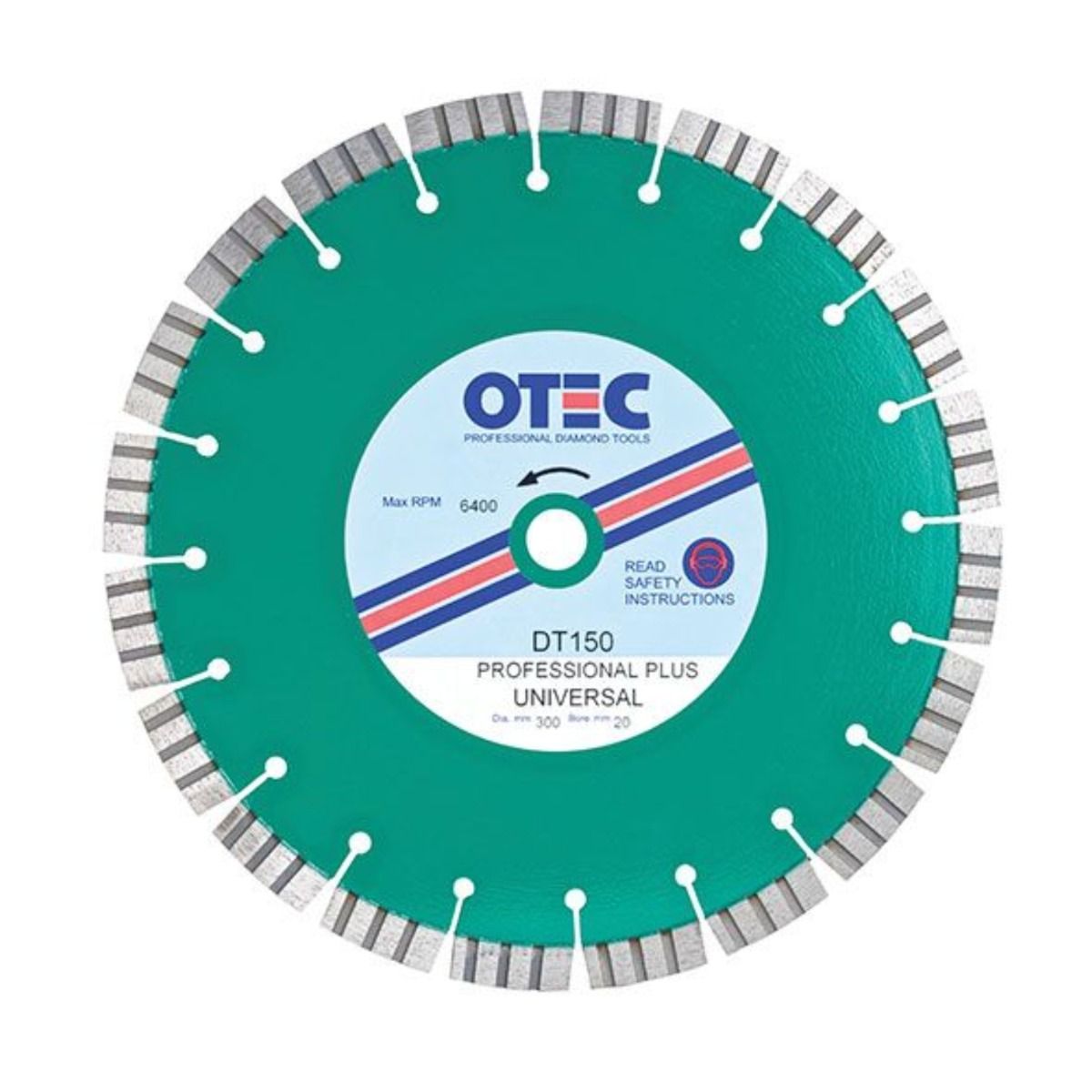
Very Hard Concrete Diamond Blade – Professional Plus – Universal Granite & Concrete & Paving – OTEC DT150

- Very hard concrete diamond blade for cutting pile caps, PQ concrete, granite and paving with handheld cut-off saws, for groundworks and civil engineering teams.
- Specialist for very hard concrete
- Conforms to EN 13236
- Also cuts reinforced concrete and granite
- Max speed 6400 RPM
- For handheld cut-off saws
- 300/20 size (300mm is the blade diameter. 20mm is the bore that fits the saw spindle.)
Order 1x to earn 165 FASTPoints
Order to earn 165 FASTPoints
Log in to access trade discountsVery Hard Concrete Diamond Blade – Professional Plus – Universal Granite & Concrete & Paving (OTEC DT150)
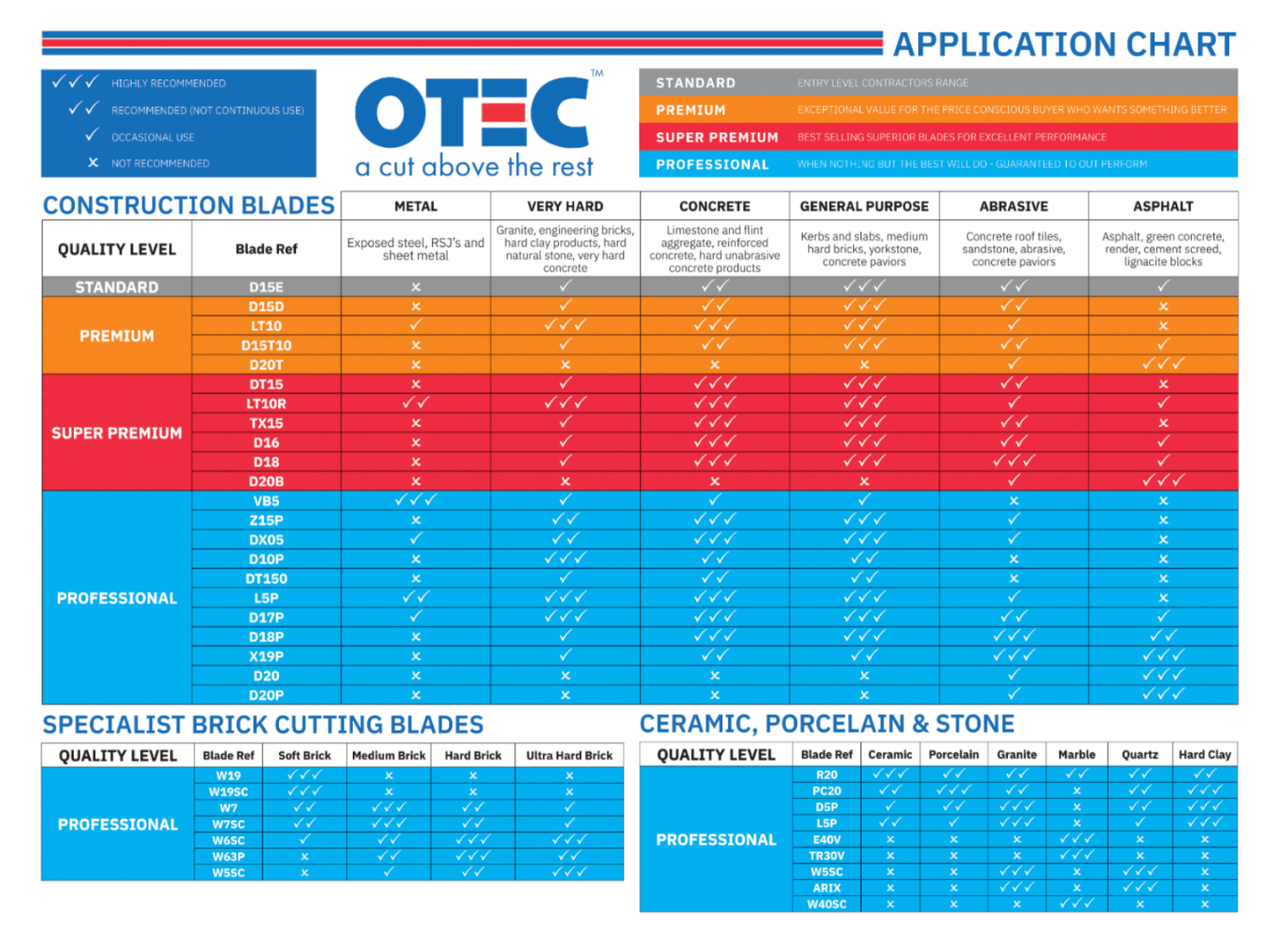
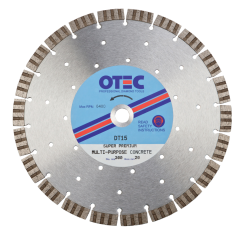
This very hard concrete diamond blade is a 300mm segmented blade for handheld cut-off saws. It is made first for dense, high strength concrete, with pile caps and PQ concrete as its main jobs. It also cuts reinforced concrete, granite, kerbs and paving, so one blade covers most hard materials on a civil engineering site.
How a Very Hard Concrete Blade Keeps Cutting on Pile Caps
Pile caps and PQ concrete are dense, high strength mixes with hard aggregate. A general purpose blade can lose cutting speed in this material, which adds time to every cut. This blade is made specifically for very hard concrete, so it suits the hardest concrete on site and still handles granite, kerbs and paving.
Key Features
-
Specialist for very hard concrete: made for pile caps and PQ concrete, the hardest concrete on most civil engineering jobs.
-
Universal hard materials coverage: also cuts reinforced concrete, granite, hard natural stone, kerbs, slabs and concrete paviors.
-
300mm diameter with 20mm bore: fits handheld cut-off saws that take a 300mm blade.
-
6400 RPM marked on the blade: printed with the direction of rotation arrow, so operators can check both against the saw before fitting.
-
EN 13236 conformity: built to the safety standard for diamond and other superabrasive tools.
Who is this for
Trades and roles
-
Groundworkers
-
Piling contractors
-
Civil engineering contractors
-
Highways and road maintenance teams
-
Kerb and paving layers
-
Demolition contractors
Industries
-
Civil engineering
-
Groundworks and piling
-
Highways
-
Construction
-
Landscaping and public realm
Specifications
| Specification | Detail |
|---|---|
| Product name | Very Hard Concrete Diamond Blade – Professional Plus – Universal Granite & Concrete & Paving – OTEC DT150 |
| Product code | DT150-300/20 |
| Product type | Segmented diamond blade for very hard concrete |
| Primary application | Very hard concrete, pile caps, PQ (pavement quality) concrete |
| Also cuts | Reinforced concrete, limestone and flint aggregate concrete, granite, hard natural stone, kerbs, slabs, concrete paviors, yorkstone, medium hard bricks |
| Saw type | Handheld cut-off saws |
| Diameter | 300mm |
| Bore | 20mm |
| Maximum speed | 6400 RPM |
| Standard | EN 13236, safety requirements for superabrasive products |
| Grade | Professional Plus |
| Brand | OTEC |
Size Selection
| Product code | Diameter | Bore | Maximum speed | Saw type |
|---|---|---|---|---|
| DT150-300/20 | 300mm | 20mm | 6400 RPM | Handheld cut-off saw |
Compatibility
| Material, tool or condition | Suitability |
|---|---|
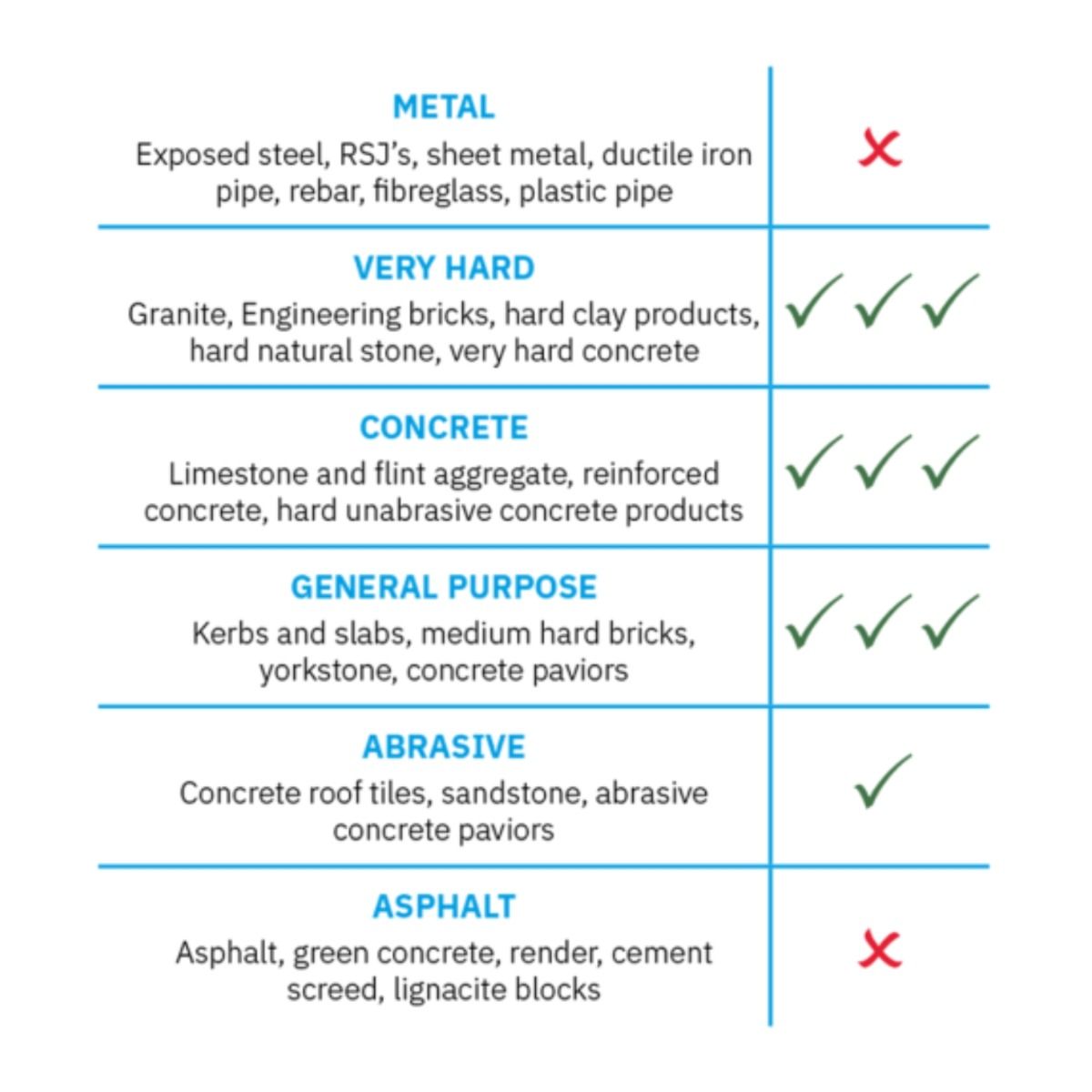
| Very hard concrete, pile caps and PQ concrete | Suitable, the blade’s main use |
| Reinforced concrete and limestone or flint aggregate concrete | Suitable |
| Granite and hard natural stone | Suitable |
| Kerbs, slabs, concrete paviors, yorkstone and medium hard bricks | Suitable |
| Handheld cut-off saws with a 20mm spindle, rated for 300mm blades | Suitable, check the saw’s speed does not exceed 6400 RPM |
| Concrete roof tiles, sandstone and abrasive concrete paviors | Not recommended for regular cutting, these materials wear the blade quickly, use an abrasive materials blade |
| Asphalt, green concrete, render, cement screed and lignacite blocks | Not recommended, use an asphalt diamond blade |
| Hard clay products, engineering bricks and clay pipes | Not recommended, use a hard materials diamond blade |
| Exposed steel, RSJs, sheet metal, ductile iron pipe, bare rebar, fibreglass and plastic pipe | Not recommended, use a blade made for metal |
| Saws running above 6400 RPM | Not recommended, never exceed the speed marked on the blade |
Typical Users and Projects
Piling, groundworks and highways contractors use this blade on civil engineering, infrastructure and road projects. Most cuts are outdoors, on concrete that has cured to high strength, such as pile caps, slabs and pavement quality concrete. It is for operators trained to use handheld cut-off saws.
Typical applications
-
Cutting pile caps to size and level on piling and foundation works.
-
Cutting PQ concrete on roads and hardstandings for repairs and joint work.
-
Cutting openings in reinforced concrete slabs and walls.
-
Cutting kerbs, slabs and concrete paviors to fit on paving and highways work.
-
Cutting granite kerbs, setts and hard natural stone on public realm schemes.
-
Cutting yorkstone and medium hard bricks during landscaping and building work.
How to use
Step 1: Check the material against the Compatibility table to confirm the blade suits it.
Step 2: Check the saw takes a 300mm blade with a 20mm bore, and that its maximum spindle speed is no higher than 6400 RPM.
Step 3: Inspect the blade for cracks, missing segments or core damage. Do not use a damaged blade.
Step 4: Fit the blade with its arrow pointing the same way as the saw’s rotation, and tighten the flange as the saw manual sets out.
Step 5: Set up dust control as the saw manual and HSE guidance require.
Step 6: Let the saw reach full speed before starting the cut. Let the blade cut at its own pace without forcing or twisting it.
Step 7: Make deep cuts in several passes rather than one.
Common mistakes
-
Using the blade for regular cutting of asphalt or abrasive materials, which wears it down quickly.
-
Cutting engineering bricks, hard clay or clay pipes instead of using a hard materials blade.
-
Fitting the blade against the rotation arrow.
-
Running the blade on a saw faster than 6400 RPM.
-
Forcing or twisting the blade in the cut, which can stall the saw or damage the core.
Safety
Cutting concrete, stone and brick creates respirable crystalline silica dust. HSE guidance requires dust control on cut-off saws, such as water suppression, together with suitable RPE. Wear eye, hearing and hand protection, and check for buried cables and pipes before cutting. Only trained operators should use cut-off saws, in line with PUWER.
Maintenance
Clean the blade after use and store it flat and dry. Check for cracks, segment damage and core wear before each use. If the blade slows on very hard concrete, a few short cuts in an abrasive concrete block can expose fresh diamond.
Frequently Asked Questions
Q: What is this very hard concrete diamond blade best used for?
A: It is made for very hard concrete, especially pile caps and PQ concrete. It also cuts reinforced concrete, granite, hard natural stone, kerbs, slabs and concrete paviors. That makes it a universal blade for hard materials, with very hard concrete as its main strength.
Q: What does 300/20 mean on a diamond blade?
A: The 300 is the blade diameter in millimetres. The 20 is the bore, the centre hole that fits the saw spindle, also in millimetres. The bore must match the spindle on your saw.
Q: What does EN 13236 mean on a diamond blade?
A: EN 13236 sets safety requirements for superabrasive products, which include diamond blades. It covers how they are designed, made and marked, including the maximum operating speed shown on the blade. It is a safety standard, not a cutting performance rating.
Q: What is this blade not suitable for?
A: It is not for regular cutting of asphalt, green concrete, render, cement screed, lignacite blocks, sandstone or concrete roof tiles. It will cut them, but they wear the blade down quickly, so use an asphalt diamond blade or an abrasive materials diamond blade. It is also not for hard clay products, engineering bricks or clay pipes, where a hard materials diamond blade is the better choice. It is not for metal.
Q: Why choose a very hard concrete blade over a general purpose blade?
A: A general purpose blade is made to cut a wide mix of materials, so it can be slower on dense, high strength concrete. This blade is made for very hard concrete first. It is the better choice where pile caps or PQ concrete make up most of the cutting, and it still covers granite, kerbs and paving on the same job.
Q: Will this blade fit my cut-off saw?
A: It fits handheld cut-off saws that take a 300mm blade on a 20mm spindle. Check that the saw’s maximum spindle speed is 6400 RPM or lower. Fit the blade with its arrow pointing the same way as the saw’s rotation.
Q: Can it cut reinforced concrete?
A: Reinforced concrete is one of the materials it is rated for, so it cuts through the rebar inside the concrete as part of the cut. It is not made for cutting exposed steel or bare rebar on its own. Use a blade made for metal for that.
Q: Why has my blade stopped cutting well on hard concrete?
A: On very hard concrete, the diamonds can glaze over and stop cutting freely. A few short cuts in an abrasive concrete block can expose fresh diamond. Also check that the blade is fitted the right way round and that the cut is not being forced. Replace the blade if the segments are worn down or damaged.