Which Wall Plug Do I Need? Nylon, Plastic and Metal Plugs by Wall Type
The right wall plug depends on three things: the wall you are fixing into, the screw you are using and the weight the fixing has to hold. This guide matches each wall type to the right plug, gives the drill and screw size for every plug we stock, and shows the recommended loads published by the manufacturer.
Quick answer
- Concrete, solid brick, dense block or stone: a nylon wall plug for most jobs, or a colour coded plastic plug for light, high-volume fixings.
- Aerated concrete block (aircrete): a metal expansion plug, or a nylon wall plug at a lower load.
- Where a metal fixing is required, for example some cable supports: a metal expansion plug.
- Heavy, overhead or safety-critical fixings: do not rely on wall plugs. Use a metal anchor rated for the load and the base material.
- Plasterboard: not a wall plug. Use a self-drill plasterboard fixing.
- Always: match the plug to the screw first, then drill a hole the same size as the plug.
Find your plug
Choose your wall to see the plugs that suit it.
Concrete
Use nylon wall plugs for most fixings, with recommended loads from 0.55 kN (6mm) to 1.90 kN (14mm). For light, high-volume jobs, colour coded plastic plugs are an economical option.
Solid brick or dense block
Use nylon wall plugs from 6mm to 10mm in solid brick (12mm and 14mm are not recommended in brick), and 6mm to 14mm in dense concrete block. Plastic wall plugs suit light fixings.
Aerated block
Use metal expansion wall plugs or nylon wall plugs (6mm to 12mm). At 8mm, the metal plug has the higher recommended load in aerated block: 0.12 kN against 0.09 kN.
Metal fixing needed
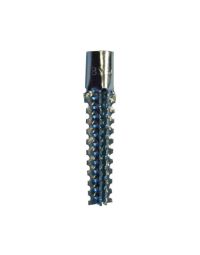
Use metal expansion wall plugs, an all-metal plug for concrete, masonry and aerated block, for example where plastic fixings cannot be the only support for cables.
Plasterboard
Do not use a wall plug. Use self-drill plasterboard fixings for light items, or fix into a stud for heavier ones.
Wall types: which plug suits which wall
| Wall | Nylon wall plugs | Plastic wall plugs | Metal expansion plugs | Self-drill plasterboard fixings |
|---|---|---|---|---|
| Concrete | Suitable | Suitable | Suitable | Not suitable |
| Solid brick | Suitable, 6mm to 10mm | Suitable | Suitable | Not suitable |
| Dense concrete block | Suitable | Suitable | Suitable (masonry) | Not suitable |
| Stone | Suitable | Suitable | Not listed | Not suitable |
| Aerated concrete block | Suitable, 6mm to 12mm, lower loads | Light fixings | Suitable | Not suitable |
| Hollow brick or block | Not listed | Light fixings only | Not listed | Not suitable |
| Plasterboard | Not suitable | Not suitable | Not suitable | Suitable |
Based on the base materials listed for each product. "Not listed" means the manufacturer does not list that wall type for the plug.
Check for hidden cables and pipes before drilling, and wear eye protection. Drilling concrete and masonry releases respirable crystalline silica dust, so use on-tool extraction and suitable RPE in line with HSE guidance.
Nylon, plastic and metal wall plugs compared
| Nylon wall plugs | Plastic wall plugs | Metal expansion plugs | |
|---|---|---|---|
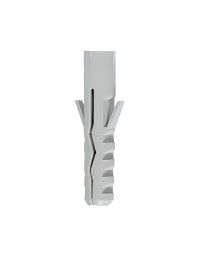
| How they work | Rimless PA6 nylon plug that opens on two sides, with anti-rotation lugs | Colour coded two way expansion plug, supplied on a sprue | Four metal segments with toothed edges that open as the screw goes in |
| Best for | Everyday light to medium fixings in concrete, brick, block and stone | High-volume light fixings such as clips, accessories and pictures | Aerated block, and jobs where a metal fixing is needed |
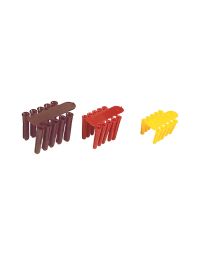
| Sizes we stock | 6mm to 14mm | 5mm yellow, 5.5mm red, 7mm brown | 6mm and 8mm |
| Published loads | Yes: concrete, block, brick and aerated block | No | Yes: concrete, brick and aerated block |
| Shop | Nylon Wall Plugs | Plastic Wall Plugs | Metal Expansion Wall Plugs |
Match the plug to your screw
Choose the plug by your screw, then drill a hole the same diameter as the plug, at least to the minimum hole depth. Filter the table by plug type:
| Plug | Drill size | Screw gauge | Screw diameter | Min hole depth |
|---|---|---|---|---|
| Plastic, yellow 5mm x 22mm | 5mm | No.4 to No.8 | 2.5mm to 4.0mm | 30mm |
| Plastic, red 5.5mm x 34mm | 5.5mm | No.6, No.8, No.10 | 3.5mm, 4.5mm, 5mm | 40mm |
| Plastic, brown 7mm x 40mm | 7mm, 8mm for No.14 | No.10, No.12, No.14 | 5mm, 6mm, 8mm | 45mm |
| Nylon 6mm x 30mm | 6mm | No.6 to No.10 | 3.5mm to 5.0mm | 35mm |
| Nylon 7mm x 35mm | 7mm | No.8 to No.12 | 4.0mm to 5.5mm | 40mm |
| Nylon 8mm x 40mm | 8mm | No.10 to No.14 | 5.0mm to 6.0mm | 45mm |
| Nylon 10mm x 50mm | 10mm | No.14 to No.18 | 6.0mm to 8.0mm | 55mm |
| Nylon 12mm x 60mm | 12mm | No.18 to No.24 | 8.0mm to 10.0mm | 70mm |
| Nylon 14mm x 70mm | 14mm | No.24 to No.32 | 10.0mm to 12.0mm | 80mm |
| Metal 6mm x 32mm | 6mm | Not stated | 4.5mm to 5.0mm | 40mm |
| Metal 8mm x 38mm | 8mm | Not stated | 5.0mm to 6.0mm | 50mm |
In a size such as 6mm x 30mm, the first number is the plug diameter, which is also the drill size. The second number is the plug length. Use a screw long enough to pass through the item being fixed and reach the end of the plug. For metal expansion plugs, the screw length is the fixture thickness plus 37mm (6mm plug) or plus 43mm (8mm plug).
How much weight can a wall plug hold?
These are the manufacturer's recommended loads for one plug. They already include a safety factor, and brick and block figures are guidance only because these materials vary. As a rule of thumb, 1 kN is roughly 100kg.
Nylon wall plugs (safety factor of 5, for tension, shear and oblique loads)
| Plug | Concrete up to C20/25 | Concrete block 7.5 N/mm2 | Solid brick 20 N/mm2 | Aerated concrete 3.5 N/mm2 |
|---|---|---|---|---|
| 6mm x 30mm | 0.55 kN | 0.33 kN | 0.28 kN | 0.07 kN |
| 8mm x 40mm | 0.75 kN | 0.45 kN | 0.49 kN | 0.09 kN |
| 10mm x 50mm | 1.20 kN | 0.72 kN | 0.52 kN | 0.15 kN |
| 12mm x 60mm | 1.50 kN | 0.90 kN | Not recommended | 0.23 kN |
| 14mm x 70mm | 1.90 kN | 1.14 kN | Not recommended | Not recommended |
Metal expansion plugs
| Plug | Concrete C20/25 | Solid brick 20 N/mm2 | Aerated block 3.5 N/mm2 |
|---|---|---|---|
| 6mm x 32mm | 0.22 kN | 0.17 kN | 0.07 kN |
| 8mm x 38mm | 0.40 kN | 0.32 kN | 0.12 kN |
- In concrete and dense masonry, nylon wall plugs carry the higher loads, up to 14mm for heavier screws.
- In aerated block, every plug holds far less than in concrete. At 8mm, the metal expansion plug has the higher recommended load.
- Plastic colour coded plugs have no published loads, so keep them for light fixings.
- Use several fixings to share the load on wider items, and never rely on wall plugs for overhead or safety-critical fixings.
Wall plug colours explained
5mm x 22mm
5mm drill
No.4 to No.8 screws
5.5mm x 34mm
5.5mm drill
No.6 to No.10 screws
7mm x 40mm
7mm drill (8mm for No.14)
No.10 to No.14 screws
Colour coding is a trade convention, not a standard, so a red plug from one brand can be a different size from a red plug from another. Always check the drill and screw sizes on the pack.
Fixing into aerated concrete block
Aerated block is light and soft, which is why plugs that hold well in concrete can spin or pull out.
- Drill without hammer action, so the hole does not open up.
- Choose a plug with a published aerated block load, such as a metal expansion plug or a nylon wall plug, and keep well within it.
- Keep metal expansion plugs at least 55mm (6mm) or 60mm (8mm) from an edge, in block at least 60mm (6mm) or 70mm (8mm) thick.
What about plasterboard?
Wall plugs need a solid hole wall to expand against, and plasterboard is too soft. Self-drill plasterboard fixings screw straight into the board with no pilot hole. Each has a recommended load of 0.06 kN pulling straight out and 0.18 kN hanging down the wall, so they suit light items such as trunking, curtain brackets and pictures. For heavier items, fix into a stud.
Common mistakes
- Drilling a hole bigger than the plug, so the plug spins instead of gripping.
- Using a screw too short to reach the end of the plug, so it never fully expands.
- Assuming every red or brown plug is the same size across brands.
- Hammer drilling aerated block, which enlarges the hole.
- Using wall plugs in plasterboard, or for overhead and safety-critical loads.
Frequently asked questions
Q: Which wall plug is best for concrete?
A: A nylon wall plug suits most fixings in concrete, with recommended loads from 0.55 kN for a 6mm plug to 1.90 kN for a 14mm plug in concrete up to C20/25. For light, high-volume jobs, colour coded plastic plugs are an economical option.
Q: Which wall plug should I use in aerated block?
A: Use a metal expansion plug or a nylon wall plug, and drill without hammer action. At 8mm, the metal expansion plug has the higher recommended load in aerated block. Loads in aerated block are much lower than in concrete, so use more fixings for heavier items.
Q: What size drill bit do I need for a wall plug?
A: Use a drill bit the same diameter as the plug. A 6mm plug needs a 6mm bit and an 8mm plug needs an 8mm bit. Drill to at least the minimum hole depth for the plug.
Q: What do yellow, red and brown wall plugs mean?
A: The colour shows the plug size. In our range, yellow is 5mm, red is 5.5mm and brown is 7mm. Sizes vary between brands, so always check the pack.
Q: Can I use wall plugs in plasterboard?
A: No. Plasterboard is too soft for a plug to expand against. Use a self-drill plasterboard fixing for light items, or fix into a stud for heavier ones.
Q: When should I use a metal wall plug instead of nylon?
A: Use a metal expansion plug in aerated block, or where the job calls for a metal fixing rather than plastic, such as some cable supports. In concrete and dense masonry, nylon wall plugs carry higher loads.
Q: What should I use for heavy or overhead fixings?
A: Do not rely on wall plugs. Wall plugs are for light to medium fixings, and their published loads do not cover overhead or safety-critical use. Use a metal anchor rated for the load and the base material.
Shop wall plugs and fixings
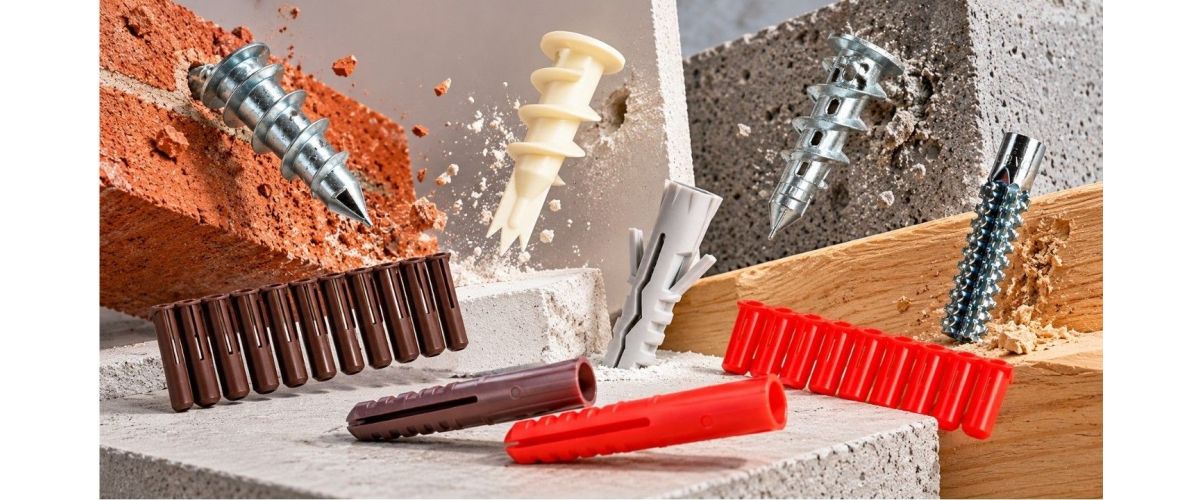
The four fixings in this guide
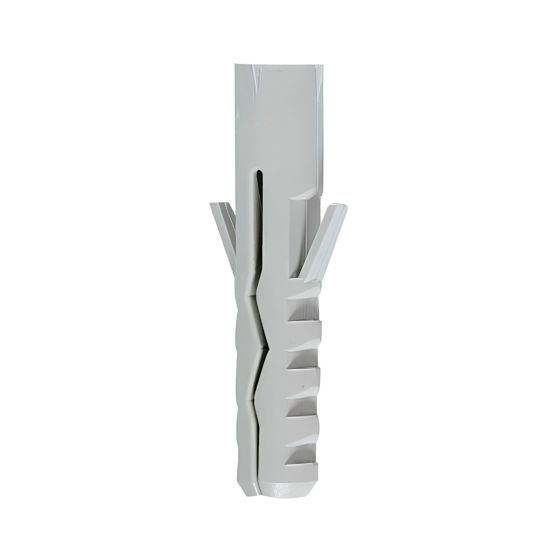
Nylon Wall Plugs - Rimless for Concrete and Masonry
- PA6 nylon, anti-rotation lugs
- 6mm to 14mm
- Published loads for 4 wall types
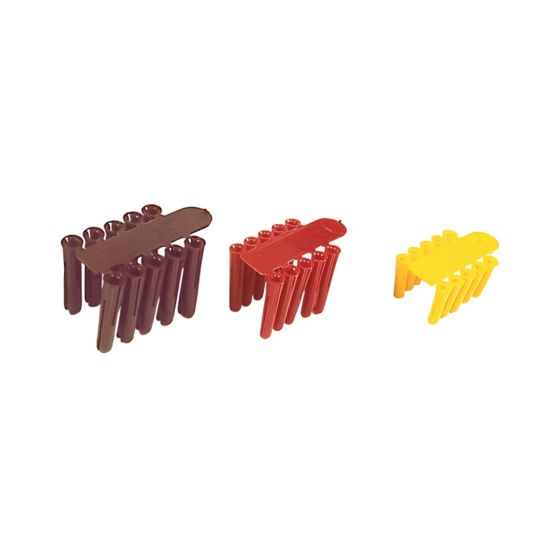
Plastic Wall Plugs - Colour Coded
- Yellow, red and brown by size
- Supplied on a sprue
- For light fixings
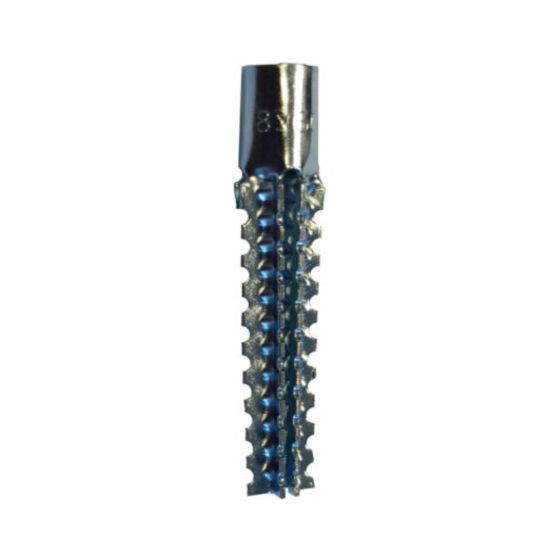
Metal Expansion Wall Plugs - 4 Segment
- All-metal, 4 toothed segments
- 6mm and 8mm
- Loads for concrete, brick, aircrete

Self-Drill Plasterboard Fixings - With Screws
- No pilot hole, Pozi No2
- Zinc alloy and nylon
- 0.06 kN tensile, 0.18 kN shear
Order by 7pm for next-day delivery on stocked lines, or call our team on 020 8311 1144 about trade accounts and bulk orders.