Plasterboard has no single safe weight. It depends on the fixing, and on whether the load hangs down the wall or pulls out of it. This guide explains tensile and shear loads, shows how many self-drill fixings you need, and when to fix into a stud instead.
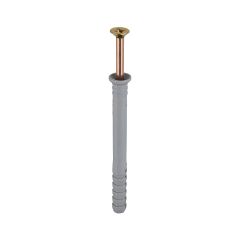
Nylon wall plugs for screw fixing into concrete, brick, block and stone, for trades fixing brackets, clips and fittings to solid walls.
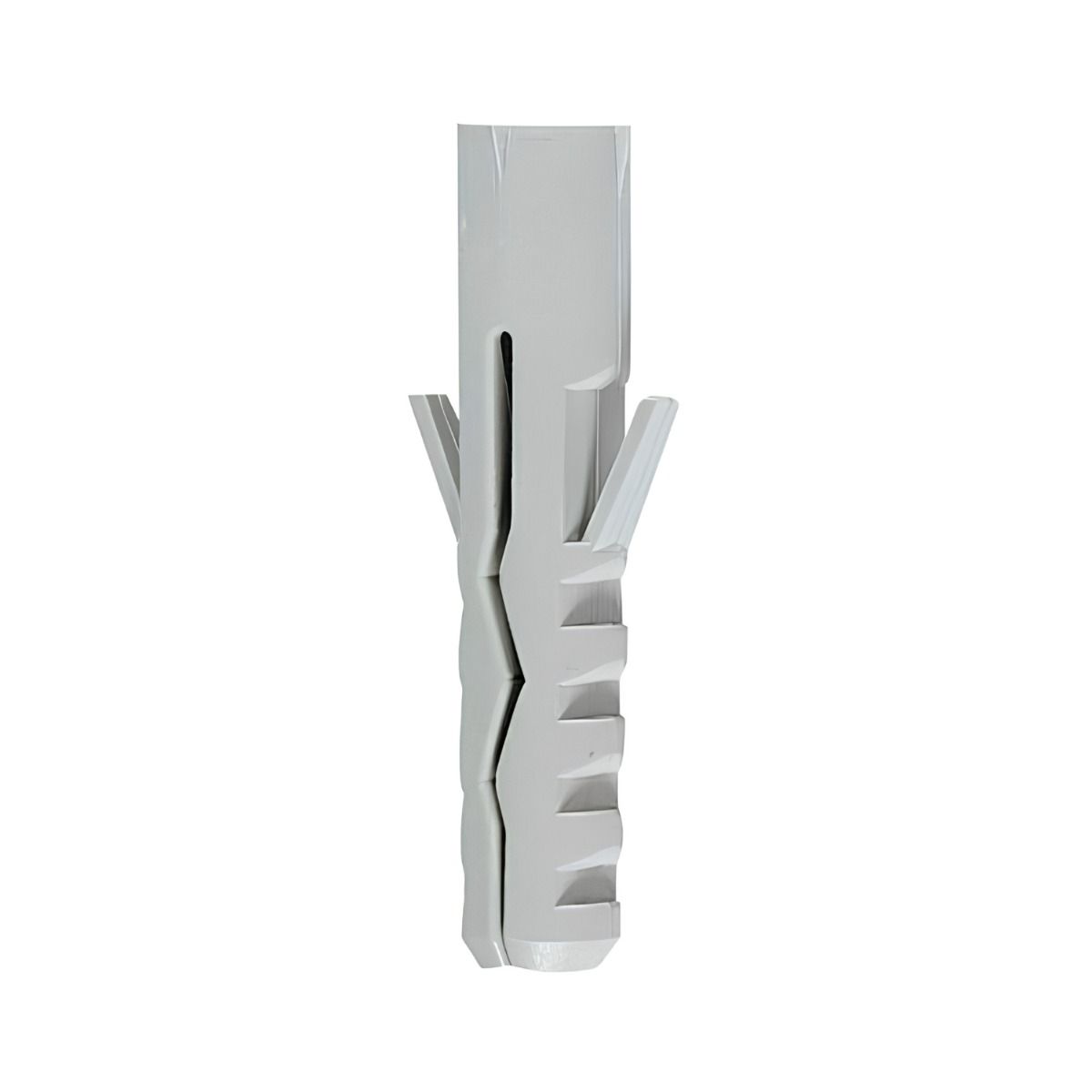
- Anti-rotation lugs stop the plug spinning
- Rimless, sets flush or below the surface
- 2-way expansion with screw guidance
- PA6 nylon
- Takes wood and chipboard screws
- Recommended loads published for each size
- Available in multiple sizes (The first number is the plug diameter, which is also the drill size. The second number is the plug length.)
Sizes marked (TO ORDER) may not be available from stock for same-day or next-day delivery. Please contact our team to confirm delivery dates.
Nylon Wall Plugs - Rimless for Concrete and Masonry
Nylon wall plugs for screw fixing into concrete, brick, block and stone, for trades fixing brackets, clips and fittings to solid walls.
- Anti-rotation lugs stop the plug spinning
- Rimless, sets flush or below the surface
- 2-way expansion with screw guidance
- PA6 nylon
- Takes wood and chipboard screws
- Recommended loads published for each size
- Available in multiple sizes (The first number is the plug diameter, which is also the drill size. The second number is the plug length.)
Sizes marked (TO ORDER) may not be available from stock for same-day or next-day delivery. Please contact our team to confirm delivery dates.
Nylon Wall Plugs
Nylon wall plugs are rimless PA6 plugs for fixing with wood and chipboard screws into concrete, brick, block and stone. Electricians, plumbers, joiners and fit-out trades use them every day for brackets, clips, cabinets and fittings. Each size has published recommended loads, so you can match the plug to the job.
How Anti-Rotation Lugs Stop Plugs Spinning in the Hole
A plain plug can turn in the hole as the screw bites, so the screw never tightens. On site, that means a stripped fixing, a wider hole and time lost re-drilling or switching to a bigger plug. The lugs on these plugs lock into the hole wall, so the plug stays put and the screw draws the fixture tight first time.
Key Features
-
Anti-rotation lugs: grip the hole wall so the plug does not spin while the screw is driven.
-
Rimless design: the plug can be set flush or below the surface, so it can be filled or plastered over.
-
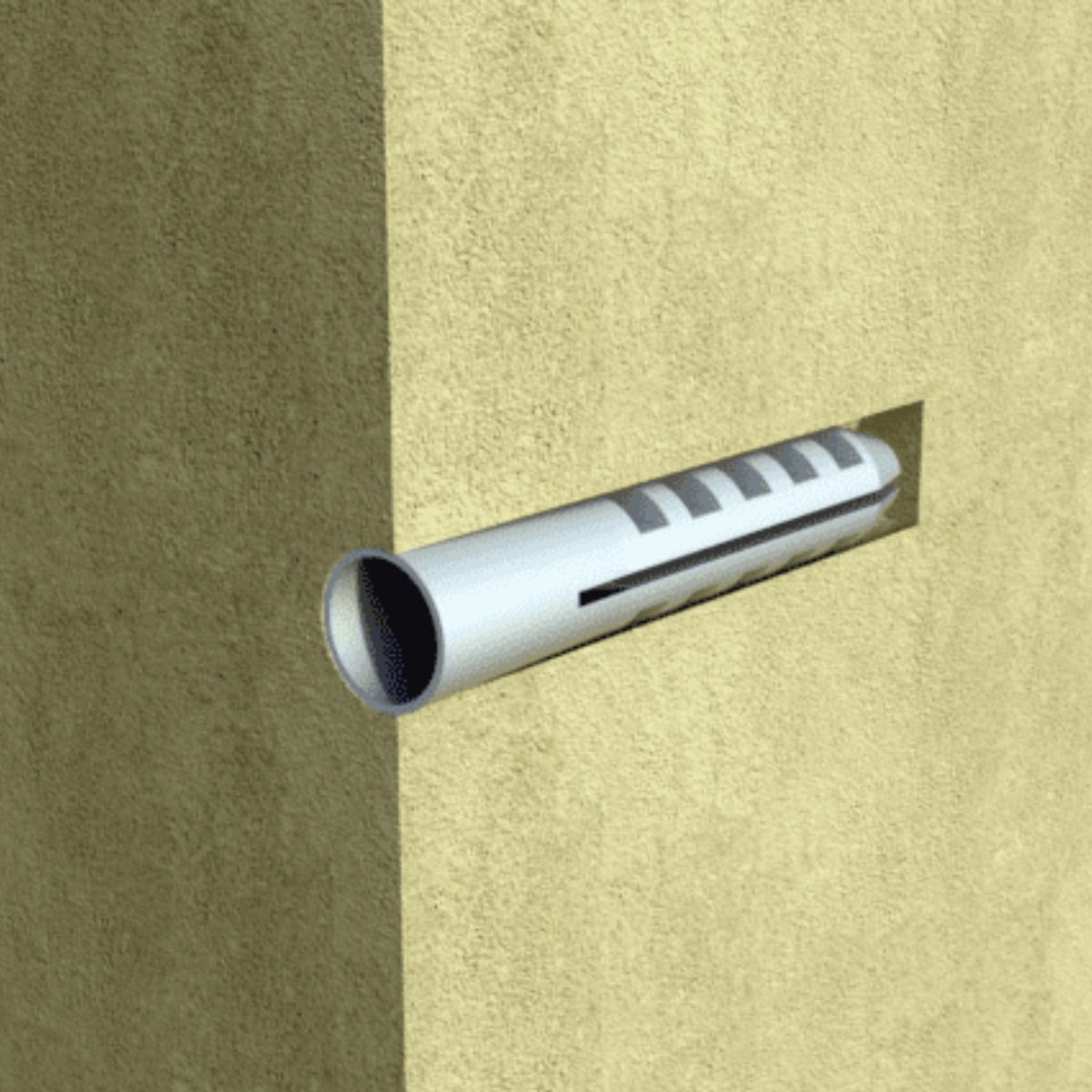
2-way expansion: the plug spreads against the hole wall as the screw goes in, for a firm hold in solid materials.
-
Screw guidance: keeps the screw running centrally down the plug, so it expands evenly.
-
Published loads for each size: recommended loads for concrete, concrete block, solid brick and aerated block, with a safety factor of 5 built in.
-
Wood and chipboard screws: works with standard screws, matched by gauge or diameter for each plug size.
Who is this for
Trades and roles
-
Electricians
-
Plumbers and heating engineers
-
Carpenters and joiners
-
Kitchen and bathroom fitters
-
Shopfitters
-
Maintenance teams
Industries
-
Construction
-
Housebuilding
-
Commercial fit-out
-
Building services
-
Facilities management
Specifications
| Specification | Detail |
| Product name | Nylon Wall Plugs - Rimless for Concrete and Masonry |
| Product code | NP |
| Product type | Nylon wall plug |
| Material | PA6 nylon (polyamide 6) |
| Design | Rimless, can be set flush or below the surface |
| Expansion | 2-way |
| Anti-rotation | Lugs grip the hole wall to stop the plug spinning |
| Screw guidance | Yes |
| Screw type | Wood and chipboard screws |
| Drill hole diameter | Same as plug diameter |
| Base materials | Solid concrete, dense concrete block, solid brick, stone, aerated concrete block |
| Recommended loads | Include a safety factor of 5, apply to tension, shear and oblique loads |
Size Selection
| Product code | Size | Screw gauge | Screw diameter | Min hole depth | Rec. load, concrete up to C20/25 | Rec. load, concrete block 7.5 N/mm2 | Rec. load, solid brick 20 N/mm2 | Rec. load, aerated concrete 3.5 N/mm2 | |
|---|---|---|---|---|---|---|---|---|---|
| NP06 | 6mm x 30mm | 6-10 | 3.5-5.0mm | 35mm | 0.55 kN | 0.33 kN | 0.28 kN | 0.07 kN | |
| NP07 | 7mm x 35mm | 8-12 | 4.0-5.5mm | 40mm | 0.65 kN | 0.39 kN | 0.32 kN | 0.08 kN | |
| NP08 | 8mm x 40mm | 10-14 | 5.0-6.0mm | 45mm | 0.75 kN | 0.45 kN | 0.49 kN | 0.09 kN | |
| NP10 | 10mm x 50mm | 14-18 | 6.0-8.0mm | 55mm | 1.20 kN | 0.72 kN | 0.52 kN | 0.15 kN | |
| NP12 | 12mm x 60mm | 18-24 | 8.0-10.0mm | 70mm | 1.50 kN | 0.90 kN | Not recommended | 0.23 kN | |
| NP14 | 14mm x 70mm | 24-32 | 10.0-12.0mm | 80mm | 1.90 kN | 1.14 kN | Not recommended | Not recommended |
Size key: in 6mm x 30mm, the first number is the plug diameter, which is also the drill size. The second number is the plug length.
Other Sizes Available in the Range, Contact Our Team to Order
| Product code | Size | Screw gauge | Screw diameter | Min hole depth | Rec. load, concrete up to C20/25 | Rec. load, concrete block 7.5 N/mm2 | Rec. load, solid brick 20 N/mm2 | Rec. load, aerated concrete 3.5 N/mm2 | |
|---|---|---|---|---|---|---|---|---|---|
| NP05 | 5mm x 25mm | 4-6 | 2.5-3.5mm | 30mm | 0.30 kN | 0.18 kN | 0.24 kN | Not recommended |
Compatibility
| Base material, use or condition | Suitability | |
|---|---|---|
| Solid concrete | Suitable | |
| Dense concrete block | Suitable | |
| Stone | Suitable | |
| Solid brick | Suitable for 6mm to 10mm plugs, not recommended for 12mm and 14mm | |
| Aerated concrete block | Suitable for 6mm to 12mm plugs at reduced loads, drill without hammer action. Not recommended for 14mm | |
| Wood and chipboard screws | Suitable, match the screw gauge or diameter to the plug size | |
| Hollow brick and block | Not recommended, not a listed base material | |
| Plasterboard and cavity walls | Not recommended, use a cavity fixing | |
| Overhead or safety-critical fixings | Not recommended, use an approved metal anchor | |
| Overhead or safety-critical fixings | Not recommended, use an approved metal anchor |
Typical Users and Projects
Fit-out, M&E and maintenance trades use nylon wall plugs on new build, refurbishment and planned maintenance work. Most fixings go into concrete, dense block and brick walls, with the occasional aerated block partition. They are the default light to medium duty fixing wherever a screw needs to hold in a solid wall.
Typical applications
-
Fixing kitchen wall units, shelving brackets and cabinets to concrete and brick walls.
-
Fixing electrical back boxes, cable trunking and consumer units to masonry.
-
Fixing pipe clips and brackets for plumbing and heating runs along block walls.
-
Fixing curtain track and blind brackets into concrete lintels.
-
Fixing signs, notice boards and bathroom accessories in schools, offices and housing.
-
Fixing timber battens and grounds to solid walls with the larger 10mm to 14mm plugs.
How to use
Step 1: Choose the plug to match your screw, using the screw gauge or screw diameter in the Size Selection table.
Step 2: Drill a hole the same diameter as the plug, at least to the minimum hole depth for that size.
Step 3: Clear the dust from the hole.
Step 4: Push or tap the plug into the hole until it sits flush or just below the surface.
Step 5: Hold the fixture in place and drive the screw through it into the plug until tight. Do not overtighten.
Common mistakes
-
Using a screw too short to reach the end of the plug, so the plug never fully expands.
-
Drilling the hole oversize or too shallow, so the plug spins or sits proud.
-
Using 12mm or 14mm plugs in solid brick, where they are not recommended.
-
Drilling aerated block with hammer action, which enlarges the hole and weakens the hold.
-
Using nylon plugs in plasterboard or hollow walls, where a cavity fixing is needed.
Safety
Wear eye protection when drilling. Drilling concrete and masonry releases respirable crystalline silica dust, so use on-tool extraction and suitable RPE in line with HSE guidance. Keep within the recommended loads for the size and base material. For overhead or safety-critical fixings, use an approved metal anchor.
Maintenance
Store plugs dry in their pack until use. Check wall-mounted fixtures during planned maintenance and refix any that have worked loose with a new plug.
Frequently Asked Questions
Q: Which size wall plug do I need for my screw?
A: Match the plug to the screw gauge or diameter. A 6mm plug takes gauge 6 to 10 screws (3.5mm to 5.0mm), and an 8mm plug takes gauge 10 to 14 (5.0mm to 6.0mm). For heavier screws, the 10mm, 12mm and 14mm plugs take up to 12.0mm diameter. The Size Selection table lists the range for every size.
Q: What does 6mm x 30mm mean on a wall plug?
A: The 6mm is the plug diameter, which is also the drill bit size you need. The 30mm is the length of the plug. Drill slightly deeper than the plug length, to the minimum hole depth for that size, so the plug sits flush.
Q: What load can a nylon wall plug hold?
A: In concrete up to C20/25, the recommended load ranges from 0.30 kN for the 5mm plug to 1.90 kN for the 14mm plug. That is roughly 30kg to 190kg. Loads are lower in concrete block, solid brick and aerated block, and every figure includes a safety factor of 5. The values apply to tension, shear and oblique loads.
Q: What are these plugs not suitable for?
A: They are not suitable for plasterboard, hollow brick or block, or overhead and safety-critical fixings. The 12mm and 14mm plugs are not recommended in solid brick, and the 5mm and 14mm plugs are not recommended in aerated block.
Q: Why choose rimless plugs instead of rimmed plugs?
A: A rimmed plug stops at the surface, so it cannot go any deeper. A rimless plug can be set flush or below the surface, which leaves a clean finish for filling or plastering over. It can also be pushed deeper if the hole is drilled long.
Q: Can I use these plugs in aerated block or brick?
A: Yes, the 6mm to 12mm plugs can be used in aerated concrete block, at much lower loads than in concrete. The 5mm to 10mm plugs can be used in solid brick. Check the load for your size and base material in the Size Selection table.
Q: What drill bit and hole depth do I need?
A: Use a drill bit the same diameter as the plug, so a 6mm plug needs a 6mm bit. Drill to at least the minimum hole depth, which is 5mm to 10mm deeper than the plug length.
Q: Why is my wall plug spinning in the hole?
A: The hole is usually oversize, from a worn bit, hammer drilling soft material or the wrong bit size. Re-drill with the correct bit in fresh material, or step up to the next plug size. The anti-rotation lugs grip a correctly sized hole.