How Much Weight Can Plasterboard Hold? Fixings and Loads Explained
Plasterboard does not have one safe weight. What it holds depends on the fixing you use, and on whether the weight hangs down the wall or pulls straight out of it. This guide explains the difference, gives the recommended loads for self-drill plasterboard fixings, and shows when to fix into a stud or into the wall behind instead.
Quick answer
With a self-drill plasterboard fixing, each fixing has two recommended loads:
- Light items on a wall, such as pictures, trunking and curtain brackets: self-drill plasterboard fixings.
- Heavy items, such as TVs and wall cupboards: fix into a stud, not the board alone.
- Ceilings and anything overhead: do not use self-drill plasterboard fixings.
- Solid wall behind the board: fix through into the masonry with a wall plug.
As a rule of thumb, 1 kN is roughly 100kg. Recommended loads are per fixing, in sound plasterboard, and already include a safety margin.
Tensile vs shear: why the direction of the load matters
A fixing in plasterboard holds about three times more weight hanging down the wall than pulling straight out of it. That is why one fixing has two figures.
Most items put some of each on a fixing. Anything that sticks out from the wall, such as a shelf or a bracket, levers the top fixings outwards. For those, work to the lower tensile figure.
Check your item
How does the load act?
Based on the recommended loads of 0.18 kN (about 18kg) shear and 0.06 kN (about 6kg) tensile per fixing. The count assumes the weight is shared evenly across fixings in sound board. It is a guide, not a design calculation. TVs, wall cupboards and overhead items should go into a stud, whatever the count.
What you can hang with self-drill plasterboard fixings
| Item or job | Self-drill plasterboard fixings |
|---|---|
| Surface mounted electrical fittings and trunking | Suitable within the recommended loads |
| Curtain rod and blind brackets | Suitable within the recommended loads |
| Skirting boards where studs do not line up | Suitable |
| Pictures and notice boards | Suitable within the recommended loads |
| TVs and wall cupboards | Not recommended, fix into a stud |
| Ceilings, overhead or safety-critical fixings | Not recommended, use a fixing rated for the load |
| Solid masonry | Not recommended, use a wall plug |
Can you fix to a plasterboard ceiling?
Not with self-drill plasterboard fixings. On a ceiling, the full weight pulls straight down and out of the board, so every fixing works in tension, the weakest direction. These fixings are not recommended for overhead or safety-critical use. Fix into a ceiling joist instead, or use a fixing rated for overhead loads.
Choosing the right size
Choose by the thickness of the item you are fixing. The zinc alloy and nylon versions carry the same recommended loads.
| Plug material | Plug length | Screw size | Max thickness of item fixed |
|---|---|---|---|
| Nylon | 29mm | 4.5mm x 30mm | 10mm |
| Zinc alloy | 32mm | 4.5mm x 35mm | 15mm |
| Zinc alloy | 32mm | 4.5mm x 50mm | 30mm |
| Zinc alloy | 37mm | 4.5mm x 35mm | 15mm |
| Zinc alloy | 37mm | 4.5mm x 50mm | 30mm |
The plug length is how far the fixing goes into the board. The screw size is the thread diameter x screw length, and the screw length sets how thick an item you can fix.
How to fit a self-drill plasterboard fixing
Step 1: Check for cables and pipes behind the board at the fixing point, using a detector where needed.
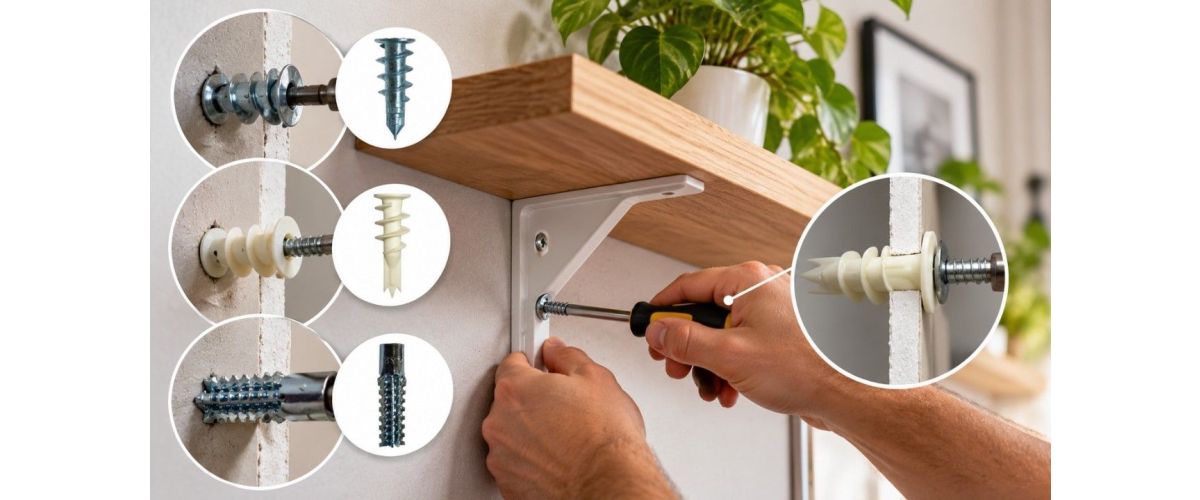
Step 2: Press the point into the board and screw the fixing in with a Pozi No2 hand screwdriver until the head sits flush.
Step 3: Hold the item in place and insert the screw through it into the fixing.
Step 4: Tighten by hand until secure. Do not overtighten.
No pilot hole is needed. If you use a power screwdriver, set it to low speed and torque, because driving too fast can strip the thread in the board.
Heavier items: fix into a stud
For TVs, wall cupboards, basins and anything heavier than the board fixings allow, fix into the timber or metal studs behind the board. The stud carries the weight, not the plasterboard.
- Use a stud detector to find the studs, and mark them before you position the item.
- In British Gypsum partition systems, studs are set at up to 600mm centres, so most wall items can reach at least one stud.
- Where a heavy item is planned before boarding, add timber noggins between the studs at the fixing height.
- Where no stud lines up, use a heavy-duty cavity fixing, such as a spring toggle, rated by its manufacturer for the load.
Is your wall really plasterboard?
Many walls are plasterboard on a solid wall behind it, known as dry lining or dot and dab. Tap the wall and drill a small test hole. If the drill meets hard material and the dust changes colour after the board, the wall behind is solid.
| What is behind the board | What to use |
|---|---|
| A cavity, in a stud partition | Self-drill plasterboard fixings for light items, or fix into a stud |
| Concrete, brick or dense block | Nylon wall plugs, sitting in the masonry, not the board |
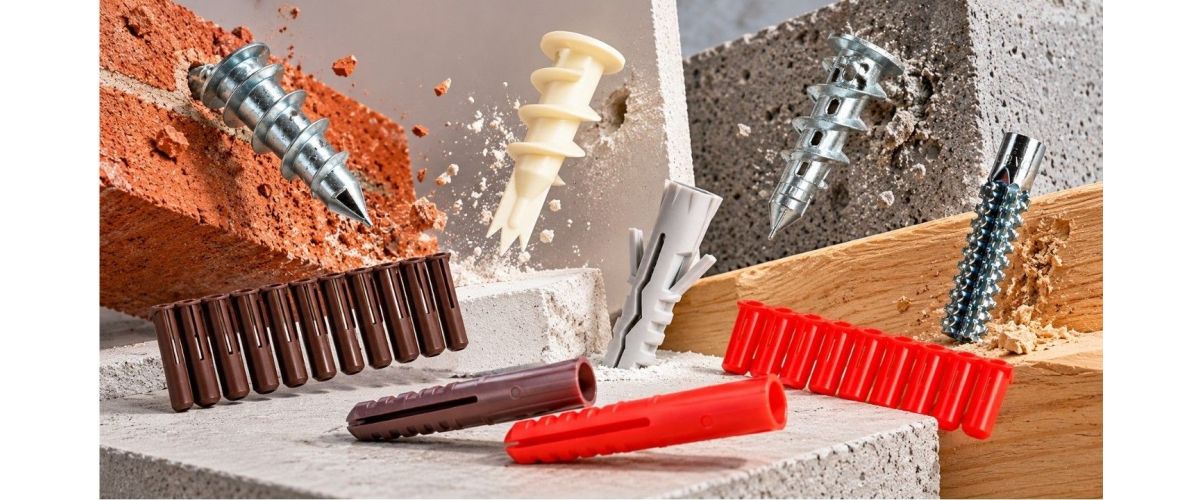
| Aerated concrete block | Metal expansion wall plugs, drilled without hammer action |
When fixing through the board into a solid wall, the plug must sit fully in the masonry, so choose a plug and screw long enough to pass through the board. Our guide Which Wall Plug Do I Need? matches plugs to each wall type, with drill sizes and loads.
Common mistakes
- Working to the shear figure for a shelf or bracket that sticks out from the wall, where the top fixings take pull-out load.
- Hanging TVs or wall cupboards from plasterboard fixings alone.
- Using plasterboard fixings on ceilings or for overhead items.
- Driving the fixing at speed with a power screwdriver, which strips the thread in the board.
- Overtightening the screw, which spins the fixing and loosens its grip.
- Using plasterboard fixings in solid masonry behind dry lining, where a wall plug is needed.
Frequently asked questions
Q: How much weight can plasterboard hold?
A: It depends on the fixing and the direction of the load. A self-drill plasterboard fixing has a recommended load of 0.18 kN, about 18kg, hanging down the wall, and 0.06 kN, about 6kg, pulling straight out. For heavier items, fix into a stud.
Q: What is the difference between tensile and shear load?
A: Tensile load pulls a fixing straight out of the wall. Shear load is weight pressing down along the face of the wall. Plasterboard fixings hold much more in shear than in tension.
Q: Can I hang a TV on plasterboard?
A: Not from plasterboard fixings alone. Fix the bracket into the studs behind the board, or into the solid wall if the board is dry lining on masonry.
Q: Can I use plasterboard fixings on a ceiling?
A: Self-drill plasterboard fixings are not recommended for overhead use. On a ceiling the whole load pulls out of the board. Fix into a joist or use a fixing rated for overhead loads.
Q: How many plasterboard fixings do I need?
A: Divide the weight of the item by the recommended load per fixing: about 18kg for weight hanging flat on the wall, or about 6kg where the item sticks out or pulls outwards. Use several fixings to share the load on wider items.
Q: Do I need a pilot hole for self-drill plasterboard fixings?
A: No. The self-drilling point cuts its own way into the board, so the fixing screws straight in with a Pozi No2 screwdriver.
Q: Are zinc alloy or nylon plasterboard fixings stronger?
A: Both have the same recommended loads. The nylon fixing suits items up to 10mm thick, and the zinc alloy fixings take items up to 15mm or 30mm thick, depending on the screw.
Shop plasterboard and wall fixings

Self-Drill Plasterboard Fixings - With Screws
- No pilot hole, Pozi No2
- Zinc alloy and nylon
- 0.18 kN shear, 0.06 kN tensile
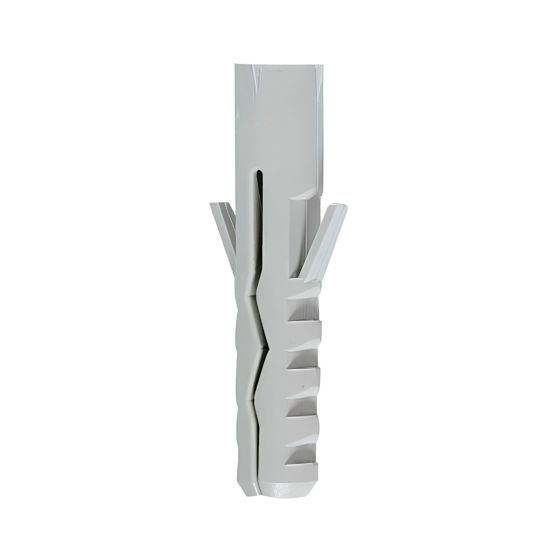
Nylon Wall Plugs - Rimless for Concrete and Masonry
- For solid walls behind the board
- 6mm to 14mm
- Published loads for 4 wall types
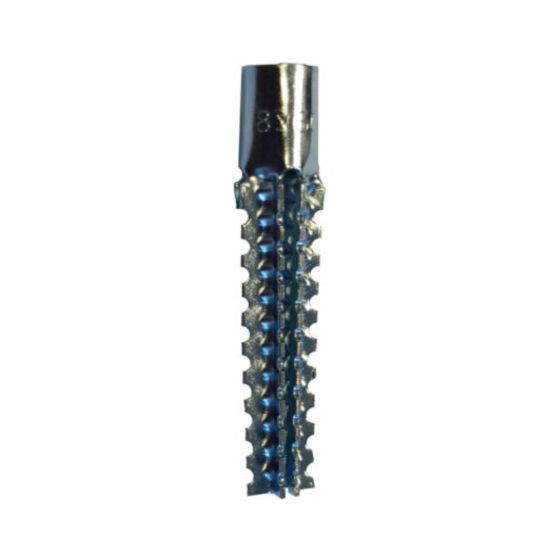
Metal Expansion Wall Plugs - 4 Segment
- For aerated block behind the board
- 6mm and 8mm
- All-metal, 4 toothed segments
Order by 7pm for next-day delivery on stocked lines, or call our team on 020 8311 1144 about trade accounts and bulk orders.