Metal expansion wall plug with 4 segment expanding body | CMT Group UK

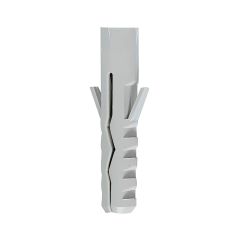
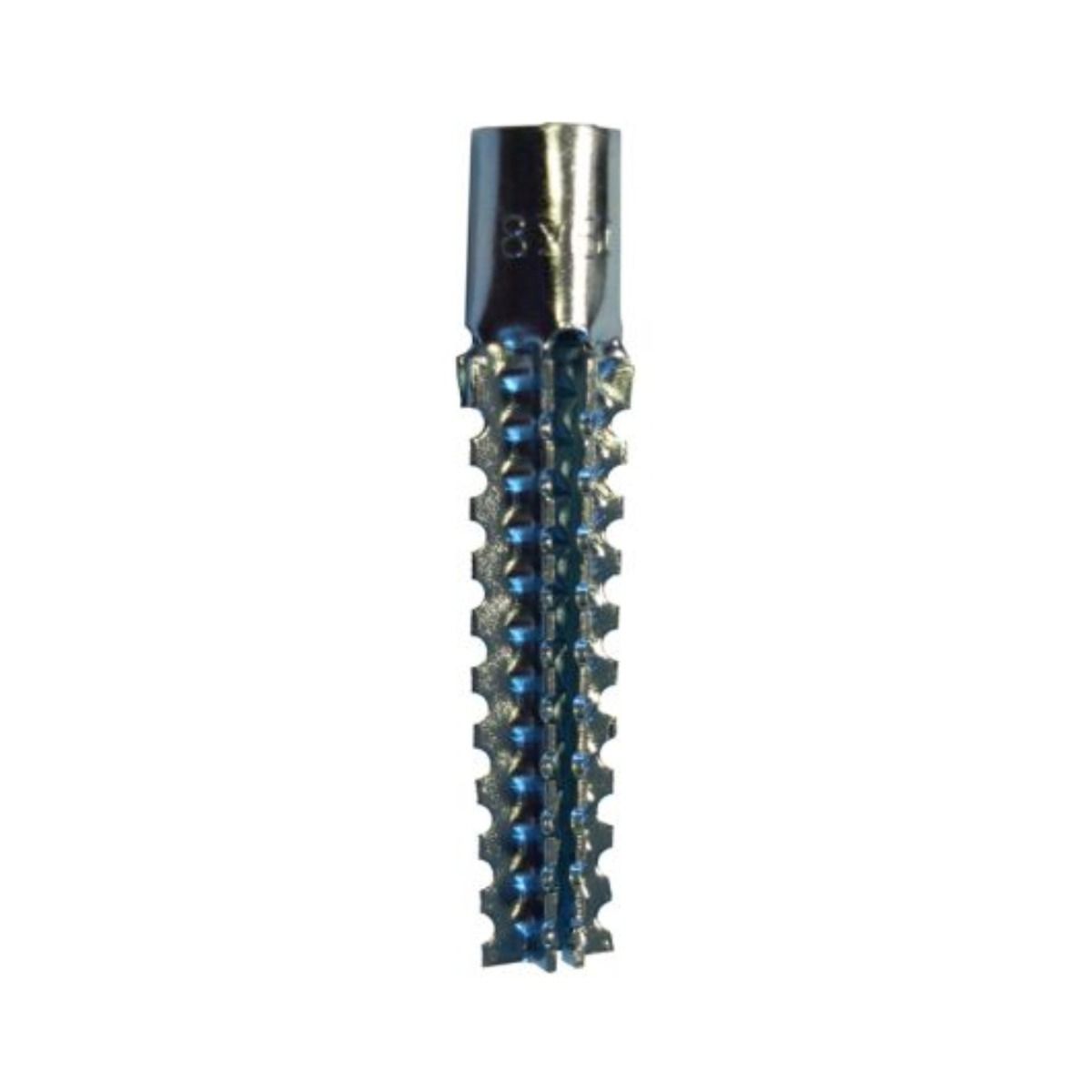
Metal expansion wall plugs with a 4 segment design, for light duty wood screw fixings into concrete, brick and aerated concrete block.

  • 4 segment expansion grips soft and hard materials
  • Recommended loads for concrete, brick and aerated block
  • All-metal plug where non-plastic fixings are needed
  • Takes standard wood screws
  • Screw length, edge distance and spacing given for each size
  • Available in multiple sizes (The first number is the plug diameter, which is also the drill size. The second number is the plug length.)

Products with the “To Order” icon may not always be available from stock for same-day or next-day delivery. Please contact our team, who will be happy to confirm exact delivery dates. 

Metal Expansion Wall Plugs - 4 Segment

Code
MP0
In stock

Metal expansion wall plugs with a 4 segment design, for light duty wood screw fixings into concrete, brick and aerated concrete block.

  • 4 segment expansion grips soft and hard materials
  • Recommended loads for concrete, brick and aerated block
  • All-metal plug where non-plastic fixings are needed
  • Takes standard wood screws
  • Screw length, edge distance and spacing given for each size
  • Available in multiple sizes (The first number is the plug diameter, which is also the drill size. The second number is the plug length.)

Products with the “To Order” icon may not always be available from stock for same-day or next-day delivery. Please contact our team, who will be happy to confirm exact delivery dates. 

Grouped product items
6mm x 32mm - Pack of 100 (TO ORDER) Code MP06032
£4.54 £3.78
Bulk Discounts
8mm x 38mm - Pack of 100 (TO ORDER) Code MP08038
£8.30 £6.92
Bulk Discounts

Metal Expansion Wall Plugs 

Metal expansion wall plugs are 4 segment plugs that open out as a wood screw is driven in, for light duty fixings into concrete, brick and aerated concrete block. Electricians, plumbers and maintenance teams use them where a metal fixing is needed or the wall is too soft for a plastic plug. Each size has published recommended loads for all three base materials.

How a 4 Segment Metal Plug Grips Where Plastic Plugs Slip

In aerated block, a plastic plug often spins or pulls out because the material is too soft for it to bite. On site, that means loose clips and brackets, oversized holes and repeat call-outs. The four metal segments spread outwards as the screw goes in, so the plug locks into the hole wall in soft and hard materials alike.

Key Features

  • 4 segment expansion: four metal segments spread evenly as the screw is driven, gripping the hole wall on all sides.

  • Aerated block, brick and concrete: one plug covers all three base materials, with a recommended load published for each.

  • All-metal construction: a metal plug where a non-plastic fixing is required, for example as part of a cable support.

  • Wood screws: works with standard wood screws, so no special screw is needed.

Who is this for

Trades and roles

  • Electricians

  • Plumbers and heating engineers

  • Fire alarm and security installers

  • Carpenters and joiners

  • Maintenance teams

Industries

  • Construction

  • Housebuilding

  • Building services

  • Facilities management

  • Social housing maintenance

 Specifications

Specification Detail
Product name Metal Expansion Wall Plugs - 4 Segment
Product code MP0
Product type Metal expansion plug
Expansion 4 segment, expanded by the screw
Screw type Wood screws
Duty Light duty
Base materials Concrete, solid brick, aerated concrete block
Load test conditions Concrete C20/25, brick 20 N/mm2, aerated block 3.5 N/mm2

Size Selection

Product code Size Drill size Hole depth Min base thickness Min spacing Min edge distance Fixture clearance hole Screw diameter Screw length Rec. load, concrete Rec. load, solid brick Rec. load, aerated block
MP06032 6mm x 32mm 6mm 40mm 60mm 110mm 55mm 6mm 4.5mm to 5.0mm Fixture thickness + 37mm 0.22 kN 0.17 kN 0.07 kN
MP08038 8mm x 38mm 8mm 50mm 70mm 120mm 60mm 8mm 5.0mm to 6.0mm Fixture thickness + 43mm 0.40 kN 0.32 kN 0.12 kN

Size key: in 6mm x 32mm, the first number is the plug diameter, which is also the drill size. The second number is the plug length.

Other Sizes in the Range, Contact Our Team to Order

Product code Size Drill size Hole depth Min base thickness Min spacing Min edge distance Fixture clearance hole Screw diameter Screw length Rec. load, concrete Rec. load, solid brick Rec. load, aerated block
MP05030 5mm x 30mm 5mm 40mm 60mm 90mm 45mm 5mm 4.5mm Fixture thickness + 35mm 0.20 kN 0.16 kN 0.06 kN
MP08060 8mm x 60mm 8mm 70mm 120mm 180mm 90mm 8mm 5.0mm to 6.0mm Fixture thickness + 65mm 0.47 kN 0.37 kN 0.15 kN

Compatibility

Base material, use or condition Suitability
Concrete Suitable
Solid brick Suitable, loads are guidance only
Aerated concrete block Suitable, loads are guidance only, drill without hammer action
Wood screws Suitable, use the screw diameter and length for the size
Dry internal conditions Suitable
External or damp locations Not recommended, no corrosion rating published, use a stainless steel fixing
Hollow brick and block Not recommended, not a listed base material
Plasterboard Not recommended, use a cavity fixing
Heavy or safety-critical loads Not recommended, use an approved anchor with design data


Typical Users and Projects

Electrical, mechanical and maintenance trades use metal expansion plugs on new build housing, refurbishment and commercial fit-out. Many fixings go into aerated block inner leaves and partitions, as well as brick and concrete. They are chosen where a plastic plug will not hold in soft block, or where the job calls for a metal fixing.

Typical applications

  • Fixing cable clips and metal cable supports where the installation calls for non-plastic fixings.

  • Fixing fire alarm devices, call points and sounders to aerated block and brick walls.

  • Fixing pipe clips and small brackets for plumbing and heating runs along aerated block walls.

  • Fixing consumer units, enclosures and back boxes to concrete and masonry.

  • Refixing loose fittings in aircrete walls where plastic plugs have spun out.

How to use

Step 1: Check the base material is at least the minimum thickness, and keep to the edge distance and spacing in the Size Selection table.

Step 2: Drill a hole the same diameter as the plug, to at least the hole depth for that size.

Step 3: Clear the dust from the hole.

Step 4: Push or tap the plug into the hole until it sits flush with the surface.

Step 5: Choose a screw length of fixture thickness plus the figure in the table, for example plus 37mm for the 6mm x 32mm plug.

Step 6: Hold the fixture in place and drive the wood screw into the plug until tight. Do not overtighten.

Common mistakes

  • Using a screw that is too short, so the segments never fully expand.

  • Fixing too close to an edge or to another plug, which can crack brick and block.

  • Drilling aerated block with hammer action, which enlarges the hole and weakens the grip.

  • Treating the brick and block loads as exact, when they are guidance only.

  • Using metal expansion plugs for heavy or safety-critical loads.

Safety

Wear eye protection when drilling. Drilling concrete and masonry releases respirable crystalline silica dust, so use on-tool extraction and suitable RPE in line with HSE guidance. Keep within the recommended loads, and treat brick and block figures as guidance only. For heavy or safety-critical fixings, use an approved anchor with published design data.

Maintenance

Store plugs dry in their pack until use. Check fixtures during planned maintenance and refix any that have worked loose with a new plug.

Frequently Asked Questions

Q: What load can a metal expansion wall plug hold?
A: The 6mm x 32mm plug has a recommended load of 0.22 kN in C20/25 concrete, 0.17 kN in solid brick and 0.07 kN in aerated block. The 8mm x 38mm plug has 0.40 kN, 0.32 kN and 0.12 kN. That is roughly 22kg to 40kg in concrete. Brick and block figures are guidance only, because these materials vary.

Q: What does 6mm x 32mm mean on a metal plug?
A: The 6mm is the plug diameter, which is also the drill size. The 32mm is the length of the plug. Drill to at least the hole depth for the size, which is deeper than the plug, so it sits flush.

Q: How long should the screw be?
A: Add the fixture thickness to the figure for the plug size. For the 6mm x 32mm plug, use fixture thickness plus 37mm. For the 8mm x 38mm plug, use fixture thickness plus 43mm. A shorter screw will not fully expand the segments.

Q: What are these plugs not suitable for?
A: They are not suitable for plasterboard, hollow walls, heavy items or safety-critical loads. They should not be used in base material thinner than 60mm for 6mm plugs or 70mm for 8mm plugs.

Q: Why choose a metal expansion plug over a plastic plug?
A: Metal segments bite into soft aerated block where a plastic plug can spin. A metal plug is also used where a non-plastic fixing is required. For light fixings in dense masonry, a plastic or nylon plug is usually enough.

Q: Can I use metal plugs to support cables under BS 7671?
A: BS 7671 requires wiring systems to be supported so they will not collapse prematurely in a fire, so plastic fixings cannot be the only means of support. Metal plugs with steel screws are commonly used for cable clips and supports for this reason. No fire test data is published for this plug, so confirm the support method against the installation design.

Q: How close to an edge can I fix?
A: Keep at least 55mm from an edge and 110mm between plugs for the 6mm x 32mm size. For the 8mm x 38mm size, keep 60mm from an edge and 120mm between plugs.

Q: Do metal expansion plugs rust?
A: No corrosion rating or finish is published for these plugs. Use them in dry internal conditions, and choose a stainless steel fixing for external or damp locations.

CMT Equipment Ltd