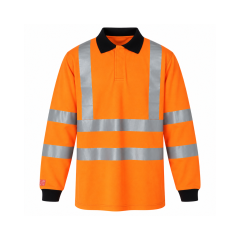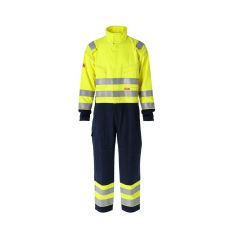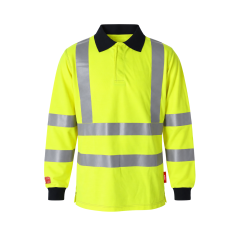
How to choose arc flash clothing in the UK: what ELIM, ATPV and APC ratings mean, which standards to check on the label, and how to layer FR clothing safely, with the MAXFR range compared.
Loading...
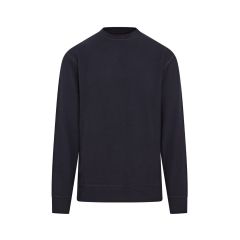
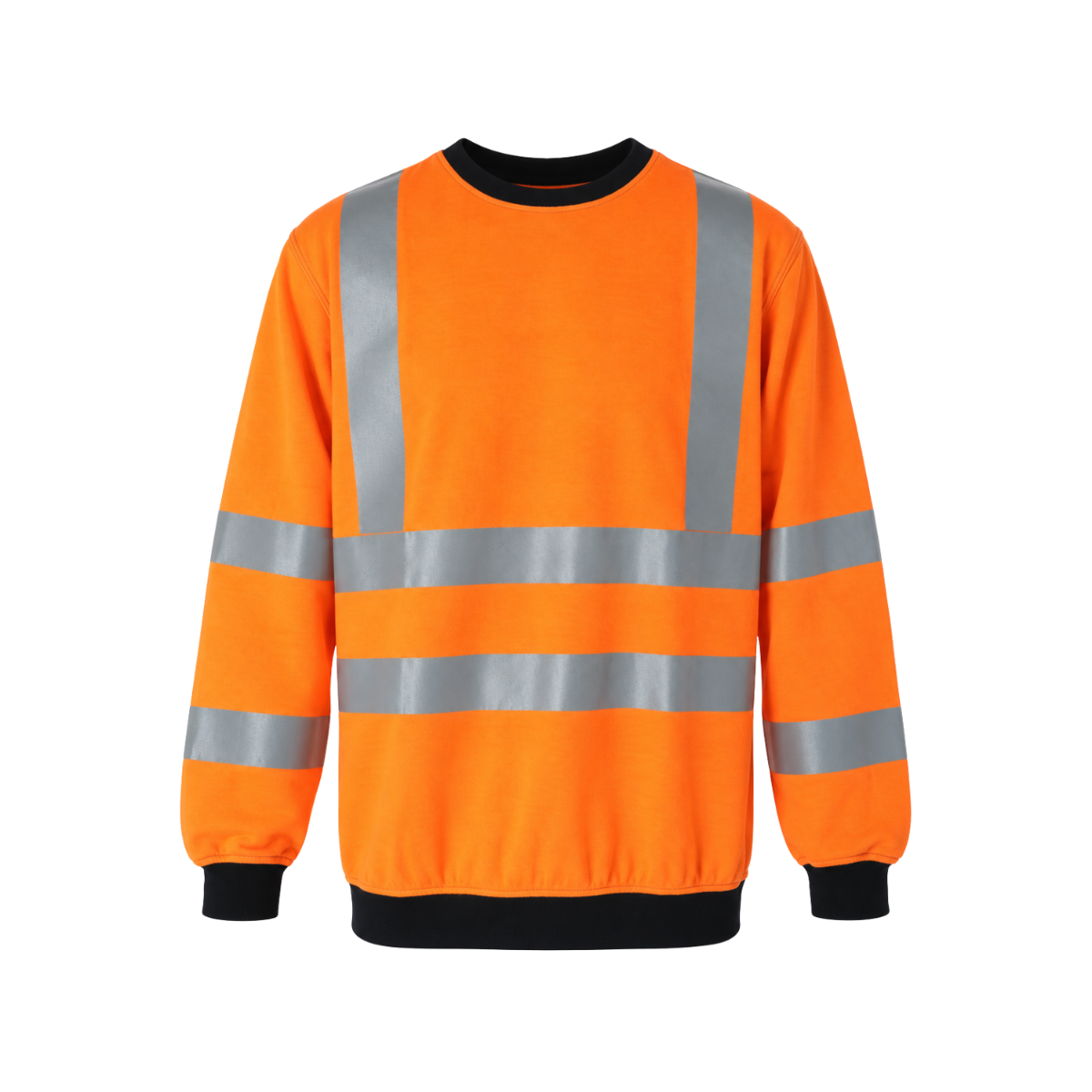
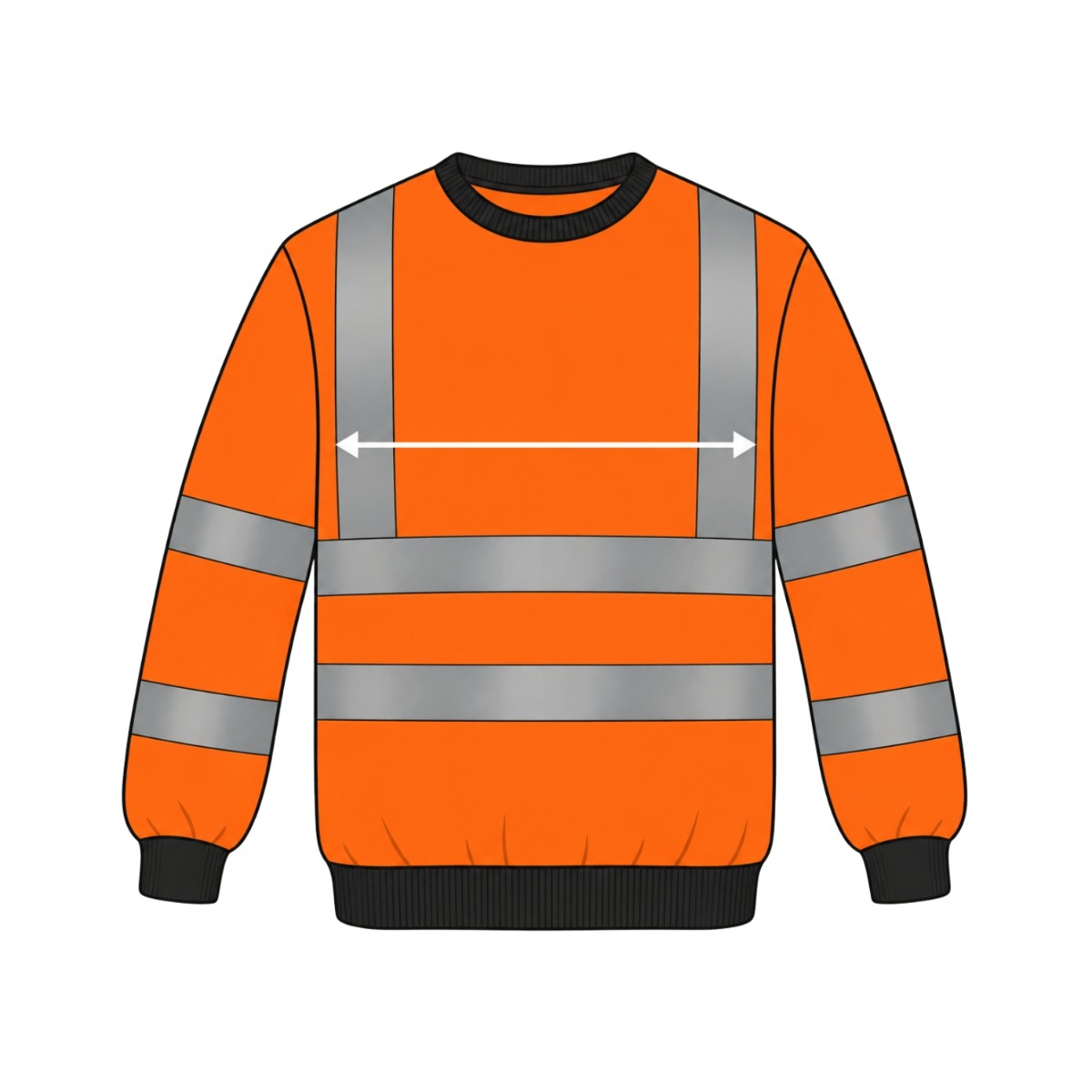
Hi-vis orange flame retardant arc flash sweatshirt for rail, electrical and utilities workers who need flame, static and electric arc protection in one top.
Hi-vis orange flame retardant arc flash sweatshirt for rail, electrical and utilities workers who need flame, static and electric arc protection in one top.
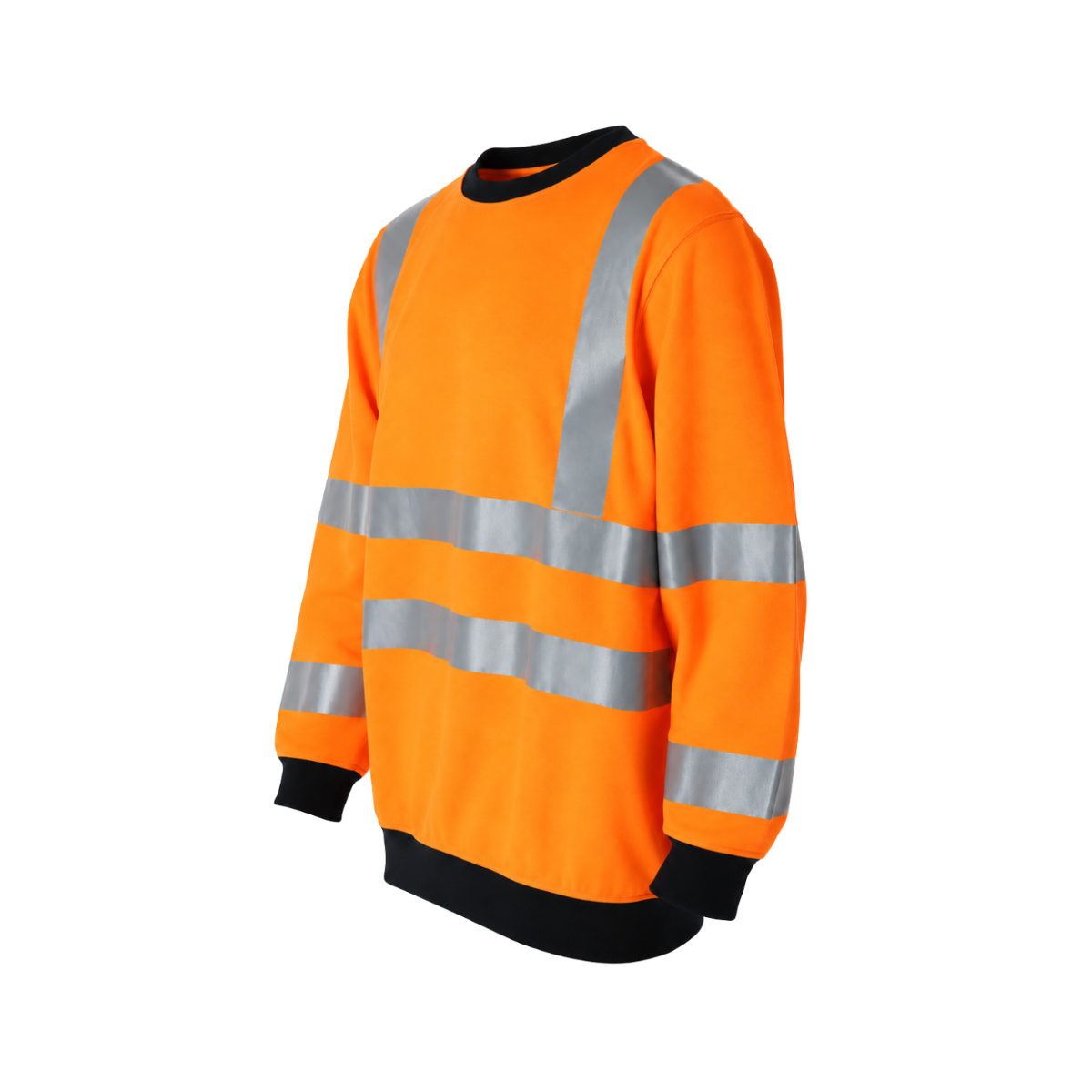
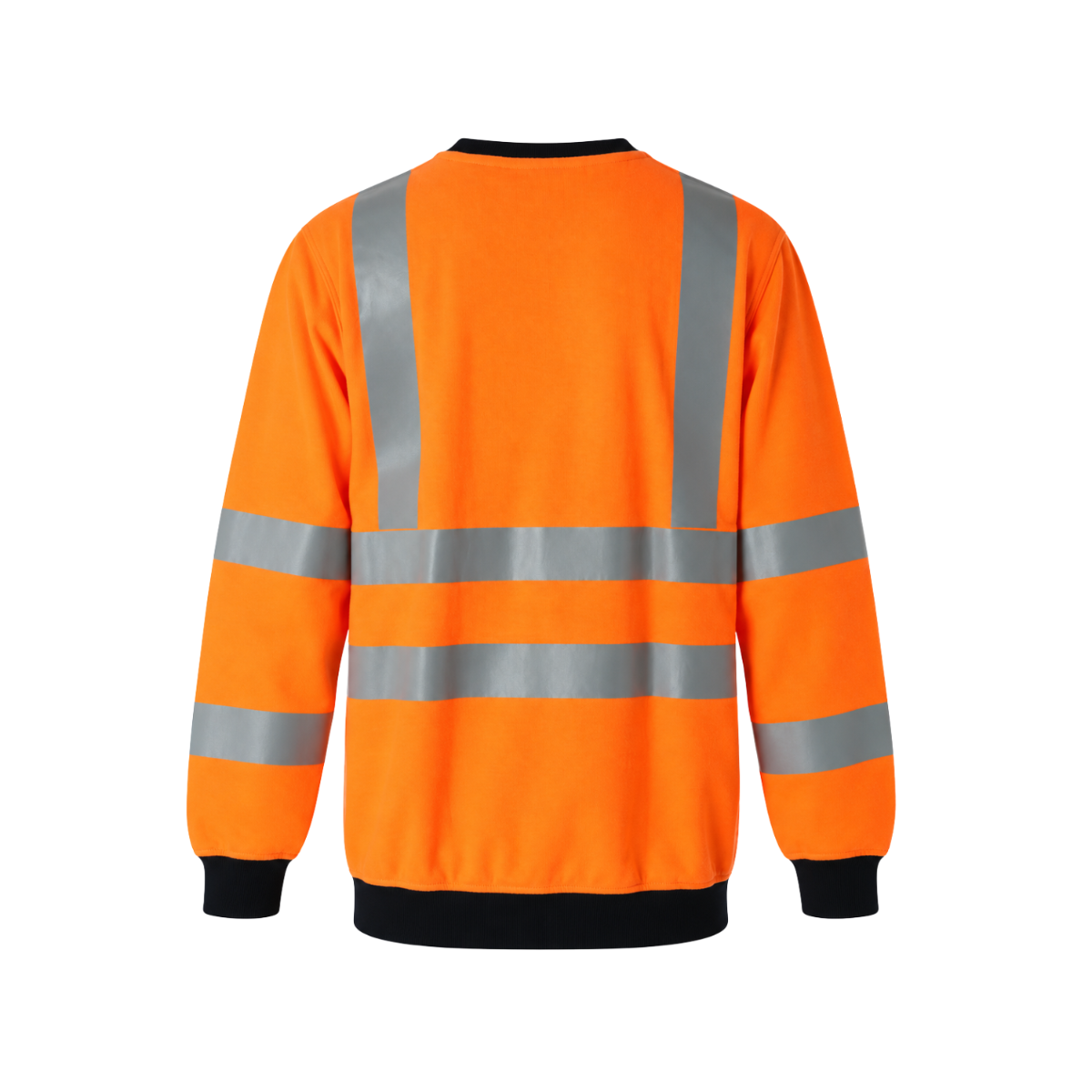
Hi-vis orange flame retardant arc flash sweatshirts give rail and electrical workers flame, heat, static and arc protection in a single warm top. This round-neck sweatshirt pairs certified FR, anti-static and arc-rated fabric with rail orange colour and Class 3 visibility. It is worn as the outer layer over FR or natural-fibre base layers, or under an FR jacket in bad weather.
Many standard hi-vis sweatshirts are made from polyester, which can melt and stick to the skin in a flash fire or electric arc. On site, that turns the top worn for visibility into a burn hazard over the FR clothing beneath it. This sweatshirt is certified for flame, heat, static and arc as well as visibility, so the outer layer protects instead of adding risk.
Rail orange to RIS-3279-TOM: meets the rail industry colour and visibility standard for work on or near the line.
Class 3 high visibility: the highest class under EN ISO 20471, for trackside and roadside work in low light.
Arc rated with APC 1: ELIM 6.4 cal/cm2 and ATPV 6.8 cal/cm2 in open arc testing, for assessed arc risks.
Flame and heat resistant fabric: limits flame spread and resists convective, radiant and contact heat.
Anti-static to EN 1149-5: dissipates static charge when the wearer is earthed, reducing spark risk.
Solid heat-seal reflective tape: bonded flat to the fabric to reflect headlights and torchlight back to the source.
Ribbed cuffs with no thumb loops: hold the sleeves at the wrist without loops that can catch on equipment.
Trades and roles
Track maintenance operatives
Signalling and telecoms technicians
Overhead line engineers
Electricians and electrical engineers
Cable jointers
Substation and switching engineers
Maintenance engineers
Industries
Rail
Electricity transmission and distribution
Utilities
Power generation
Infrastructure maintenance
| Specification | Detail |
|---|---|
| Product name | MAXFR Hi-Vis Orange Flame Retardant Arc Flash Sweatshirt - Rail Spec |
| Product code | CL010005 |
| Garment type | Round-neck sweatshirt, no zip |
| Protection | Flame retardant, anti-static, electric arc, high visibility |
| Rail standard | RIS-3279-TOM Issue 2:2019 |
| High visibility | EN ISO 20471:2013 + A1:2016, Class 3 |
| Electric arc standard | EN 61482-2:2020 |
| Open arc test (EN 61482-1-1) | ELIM 6.4 cal/cm2, ATPV 6.8 cal/cm2 |
| Box test (EN 61482-1-2) | APC 1 (4 kA) |
| Heat and flame | EN ISO 11612:2015, A1+A2, B1, C1, F1 |
| Electrostatic | EN 1149-5:2018 |
| General requirements | EN ISO 13688:2013 + A1:2021 |
| Certification | AITEX EU type-examination 26/10463/00/0161/B, valid 23/09/2026 to 25/04/2030 |
| Reflective tape | Solid heat-seal |
| Cuffs | Ribbed, no thumb loops |
| Brand | MAXFR |
| Colour | Hi-vis orange |
| Product code | Size | Size label | To fit chest |
|---|---|---|---|
| CL010005-S | S | Small | 88 to 94 cm (35 to 37 in) |
| CL010005-M | M | Medium | 94 to 102 cm (37 to 40 in) |
| CL010005-L | L | Large | 102 to 110 cm (40 to 43 in) |
| CL010005-XL | XL | Extra Large | 110 to 115 cm (43 to 45 in) |
| CL010005-2XL | 2XL | 2 Extra Large | 115 to 124 cm (45 to 49 in) |
| CL010005-3XL | 3XL | 3 Extra Large | 124 to 131 cm (49 to 52 in) |
| CL010005-4XL | Size 4XL | 4 Extra Large | 131 to 138 cm (52 to 54 in) |
| CL010005-5XL | Size 5XL | 5 Extra Large | 138 to 145 cm (54 to 57 in) |
| Base material, tool or condition | Suitability |
|---|---|
| Work on or near the railway | Suitable, |
| Assessed arc risk up to 6.4 cal/cm2 and APC 1 | Suitable as part of a full arc-rated outfit |
| Arc risk above 6.4 cal/cm2 or requiring APC 2 | Not recommended, use clothing rated for the assessed incident energy |
| Night work and low light | Suitable, Class 3 with retroreflective tape |
| Areas where static build-up must be controlled | Suitable when worn fastened over other layers with anti-static footwear |
| Polyester or nylon base layers | Not recommended, they can melt, use FR or natural-fibre layers |
| Non-FR jacket or fleece worn over the top | Not recommended, use an FR outer layer |
| Welding and molten metal splash | Not recommended, no EN ISO 11611 rating, use welding-rated clothing |
| Chemical splash | Not recommended, no EN 13034 rating |
| Firefighting | Not recommended, this is industrial heat and flame clothing |
Rail, power and utilities teams wear this sweatshirt on track renewals, signalling work, substations and network maintenance. It suits outdoor work in cold weather and low light, where one layer must cover visibility, flame and arc risks. Wearers are usually trained operatives working under an arc flash risk assessment and site PPE rules.
Working on or near the line during track maintenance and renewals.
Maintaining signalling and telecoms equipment in lineside cabinets.
Switching and inspection work in substations and switch rooms where an arc risk has been assessed.
Cable jointing and network maintenance for electricity distribution companies.
Overhead line equipment work during night possessions.
Maintenance work on industrial sites where static build-up must be controlled.
Step 1: Check that the incident energy in your arc flash risk assessment is within the garment’s ELIM of 6.4 cal/cm2.
Step 2: Put on an FR or natural-fibre base layer, not polyester or nylon.
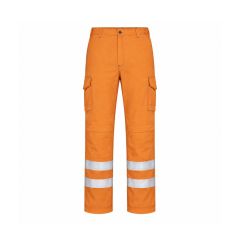
Step 3: Wear the sweatshirt with arc-rated FR trousers so the lower body is also covered.
Step 4: Pull the cuffs down to the wrists and keep the sweatshirt covering any other layers.
Step 5: Add arc-rated gloves, face protection and anti-static footwear as your risk assessment requires.
Step 6: Check the garment before each shift for holes, contamination or damaged reflective tape.
Wearing a non-FR fleece or jacket over the sweatshirt.
Wearing a polyester or nylon base layer underneath.
Rolling up the sleeves during arc risk work.
Wearing the sweatshirt when soiled with oil or grease, which can reduce protection.
Adding non-FR badges, patches or prints.
This sweatshirt is one part of arc flash protection, not a substitute for making equipment dead. Under the Electricity at Work Regulations 1989, live work should be avoided wherever reasonably practicable, and PPE is the last line of defence. Base the choice of garment on a documented arc flash risk assessment. On the railway, follow the PPE standards of the principal contractor.
Wash at up to 40 degrees C, inside out and separately from ordinary clothing, using detergent rather than soap-based products. Rinse thoroughly, then tumble dry on low or dry away from direct sunlight. Iron at up to 110 degrees C, avoiding printed areas. Do not bleach, boil or dry clean. Store clean and dry, and always follow the care label on the garment.
Q: What arc flash protection does this sweatshirt give?
A: In open arc testing it has an ELIM of 6.4 cal/cm2 and an ATPV of 6.8 cal/cm2. ELIM is the incident energy with no predicted second-degree burn, while ATPV is the point with a 50% chance of one. In the box test it reaches Arc Protection Class 1 (APC 1) at 4 kA. Plan with the ELIM figure when checking it against your arc risk assessment.
Q: What does 2XL mean on a sweatshirt size?
A: 2XL stands for 2 Extra Large, the size above XL. The number counts the sizes above XL, so 5XL is 5 Extra Large. S, M and L stand for Small, Medium and Large. Check the chest measurement for each size in the Size Selection table before ordering.
Q: What do A1+A2, B1, C1 and F1 mean under EN ISO 11612?
A: A1 and A2 mean the fabric limits flame spread when a flame touches its surface (A1) and its edge (A2). B1 is protection against convective heat, such as hot gases, at level 1. C1 is protection against radiant heat at level 1. F1 is protection against contact heat at level 1, the first performance level for each heat type.
Q: What is this sweatshirt not suitable for?
A: It is not designed for welding or molten metal splash, as it carries no EN ISO 11611 rating. It is not firefighting clothing. It is not suitable where the assessed arc incident energy is above 6.4 cal/cm2 or calls for APC 2. It has no rated protection against chemical splash.
Q: Why choose an FR arc sweatshirt over a standard hi-vis sweatshirt?
A: Standard hi-vis sweatshirts are often polyester, which can melt onto the skin in a flash fire or arc. This sweatshirt is certified for flame, heat, static and arc as well as Class 3 visibility. The outer layer adds protection rather than risk, and one top replaces a separate hi-vis and FR layer.
Q: Can this sweatshirt be worn for work on the railway?
A: The garment meets RIS-3279-TOM Issue 2:2019, the rail industry standard for high-visibility clothing worn on or near the line. It is also certified to EN ISO 20471 Class 3. Always check the PPE rules of the principal contractor or site before work starts.
Q: What should I wear with it for arc flash work?
A: Wear it with arc-rated FR trousers, gloves and face protection that match your arc risk assessment. Avoid polyester or nylon base layers, which can melt if the outer layer is breached. For the anti-static protection to work, keep the sweatshirt on and covering other layers in hazardous areas, and wear anti-static footwear. Never wear a non-FR jacket or fleece over the top.
Q: When should the sweatshirt be replaced?
A: Replace it if the fabric has holes, burns or contamination that will not wash out. Replace it too if the reflective tape is cracked, peeling or no longer bright in torchlight. Hi-vis orange fades with wear, and a faded garment may no longer meet Class 3 or the rail colour requirement.