The complete guide to NLG dropped object prevention at CMT Group UK. Every product in the range explained and compared, from tether rings to MEWP bags, organised by the three-step tethering system and matched to your trade. Includes comparison tables, ANSI/ISEA 121-2023 compliance guidance, and a trade-by-trade buying guide for scaffolders, electricians, rope access technicians, MEWP operators, telecoms engineers, and wind energy technicians.
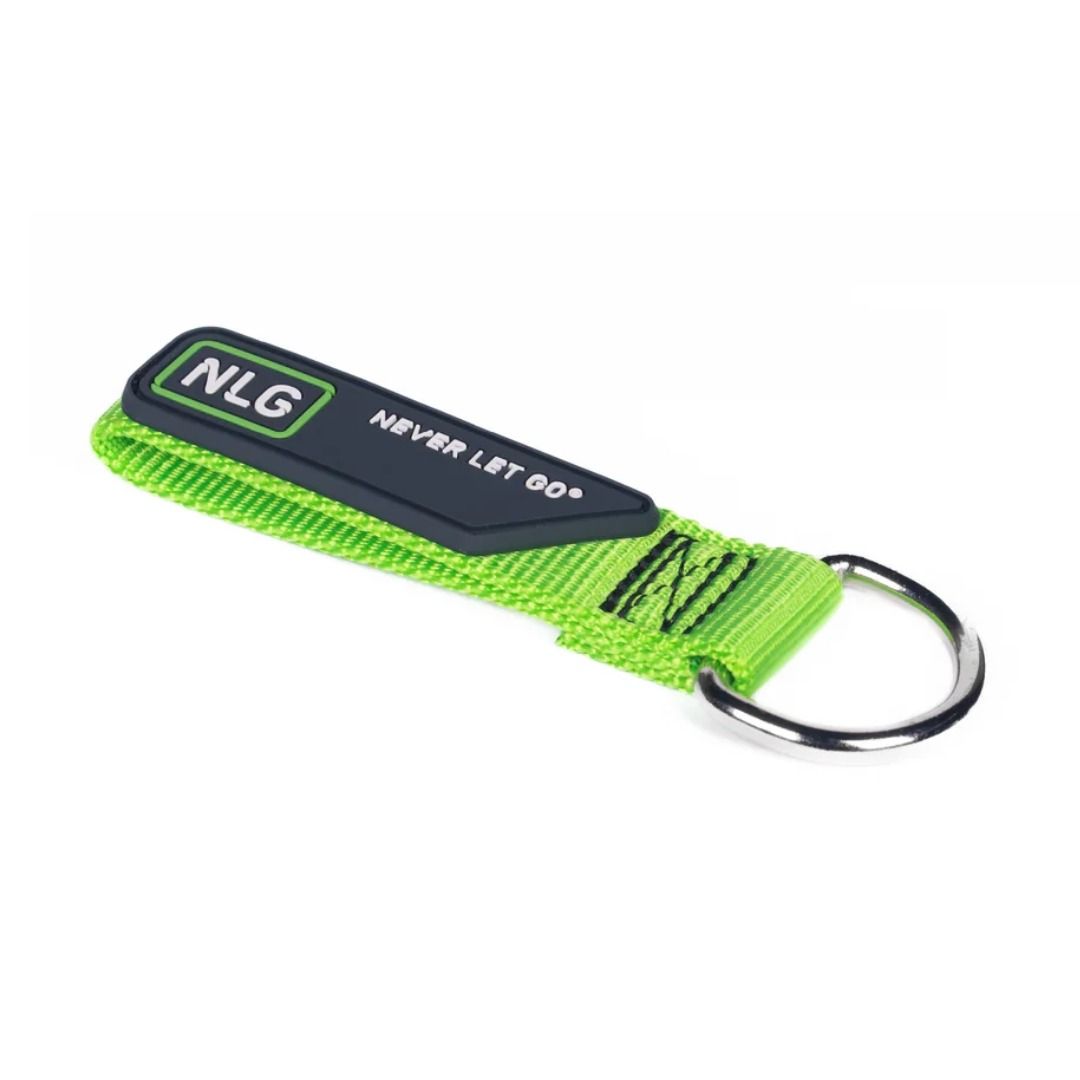
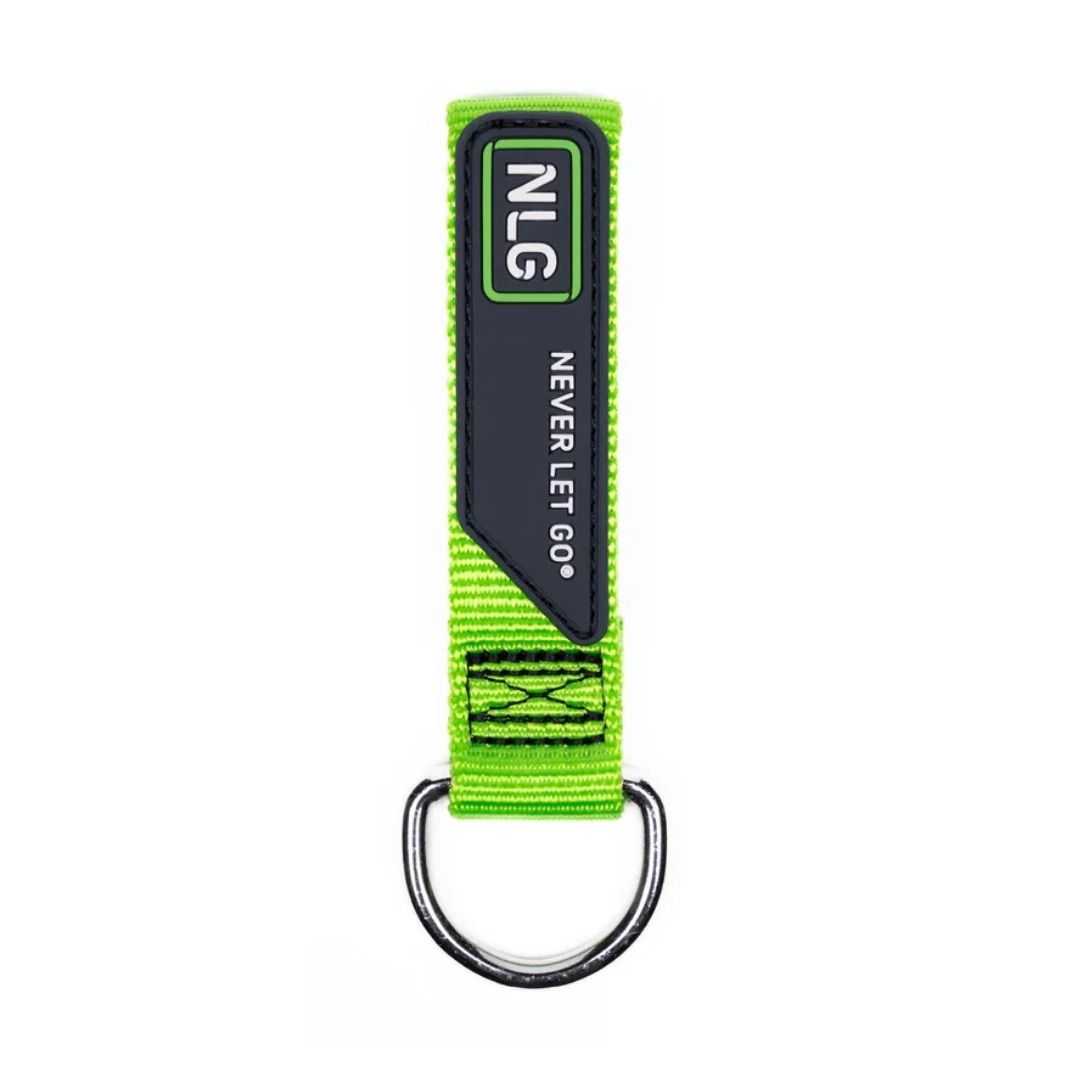
Belt loop anchor that slides onto any standard work belt and creates a certified 3kg-rated D-ring tether point without modifying the belt or requiring a harness.
- Welded D-ring, dynamically load tested to 3kg
- Fits standard 50mm tool belts and harnesses
- ANSI/ISEA 121-2023, NS 9611:2022+AC, CE and UKCA
- Contrast stitching for pre-use visual inspection
- Multiple can be fitted to one belt simultaneously
- 130mm x 25mm, 25g
- unique serial number
Belt loop anchor that slides onto any standard work belt and creates a certified 3kg-rated D-ring tether point without modifying the belt or requiring a harness.
- Welded D-ring, dynamically load tested to 3kg
- Fits standard 50mm tool belts and harnesses
- ANSI/ISEA 121-2023, NS 9611:2022+AC, CE and UKCA
- Contrast stitching for pre-use visual inspection
- Multiple can be fitted to one belt simultaneously
- 130mm x 25mm, 25g
- unique serial number
- Buy 10 for £10.58 £8.82 each and save 7%
- Buy 20 for £9.58 £7.98 each and save 16%
| BULK DISCOUNT | 10 | 20 |
|---|---|---|
| Price | £8.82 £10.58 | £7.98 £9.58 |
Order 1x to earn 9 FASTPoints
Order to earn 9 FASTPoints
Log in to access trade discountsNLG Belt Loop Anchor
Belt loop anchors convert an unrated tool belt into a formally certified tether point in seconds, without belt modification, without additional hardware, and without a harness. The NLG Belt Loop Anchor slides onto any standard 50mm tool belt webbing, positions anywhere along its length, and provides a welded D-ring rated to 3kg for direct lanyard attachment. Certified to ANSI/ISEA 121-2023, NS 9611:2022+AC, CE and UKCA marked, and dynamically load tested at a 2:1 safety factor, it gives operatives working from a tool belt alone the same certified anchor infrastructure available to harness wearers. Multiple anchors can be fitted to one belt simultaneously, giving each tool its own rated tether point.
How a welded D-ring creates a genuinely certified anchor on an unrated belt
A standard tool belt has no rated anchor points. Hanging a lanyard from a belt loop, a utility clip, or a trouser waistband creates a tether with no load rating and no certification, and on a site with a formal dropped object management plan, an uncertified anchor invalidates the entire tethering system regardless of how good the lanyard is. The belt loop anchor slides onto the belt webbing and provides a welded D-ring rated to 3kg and certified to three independent standards, turning any standard tool belt into a formally documented tether point in about ten seconds. A welded D-ring cannot open under dynamic load in the way a pressed or split ring can, which is why this construction matters for a safety-critical application.
Key Features
-
Welded D-ring: Fully closed ring welded at the joint, rated to 3kg dynamic load. Cannot open or deform under the forces generated by a dropped tool in the way a pressed or split ring can. The primary load-bearing component of the anchor.
-
Slides onto standard tool belts: 70mm opening designed for standard 50mm / 2" webbing. Positions anywhere along the belt length. No cutting, drilling, or belt modification required.
-
Multiple per belt: Multiple belt loop anchors can be fitted to the same belt simultaneously, providing a separate rated anchor point for each tethered tool without sharing load between them.
-
Triple certification: ANSI/ISEA 121-2023, NS 9611:2022+AC, CE and UKCA. Dynamically load tested at a 2:1 safety factor by an independent third-party laboratory.
-
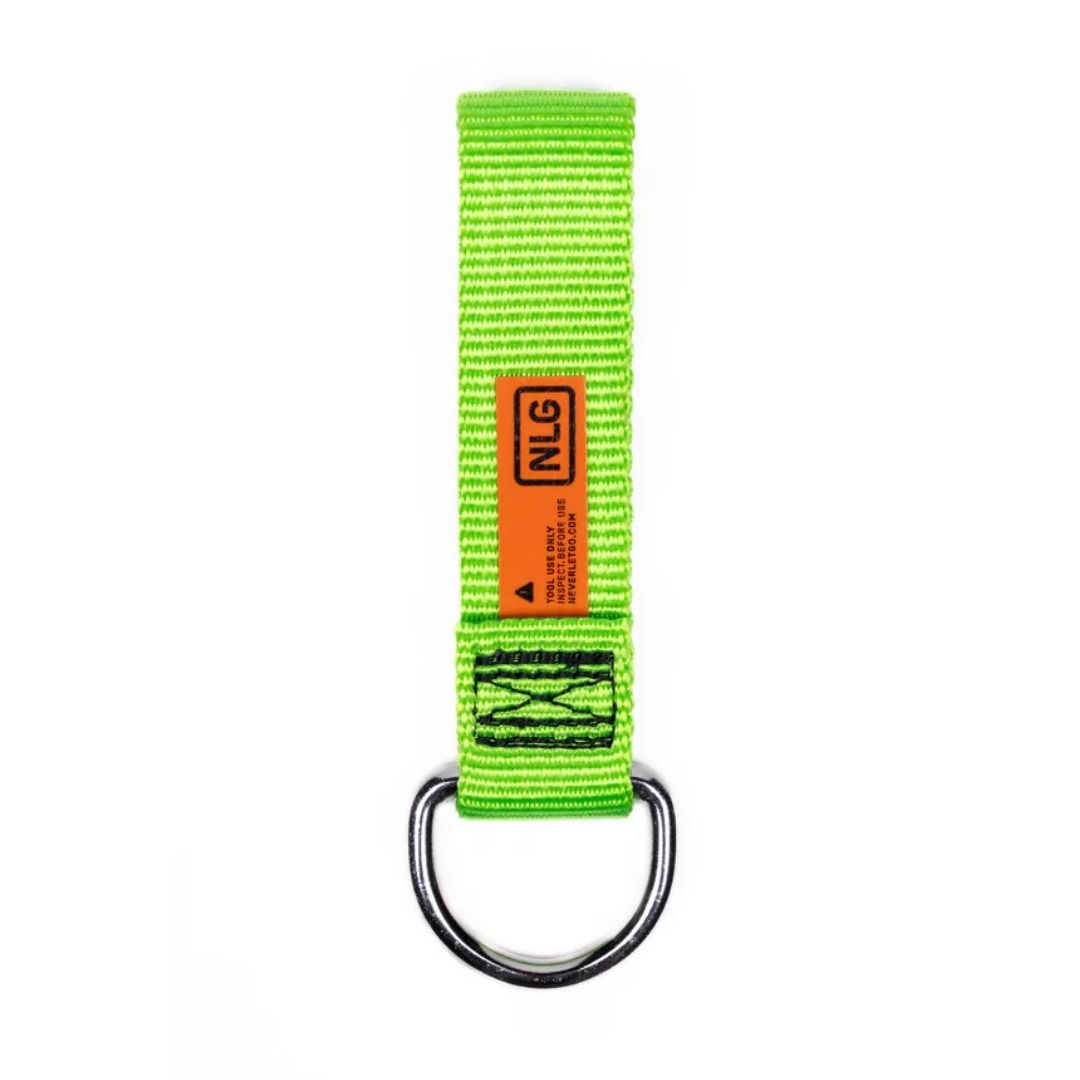
Contrast stitching: Visible stitching across the webbing provides a clear inspection reference. Any fraying, pull-through, or damage is immediately apparent during pre-use checks.
-
NLG ID serialisation: Unique serial number with NLG ID compatibility for formal inspection record-keeping within a dropped object management programme.
Who is this for
Trades and roles:
-
Scaffolders
-
Construction operatives working without a harness
-
Maintenance engineers on elevated platforms
-
Electricians and instrumentation engineers
-
Arborists and tree surgeons
-
Any operative tethering tools from a work belt
Industries:
-
Construction and scaffolding
-
Industrial maintenance
-
Facilities management
-
Utilities and infrastructure
-
Tree surgery and arboriculture
-
Telecoms and broadcast
Specifications
| Specification | Detail |
|---|---|
| Product Name | NLG Belt Loop Anchor - 3kg Welded D-Ring Tool Belt Anchor |
| SKU | NLG101366 |
| Product Type | Tool belt anchor point |
| Max Load | 3kg (6.6lbs) |
| D-Ring Type | Welded D-ring |
| Belt Opening | 70mm, fits standard 50mm / 2" webbing |
| Dimensions | 130mm (L) x 25mm (W) |
| Webbing | High-strength wear-resistant webbing |
| Safety Standards | ANSI/ISEA 121-2023, NS 9611:2022+AC |
| Compliance Marking | CE and UKCA |
| Load Testing | Dynamic, 2:1 safety factor, third-party certified |
| Serialisation | Unique serial number, NLG ID compatible |
| Unit Weight | 25g |
Compatibility
| Application or Condition | Status |
|---|---|
| Standard tool belts up to 50mm width | Compatible |
| Safety harnesses with 50mm belt sections | Compatible |
| Any rated NLG tool lanyard via D-ring attachment | Compatible |
| Tools up to 3kg attached via a compatible lanyard | Compatible |
| Multiple anchors on the same belt simultaneously | Compatible |
| Tools exceeding 3kg system rated load | Not recommended |
| Belts wider than 50mm webbing | Not recommended |
| Personal fall arrest, restraint, or work positioning | Not recommended |
| Direct attachment of tools without a rated lanyard | Not recommended |
Who is this for
The NLG Belt Loop Anchor is used by scaffolders, construction operatives, maintenance engineers, and arborists who tether tools from a work belt rather than a harness, and who need a formally certified anchor point rather than an improvised connection. It is equally relevant to harness wearers who need additional anchor points at belt level beyond those provided by the harness itself. At 3kg rated load, it covers the majority of standard hand tools: spanners, wrenches, hammers, screwdrivers, and compact precision instruments. The ability to run multiple anchors on the same belt simultaneously makes it practical for operatives carrying three or four tethered tools on a single shift.
Typical applications
-
Adding a certified anchor point to a scaffolder's tool belt for tethering a spanner or ratchet during platform build work, where a harness is not worn.
-
Running three or four belt loop anchors along a work belt to give each tool its own dedicated rated tether point without combining loads.
-
Providing a certified body-worn anchor for a maintenance engineer's retractable lanyard during elevated plant inspection, where the existing belt has no rated D-ring.
-
Giving a harness-wearing operative additional anchor points at belt level for light tools when the harness D-rings are occupied by fall arrest equipment.
-
Fitting multiple anchors to one belt for arborists carrying a pruning saw, folding saw, and hand tools simultaneously at height.
-
Creating a certified anchor point on a standard utility belt for an electrician tethering a screwdriver, cable stripper, and multi-bit driver during overhead installation.
-
Equipping a crew's existing tool belts with certified anchor points at the start of a project without issuing new belts or harnesses.
How to use
Step 1: Inspect the belt loop anchor before every use. Check the webbing for fraying, cuts, or damage to the contrast stitching. Check the welded D-ring for deformation or cracking. Retire immediately if any defect is found.
Step 2: Open up the belt loop by separating the webbing loop.
Step 3: Pass the belt through the open loop with the NLG logo facing outward and the D-ring positioned at the bottom of the belt.
Step 4: Slide the anchor to the preferred position along the belt. The D-ring should hang below the belt at the chosen location.
Step 5: Attach the tool lanyard to the D-ring. Confirm the lanyard connector is fully engaged before beginning work. The tool attached via the lanyard must not exceed 3kg.
Step 6: After use, inspect the anchor before removing from the belt. Check the D-ring and stitching for any sign of load damage.
Common mistakes
-
Exceeding the 3kg system load: the anchor limits the entire system to 3kg regardless of the lanyard rating. If a 5kg lanyard is attached to this anchor, the tool weight must still not exceed 3kg.
-
Using on belts wider than 50mm: the 70mm opening is designed for standard 50mm webbing. Wider belts may not allow the anchor to slide and position correctly.
-
Positioning the D-ring at the top rather than the bottom: the anchor is designed with the D-ring hanging below the belt. Fitting it the wrong way around puts load on the webbing loop in the incorrect orientation.
-
Attaching a tool directly to the D-ring without a lanyard: the anchor creates a tether point for a rated lanyard. The tool attaches to the lanyard, not directly to the D-ring.
-
Assuming the anchor can be used as a fall arrest anchor: this is a tool retention anchor only, not a personal fall protection anchor. It must not be used as part of a fall arrest or restraint system.
Safety
Certified to ANSI/ISEA 121-2023, NS 9611:2022+AC, CE and UKCA marked, dynamically load tested at a 2:1 safety factor. Maximum system load is 3kg (6.6lbs), the tool weight attached via any lanyard connected to this anchor must not exceed this limit. This is a tool retention anchor only. It must not be used as a personal fall arrest anchor, fall restraint anchor, or work positioning anchor under any circumstances. After any dynamic load event, remove from service and carry out a formal inspection by a competent person before reuse.
Maintenance
Wipe down with a damp cloth after exposure to concrete dust, oil, or chemical residue. Air dry away from direct heat. Do not expose to solvents or chemical immersion. Before each shift, check the contrast stitching for fraying or pull-through and the welded D-ring for any deformation, cracking, or surface damage. The anchor should slide freely along the belt and position correctly. Record formal inspections against the serial number at intervals appropriate to site conditions and frequency of use.

Frequently Asked Questions
Q: Can this be used by operatives who are not wearing a harness?
A: Yes. This is one of the primary use cases for the belt loop anchor. It creates a certified 3kg-rated tool tether point on a standard tool belt without requiring a harness, giving operatives working from a belt alone access to the same certified anchor infrastructure available to harness wearers. Tools attached via a compatible lanyard must not exceed 3kg.
Q: What certifications does this anchor carry?
A: Certified to ANSI/ISEA 121-2023, NS 9611:2022+AC, CE and UKCA. Dynamically load tested at a 2:1 safety factor by an independent third-party laboratory, meaning it withstands twice its rated load under a simulated drop event. Each anchor carries a unique serial number and is NLG ID compatible.
Q: What is this anchor NOT suitable for?
A: This is a tool retention anchor only. It must not be used as a personal fall arrest anchor, fall restraint anchor, or work positioning anchor under any circumstances. Tools attached via lanyards connected to this anchor must not exceed the 3kg rated system load. It is not suitable for belts wider than 50mm webbing.
Q: How many belt loop anchors can be fitted to one belt?
A: Multiple belt loop anchors can be fitted to one belt simultaneously, with each anchor rated independently to 3kg. This allows an operative to carry several tethered tools on the same belt with a separate rated anchor point for each tool, without combining the loads across a single anchor.
Q: Why does a welded D-ring matter for a tool tether anchor?
A: A welded D-ring is fully closed at the joint, it cannot open or deform under dynamic load in the way a pressed or split ring can. When a tool drops and the lanyard goes taut, the force generated is sudden and significant relative to the tool's static weight. A pressed ring that opens under this load invalidates the tethering system at the moment it is most needed. The welded construction ensures the D-ring remains fully closed and maintains its rated capacity throughout its service life.
Q: What belts and harnesses is this compatible with?
A: Designed for standard 50mm / 2" tool belt webbing. The 70mm opening allows the anchor to slide onto standard tool belts and belt sections on safety harnesses without modification. Confirm the belt width is 50mm before fitting.
Q: How does the system rated load work when using a higher-rated lanyard?
A: The rated load of the complete tethering system is determined by its lowest-rated component. This anchor is rated to 3kg. If you attach a lanyard rated to 5kg to this anchor, the system limit remains 3kg, the tool weight must not exceed the anchor's capacity. When assembling a tethering system, always check every component's rated load and use the lowest figure as the system limit.