Extension Leads and Cable Reels for Site and Workshop Use: The Complete Guide
Choosing the wrong extension lead or cable reel is one of the most common electrical safety mistakes on UK construction sites and in workshops. The right choice depends on three things: the IP rating for your environment, the cable length you actually need, and the total load of the devices you are connecting. This guide covers all of it.
Part 1IP Ratings: The Most Important Decision
Before you look at socket count or cable length, you need to know where the lead will be used. This determines the minimum IP rating you need. Using a lead without the correct IP rating in the wrong environment is an electrical safety risk.
IP stands for Ingress Protection. It is defined under BS EN 60529 and describes how well a product is protected against solid particles and water.
Indoor dry use only
Protected against solid objects larger than 12.5mm. No water protection at all. Condensation, cleaning water, or outdoor exposure all create a safety risk.
Office, home, dry indoor spacesWorkshop and covered outdoor use
Protected against solid objects larger than 1mm and water splashes from any direction. Suitable for workshops, garages, site welfare, and covered outdoor environments.
Workshops, garages, covered outdoor, site useNever use an extension lead or cable reel without an IP rating in a workshop, garage, or covered outdoor area. Even light condensation can reach unprotected sockets. Always check the IP rating before deploying any lead outside a dry, controlled indoor environment.
Which IP rating do I need?
- Home office, bedroom, living room: IP20 or unrated is acceptable in dry conditions.
- Office, retail, hospitality (indoor): IP20 or unrated for dry environments.
- Workshop, garage, outbuilding: IP44 minimum. Condensation is always a risk.
- Construction site welfare cabin: IP44 recommended, IP20 acceptable if strictly dry.
- Covered outdoor areas (marquees, patios, site compounds): IP44 minimum.
- Direct outdoor exposure: IP44 minimum. Not all IP44 products are rated for heavy rain. Position under cover where possible.
Part 24-Gang IP44 Extension Leads: 1m, 2m, and 5m
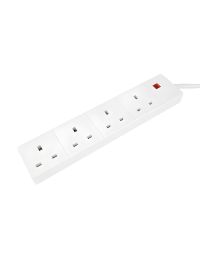
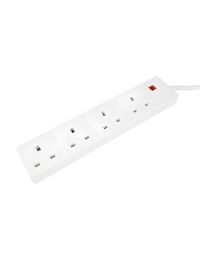
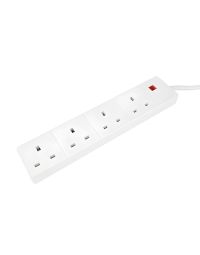
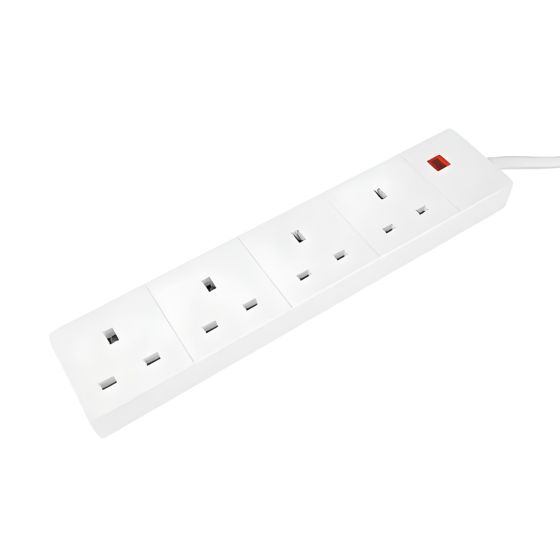
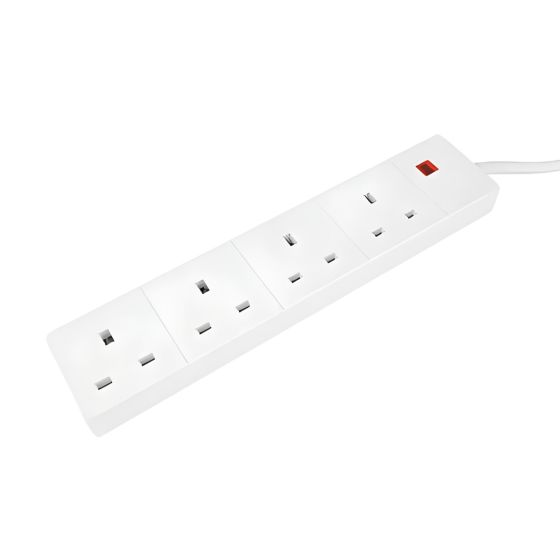
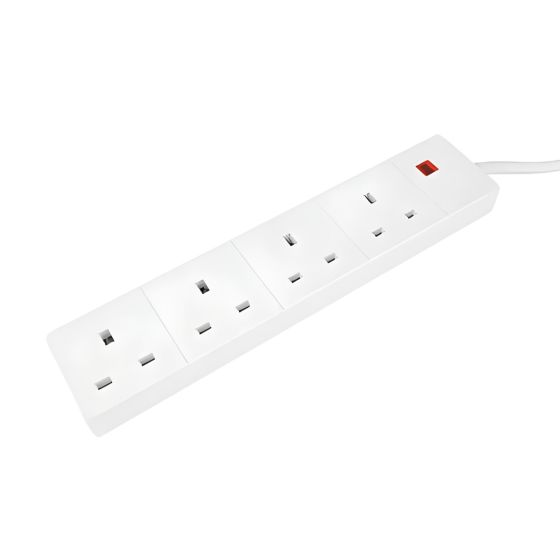
The CMT 4-gang IP44 extension lead range is built for environments where a standard indoor lead is not appropriate. All three lengths share the same specification: four 13A BS1363 sockets, a 13A fused plug, IP44 protection, and UKCA, CE, and RoHS certification. The only difference is cable length.
All four sockets share one 13A plug and fuse. Maximum combined load across all sockets is 13A (3,120W at 240V). This is not 13A per socket. Always calculate total wattage before connecting devices.
Choosing the right length
At 5m, always lay the full cable out before connecting devices. A coiled 5m cable generates significant heat under load that it cannot dissipate. This is a fire risk at full 13A load. Extend the cable fully every time before use.
Part 36-Gang Extension Leads: Standard and Surge Protected
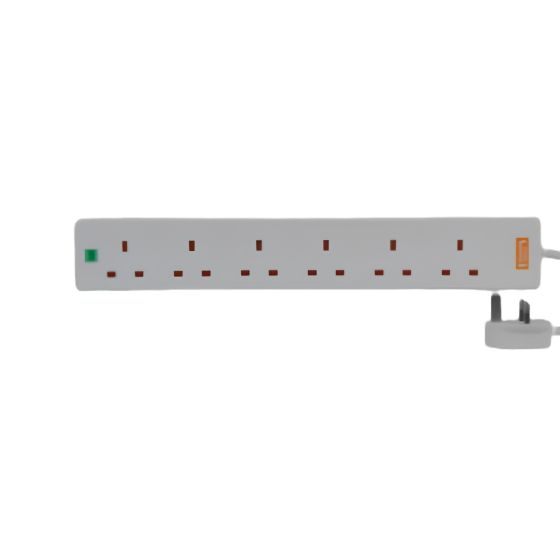
When four sockets are not enough, the CMT 6-gang range provides six BS1363 outlets from a single 13A mains plug. Two products serve different needs.
Standard 6-gang: indoor office and site cabin use
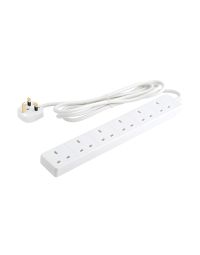
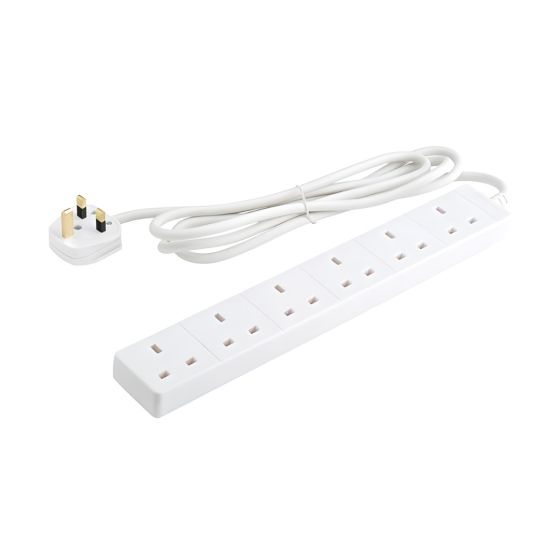
The 6-gang extension lead provides six sockets on a 2m cable for dry indoor environments. No IP rating. Suited to offices, site office cabins, home workstations, and any indoor setting where condensation is not a factor. All six sockets share the same 13A (3,120W) combined maximum load.
The key use case is replacing two daisy-chained 4-gang leads. Daisy-chaining is prohibited under IET Wiring Regulations and creates a fire risk at the connection point. A single 6-gang lead is the compliant, safer alternative when you need more than four outlets.
Surge protected 6-gang: for computers and sensitive electronics
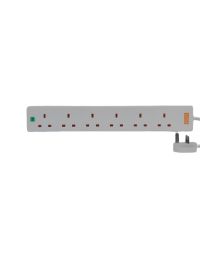
The surge protected version adds built-in surge protection across all six sockets. This diverts transient voltage spikes on the mains supply before they reach connected devices. Computers, monitors, televisions, audio equipment, and network hardware are most at risk from these spikes.
Surge protection does not increase the load capacity. Maximum total load remains 13A (3,120W). It also does not make the lead suitable for outdoor use. It is indoor-only, for environments where sensitive electronics are in regular use.
Voltage spikes occur when high-current appliances switch on or off, and during supply switching events. They are brief but can degrade or destroy sensitive electronics over time. For a workstation with a computer and monitor, the surge-protected lead is the right choice. For a kettle and a fan heater, it adds no benefit.
Part 4240V Cable Reels
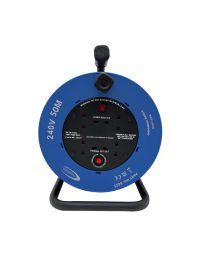
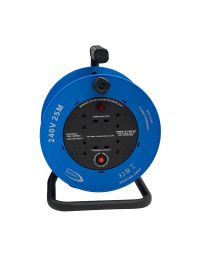
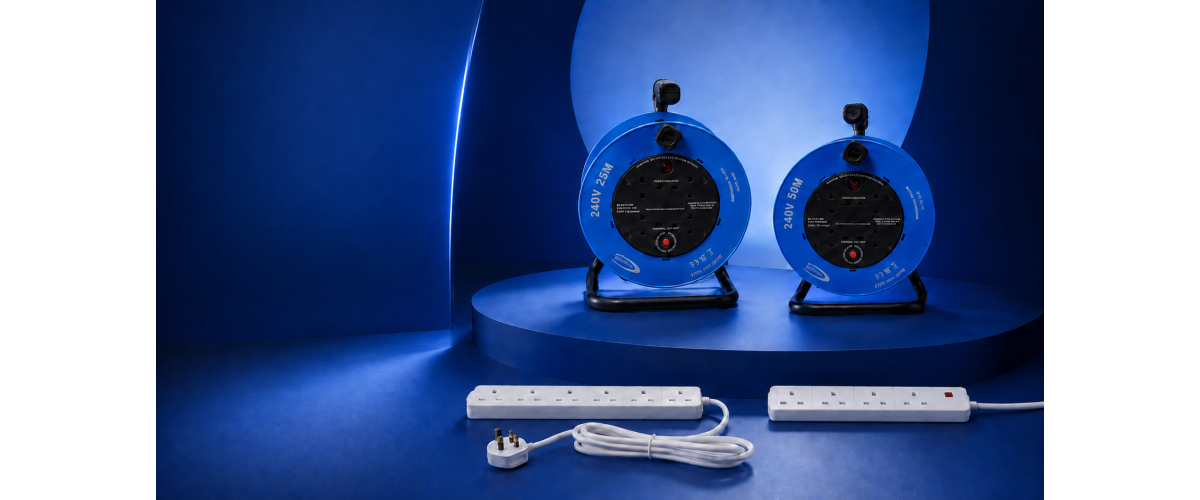
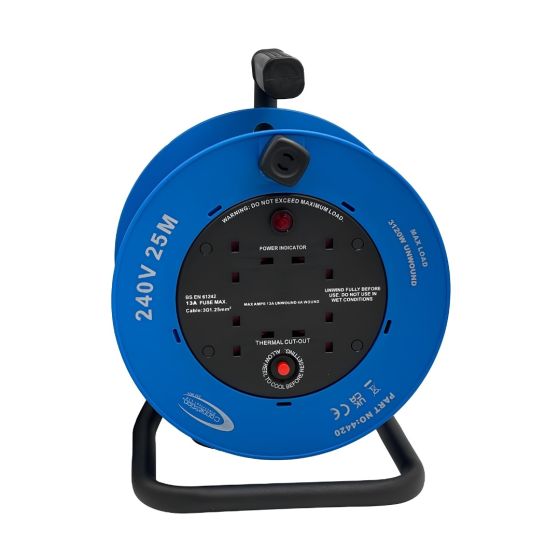
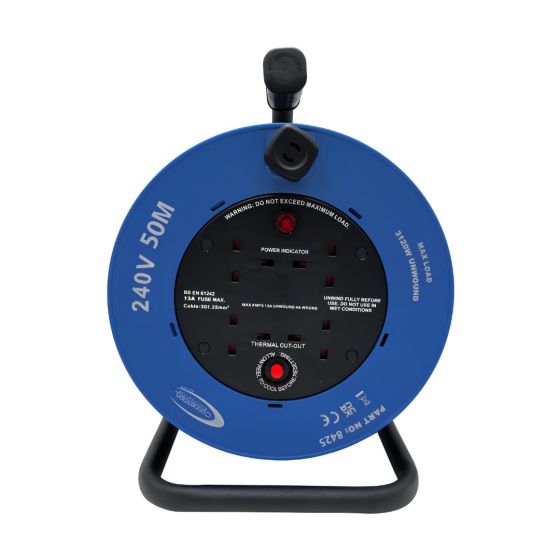
A cable reel is the right choice when you need to bridge a significant distance from the mains socket to the working position, and a flat extension lead is not long enough. CMT 240V cable reels come in 25m and 50m lengths, both with thermal cutout protection.
CMT 240V cable reels are IP20 rated. This means no water protection at all. They must be used in dry indoor environments only. Do not use a 240V cable reel in a workshop with condensation, a covered outdoor area, or any environment where moisture may be present. For outdoor and workshop use, see the 110V IP44 cable reel range.
The wound and unwound current limit: the most critical safety rule
This is the single most important thing to understand about any cable reel. It is also the most commonly ignored rule on site.
Cable fully unwound
Conductors can dissipate heat normally into the surrounding air. Full rated current is available safely.
13A maximum (3,120W)Cable wound on drum
Adjacent turns trap heat. Temperature builds rapidly under load. Risk of insulation damage and fire within minutes at full load.
4A maximum (960W)When cable is wound on a drum, adjacent turns cannot dissipate heat the way flat cable can. Current flowing through the conductors generates heat between the turns. At full 13A load with the cable wound, the thermal cutout will trip within minutes. The correct approach is to always unwind the full cable before connecting anything.
Unwind the full cable from the drum before connecting any devices. This applies every single time, even if you only need part of the cable length. The remaining cable must be laid out on the floor, not left on the drum.
What the thermal cutout does
Both CMT 240V cable reels have a thermal cutout with a neon indicator and a manual reset button. If the reel overheats, the cutout disconnects the circuit. The neon goes off.
When the cutout trips: unplug from mains, remove all devices, let the reel cool fully (up to 30 minutes), then press the reset button. Never press reset while the reel is still warm. If the cutout trips repeatedly at normal loads, take the reel out of service.
25m or 50m: choosing the right length
A 25m reel covers most standard indoor work areas from a centrally placed mains socket. A 50m reel is for large warehouses, factory floors, and sites where the mains socket is at one end and the work is at the other. Always use a single reel of the correct length. Connecting two reels together is daisy-chaining and is prohibited.
Part 5Load Calculations: Staying Within the 13A Limit
Every extension lead and cable reel in this range shares a single 13A fused plug. The combined load of all connected devices must not exceed 13A (3,120W at 240V). This is the limit for the whole lead, not per socket.
To calculate load: find the wattage on each device rating plate. Add them together. Divide the total by 240 to get amps, or simply check the total wattage stays below 3,120W.
| Device | Typical Wattage | Current at 240V | Risk Level |
|---|---|---|---|
| Phone charger | 5-20W | 0.02-0.08A | Very low |
| Laptop charger | 45-90W | 0.2-0.4A | Low |
| LED desk lamp | 8-15W | 0.03-0.06A | Very low |
| Desktop computer | 150-400W | 0.6-1.7A | Low |
| Monitor (24") | 20-50W | 0.08-0.2A | Low |
| Electric fan | 40-100W | 0.2-0.4A | Low |
| Angle grinder (240V) | 1,200-2,000W | 5-8.3A | Moderate |
| Circular saw (240V) | 1,200-2,000W | 5-8.3A | Moderate |
| Microwave | 700-1,200W | 3-5A | Moderate |
| Electric kettle | 2,200-3,000W | 9.2-12.5A | High: leaves little headroom |
| Fan heater | 1,000-3,000W | 4.2-12.5A | High: check before connecting anything else |
A 2,800W kettle alone draws 11.7A, leaving only 1.3A of headroom across the remaining sockets. A fan heater at full power may use the entire 13A by itself. Always calculate before connecting and never assume individual sockets are independent circuits.
Safety Rules for Extension Leads and Cable Reels
- Never daisy-chain extension leads. Connecting one lead into another is prohibited under IET Wiring Regulations (BS 7671). Use a lead with more sockets or a cable reel with greater reach.
- Always unwind cable reels fully before use. The wound current limit is 4A. Running any significant load on a wound reel causes overheating.
- Match the IP rating to the environment. IP20 in a dry office is fine. IP20 in a workshop or outdoors is a safety risk.
- Never run cables under carpets or mats. Covered cables cannot ventilate. They overheat even at moderate load. Keep all cables exposed during use.
- Inspect before every use. Check cables for cuts, kinking, and damaged sheathing. Check plug faces and socket faces. Remove any damaged product from service immediately.
- Switch off at the mains when not in use. Do not leave energised leads unattended for extended periods.
- Replace, do not repair. A damaged extension lead or cable reel should be replaced, not repaired with tape or DIY methods.
- Keep to one plug per wall socket. Do not plug multi-socket adaptors into extension leads. If you need more sockets, use a lead designed for it.
Common Mistakes and How to Avoid Them
Using an unrated lead in a workshop or garage
An extension lead without an IP rating has not been tested against moisture. Condensation, cleaning water, and outdoor air are enough to create a risk. Always use IP44 in any space that is not a climate-controlled dry office. The cost difference is minimal. The risk is not.
Operating a cable reel with the cable still wound
The most common cause of cable reel fires. Even a 1,000W heater will trigger the thermal cutout quickly on a wound 25m reel. Unwind completely before connecting anything. Without exception.
Connecting one extension lead into another for more reach
Prohibited under IET Wiring Regulations and a recognised fire risk. If you need more reach, use a 5m lead or a cable reel. If you need more sockets, use a 6-gang lead or a splitter box connected directly to the mains.
Assuming 13A per socket rather than 13A total
Six sockets and 13A total capacity is a very easy limit to exceed. Three modest appliances at 1,000W each reach the limit. Calculate first. Connect second.
Using a 5m lead coiled or bundled
Even flat extension leads generate heat when coiled under load. A 5m lead in a loose coil at full 13A load will overheat significantly faster than a fully extended one. Lay it flat every time.
How to Choose the Right Product
| Your situation | What you need | Recommended product |
|---|---|---|
| Desk or workstation, socket nearby | Short reach, indoor dry | 4-Gang 1m IP44 |
| Office or home, socket across the room | Medium reach, indoor | 4-Gang 2m IP44 |
| Workshop or site cabin, socket far away | Extended reach, moisture possible | 4-Gang 5m IP44 |
| Home office with multiple devices | More sockets, indoor dry | 6-Gang 2m Standard |
| Office with computers and electronics | Surge protection, indoor dry | 6-Gang Surge Protected |
| Large indoor work area, need long reach | 25m cable reel, dry indoor only | 240V Cable Reel 25m |
| Large warehouse or factory floor | 50m cable reel, dry indoor only | 240V Cable Reel 50m |
| Outdoor or workshop power distribution | IP44 rated supply (see 110V range) | 110V CTE Range |
Frequently Asked Questions
All four sockets share a single 13A fused plug. The maximum combined load is 13A (3,120W at 240V). This applies to all sockets together, not each socket individually. Always add the wattage of every device you plan to connect and confirm the total stays below 3,120W.
Only if the lead carries an IP44 rating or higher. IP44 means the lead is protected against water splashes from any direction. The CMT 4-gang leads in 1m, 2m, and 5m all carry IP44, making them suitable for covered outdoor environments, workshops, and garages. A lead without an IP rating must stay in dry indoor conditions.
A wound cable cannot dissipate heat from current flowing through the conductors. Adjacent turns trap heat between them. Running significant load on a wound reel causes overheating, triggers the thermal cutout, and risks cable insulation damage. Always unwind the full cable from the drum before connecting any devices, even if you only need part of the length.
A 4-gang lead has four socket outlets. A 6-gang lead has six. Both share one 13A plug and fuse, so the maximum combined load is the same: 3,120W. Choose 6-gang when you need to power more devices simultaneously without daisy-chaining a second lead into the first, which is prohibited under IET Wiring Regulations.
Surge protection diverts transient voltage spikes on the mains supply before they reach connected devices. Computers, monitors, televisions, and audio equipment are most at risk. Surge protection does not increase load capacity and does not make the lead suitable for outdoor use. It is for indoor environments where sensitive electronics need protection from mains transients.
No. Connecting one lead into another (daisy-chaining) is prohibited under IET Wiring Regulations (BS 7671). It creates an overloading risk at the first socket and is a documented cause of electrical fires. If you need more sockets, use a lead with more outlets. If you need more reach, use a cable reel.
IP20 means protection against solid objects larger than 12.5mm but no water protection at all. An IP20 product must only be used in dry indoor environments. IP44 means protection against solid objects larger than 1mm and water splashes from any direction, making it suitable for workshops, garages, and covered outdoor environments.
CMT 240V cable reels carry a maximum of 13A when the cable is fully unwound and 4A (960W) when the cable remains wound on the drum. This is because wound cable cannot dissipate heat properly. The thermal cutout protects the reel if overheating occurs, but the correct approach is always to unwind fully before connecting any load above 4A.
A 25m reel covers most standard workshop layouts and indoor work areas. A 50m reel is for large warehouses, factory floors, and sites where the mains socket is far from the working position. Always use a single reel of the correct length rather than connecting two reels together, which is prohibited.
If your office has computers, monitors, or other sensitive electronics, a surge-protected lead is a worthwhile choice. Mains voltage spikes occur regularly and can degrade sensitive components over time. For devices like kettles, fans, and lamps, surge protection provides no meaningful benefit. Match the protection level to what you are connecting.
Shop the Full Range at CMT Group
All products in stock with next-day delivery on stocked lines across the UK.