Site Lighting for UK Construction: How to Choose the Right Light for Every Job
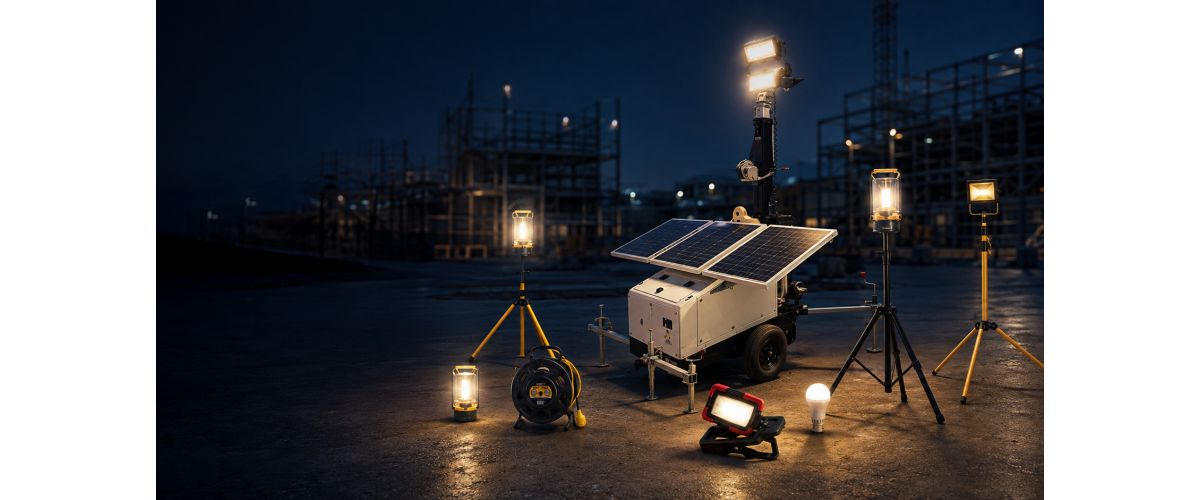
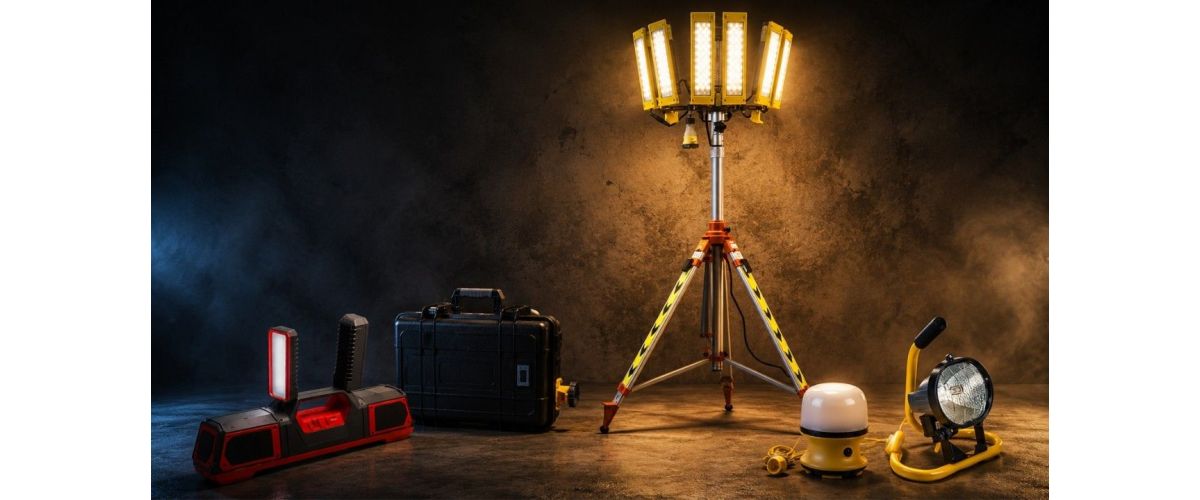
Choosing the wrong site light wastes money, creates safety risks, and fails compliance checks. This guide maps every construction application to the right product: from a 10W magnetic COB work light to an 84,000lm tower flood.
1. Understanding site lighting categories
Every construction site has at least five distinct lighting needs, and almost no single product covers more than one or two of them well. If you are looking for a full overview of every CMT site lighting product in one place, see the CMT site lighting range guide. This guide focuses on matching the right product to the right application. Specifying the same lamp type for a confined space inspection, a welfare unit, and a 5,000m² groundwork floor is one of the most common errors in site procurement.
Before looking at specific products, it helps to answer five questions:
- Task or area? Task lighting targets a specific work point. Area lighting covers an entire floor or space. Most sites need both.
- Mains power available? 110V via site transformer, 240V mains, or fully battery-powered are different supply environments requiring different products.
- Indoor, sheltered outdoor, or fully exposed? IP rating determines outdoor suitability. IP44 covers splashes; IP65 covers sustained water jets and full dust ingress.
- Temporary or fixed? A welfare unit bulkhead can be semi-permanent. A rechargeable magnetic work light moves with the operative several times per shift.
- Any compliance requirements? The Highways Act 1980 mandates hoarding lighting during darkness. BS 5266 Part 1 mandates emergency lighting on escape routes. Getting either wrong creates legal exposure.
| Application | Product Type | Supply | CMT Products |
|---|---|---|---|
| Close task work, confined spaces | Rechargeable work light | Battery | LED10WRC, ELLEDCLMP, LEDPLSSPK |
| Construction floor area lighting | 110V globe site light | 110V | EL060013 + EL060014 |
| Large open areas, groundwork | High-output tower floodlight | 100-240V or battery | EL060006, ELTOWL500 |
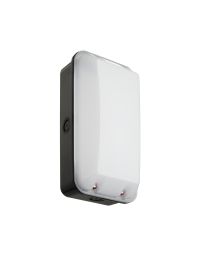
| Welfare units, site offices | 110-240V LED bulkhead (opal) | 110-240V | EL060010 |
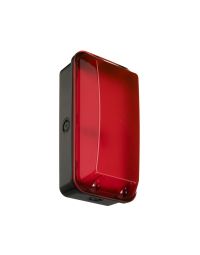
| Hoarding warning (red) | 110-240V LED bulkhead (red) | 110-240V | EL060012 |
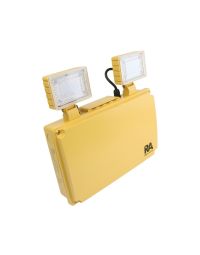
| Escape route emergency lighting | Non-maintained emergency twin spot | 110V | EL060009 |
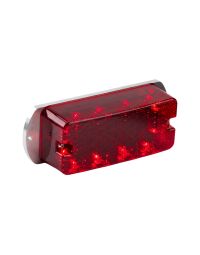
| Hoarding lighting (battery) | Battery photocell hoarding light | Battery | EL060004 |
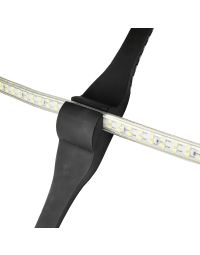
| Barrier LED strip mounting | Rubber barrier strap accessory | Via LED strip | ELLEDBCLIP |
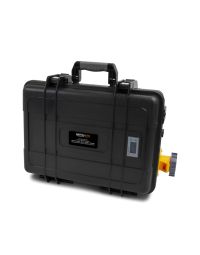
| LED reel power without mains | Portable power pack | Battery (USB output) | BP1280WH |
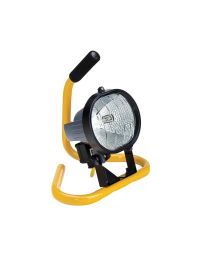
| High-output traditional lighting | Halogen site floodlight | 110V | ELHLF01 |
2. Portable rechargeable work lights
A rechargeable work light handles the task lighting end of the spectrum: close inspection, confined space work, hands-free positioning on a steel structure, and any situation where trailing a cable to a power source is impractical. Three products cover the range from compact and magnetic to high-output and audio-capable.
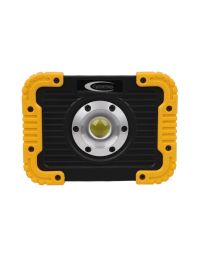
When 800lm is enough: the compact magnetic COB work light
For electricians, maintenance engineers, and plant mechanics who need hands-free task lighting on steel surfaces, a compact rechargeable COB light with four built-in magnets is often the most practical tool on the site.
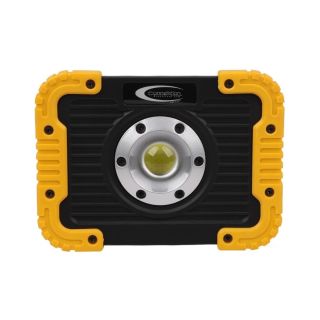
Cold weather note: This product has a minimum working temperature of +15°C. For cold outdoor UK winter use, a mains-connected alternative is more reliable.
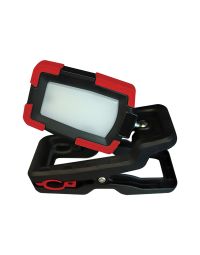
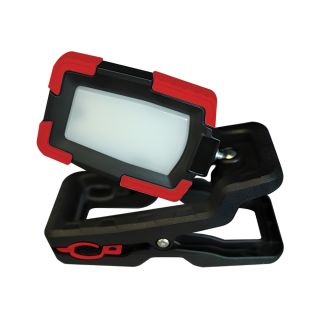
When you need more range: the clip-and-magnetic rechargeable work light
The MAX rechargeable work light goes further on both output (1,500lm) and mounting flexibility. The dual clip-and-magnetic system covers situations the magnetic-only COB light cannot: scaffold tubes, conduit, panel edges, and timber frame alongside steel surfaces.
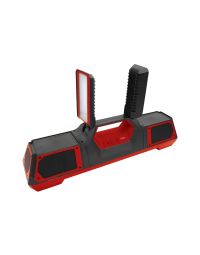
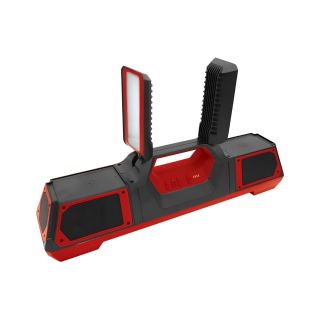
When you need output and audio: the work light and Bluetooth speaker
The MAX LED Work Light and Bluetooth Speaker is the right choice for operatives on extended shifts who need both high-output task lighting and audio from a single portable unit. At 4,000lm from twin rotating panels, it delivers four times the output of the compact COB light, with dual power covering both battery and mains operation.
3. 110V area lighting for construction floors
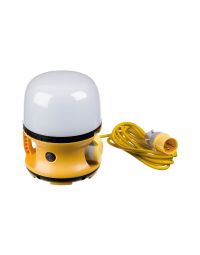
A directional floodlight aimed at a construction floor lights one half of the space and leaves the other in shadow. A 360° globe site light fixes this. It distributes output in all directions from a single point, eliminating the dark zones that directional lights create around plant, equipment, and materials.
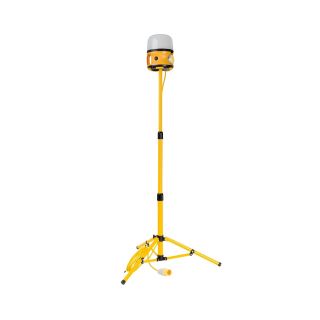
The 110V LED Globe Site Light is the standard solution for construction floors on UK sites. At 30W delivering 2,600lm, it connects to the existing 110V site supply with a 16A industrial plug and can daisy-chain up to 20 units from a single feed.
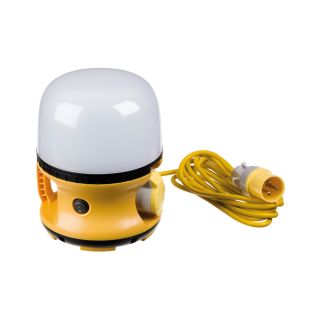
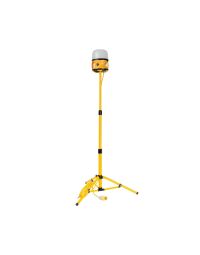
A globe light on its own base at floor level covers the area immediately around it well. Raising it on a 1.5m steel tripod puts the light source above most site obstacles, spreading the 360° output at a higher angle and covering a significantly larger radius from a single position.
4. High-output area lighting for large sites
A 30W globe light at 2,600lm is the right tool for a single construction floor bay. For a large open groundwork area, a civils excavation, or a road closure requiring night working across several hundred square metres, the calculation changes entirely.
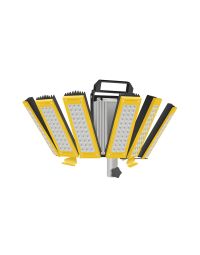
Two products cover this application: a 600W mains-connected tower head and a battery-powered portable tower. The right choice depends on whether mains power is available and whether the light needs to be moved regularly.
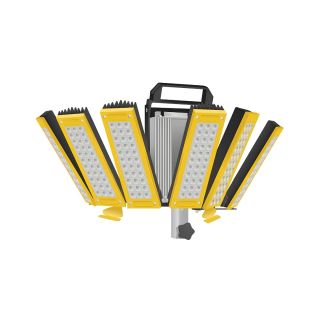
Installation note: The EL060006 is a Class I fitting. An earth connection is mandatory. Never energise without a verified earth in place.
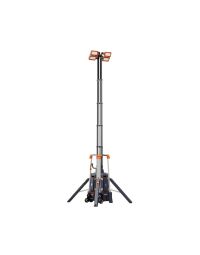
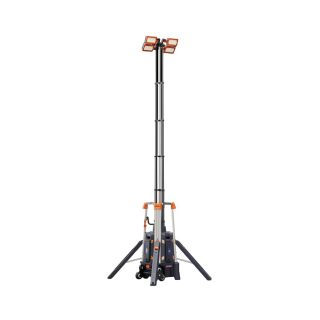
For sites without mains power access, the CMT Power battery-powered lighting tower delivers comparable output at 65,000lm on AC and 35,000lm on battery, from a 5m telescoping mast, with single-person rapid deployment and up to 100 hours eco mode runtime.
5. Fixed wall bulkheads for site infrastructure
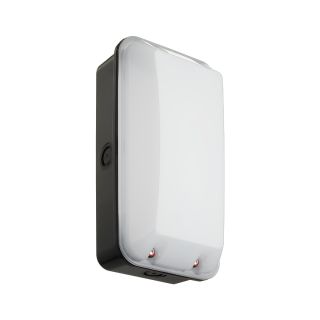
Welfare units, site offices, corridors, plant rooms, and scaffold structures need a different type of fitting from the portable lights that move with the task. A fixed wall bulkhead provides permanent or semi-permanent illumination from a mains supply without the management overhead of batteries or extension leads.
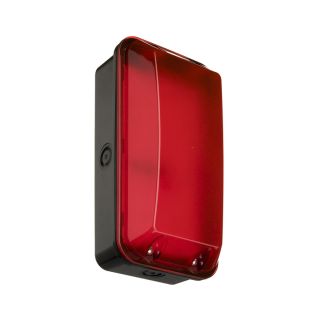
Two variants cover the main site applications: an opal diffuser for white working light and a red diffuser for hoarding warning light. Both are dual voltage (110-240V), IP65, IK08, Class II (no earth required), and rated to L70B50 50,000 hours.
6. Emergency lighting: the legal requirement
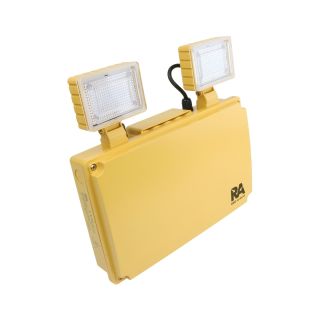
Legal requirement: BS 5266 Part 1 and the Regulatory Reform (Fire Safety) Order 2005 require emergency escape route lighting on construction sites where loss of mains power could leave operatives unable to evacuate safely. The minimum duration is 3 hours. Non-maintained is the correct type for most construction site applications.
Non-maintained emergency lighting is off during normal mains operation. When mains power fails, it switches on automatically. A LiFePO4 battery holds charge longer than lead-acid alternatives, and the 5-year battery warranty on the EL060009 is longer than most competing products in this class.
After installation, establish a testing schedule. Monthly: briefly interrupt the supply and confirm the heads activate. Annual: full 3-hour duration test. Record all results. Failure to test and record is a BS 5266 non-compliance even if the fitting itself works correctly.
7. Hoarding and perimeter lighting: Highways Act compliance
Legal requirement: Section 172(3)(c) of the Highways Act 1980 requires any person who has erected a hoarding or fence alongside a highway to sufficiently light it during hours of darkness. Failure is a breach of statutory duty and may create liability in the event of a pedestrian or road user incident.
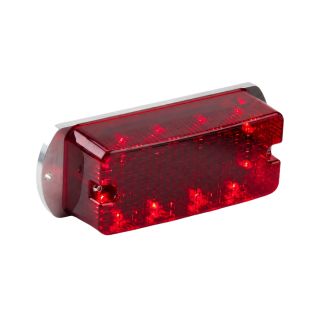
Where mains power is unavailable on the hoarding perimeter, the battery-powered photocell hoarding light is the standard compliance solution. It activates automatically at dusk, requires no manual switching, and runs for a minimum of 12 weeks on a single set of batteries with the photocell enabled.
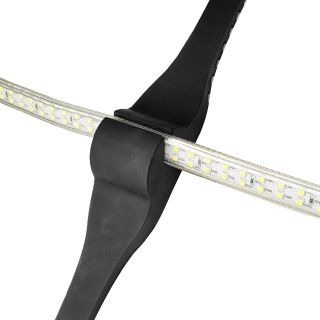
Where mains power IS available on the hoarding and white illumination is preferred alongside the red warning lights, the UtilityLite LED strip with rubber barrier straps provides continuous even lighting along the full length of the barrier run.
8. Power solutions for off-grid site lighting
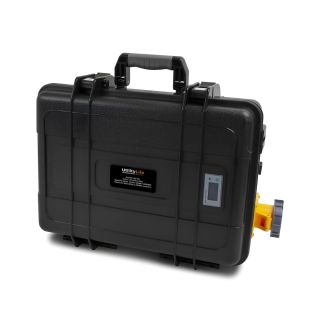
The UtilityLite LED lighting strip is one of the most practical access route and barrier lighting solutions in the UK construction market. Its one limitation is that it requires a 110V supply. On sites without established 110V infrastructure, the UtilityLite Portable Power Pack removes that constraint.
9. Traditional halogen: when it still makes sense
LED is the right technology for most site lighting applications. But there are scenarios where a proven halogen floodlight on a floor stand is still the practical answer.
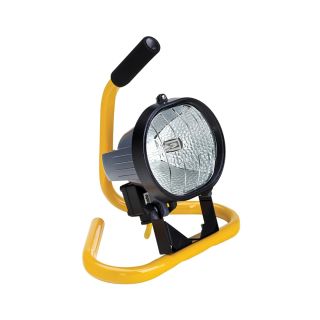
Halogen lamps reach full output the instant they are switched on, with no warm-up delay. The lamp is replaceable when it reaches its approximately 2,000-hour rated life. The 110V halogen floor light is a direct, reliable tool that any operative can connect and reposition without technical knowledge.
Safety reminder: Halogen lamps reach very high temperatures during operation. Keep at least 0.5 metres clear of all combustible materials. Allow to cool fully before moving or storing the unit. Never operate without the protective grille in place.
10. Building a complete site lighting plan
A site lighting plan does not need to be complex. Work through the site area by area and answer the five questions from Section 1 for each zone.
Step 1: Map your zones
List every area that will need lighting: access routes, construction floors, welfare units, plant areas, hoarding perimeters, stairwells. Each zone will have different requirements.
Step 2: Confirm your power supply for each zone
110V site supply, 240V mains, and battery-only are three different environments. Hoarding perimeters often have no mains supply. Remote groundwork areas may not have 110V infrastructure in the early project phase. Battery-powered products cover these gaps without generator hire.
Step 3: Address compliance requirements
- Hoardings alongside a highway: Highways Act 1980 Section 172(3)(c) applies. Battery photocell hoarding lights (EL060004) or red mains bulkheads (EL060012) where power is available.
- Escape routes and emergency: BS 5266 Part 1 applies. Non-maintained emergency twin spots (EL060009) on 110V supply.
- Welfare units: Construction (Design and Management) Regulations 2015 require adequate lighting in welfare facilities. The opal bulkhead (EL060010) at 100 lm/W efficacy minimises the number of fittings needed.
Step 4: Match output to the space
| Area type | Recommended output | CMT product |
|---|---|---|
| Close task, inspection | 800 to 1,500lm | LED10WRC, ELLEDCLMP |
| Single construction floor bay | 2,000 to 4,000lm | EL060013 |
| Extended shift, audio | 4,000lm | LEDPLSSPK |
| Multiple floor bays | Daisy-chain globes | EL060013 x multiple |
| Large open area or groundwork | 60,000 to 84,000lm | EL060006, ELTOWL500 |
| Welfare unit, office | 800lm per fitting | EL060010 |
| Hoarding perimeter | Red warning light | EL060004, EL060012 |
| Emergency escape route | 500lm for 3 hours | EL060009 |
Step 5: Plan for recharging and maintenance
Rechargeable products need a charging schedule. Build recharging into the site routine rather than reacting when lights go dark mid-shift. Battery hoarding lights need a battery check or replacement every 12 weeks at minimum. Emergency lighting needs monthly function tests and annual 3-hour duration tests, with results recorded.