

Safety Glove Standards Explained:
EN388, TDM Cut Resistance & PPE Ratings
for UK Workplaces
Choosing the right safety gloves is no longer just about comfort or grip. Modern UK workplaces face a wide range of hand hazards, and one of the biggest problems in PPE procurement is confusion around glove ratings. This guide breaks down every major standard in plain, practical terms.
Why Understanding Glove Ratings Matters
Hand injuries remain one of the most common workplace accidents across the UK, and yet they are also among the most preventable. Industries including construction, logistics, engineering, utilities, warehousing, manufacturing, automotive and fabrication all see a disproportionate share of hand and finger injuries that could have been avoided with the correct PPE.
Under UK health and safety law, employers are required by the Personal Protective Equipment at Work Regulations 1992 (as amended) and the Management of Health and Safety at Work Regulations 1999 to carry out a suitable risk assessment and provide appropriate hand protection where a risk is identified. The HSE reinforces this across guidance documents including the Construction (Design and Management) Regulations 2015. Selecting the wrong glove does not just put workers at risk, it can expose your organisation to enforcement action and civil liability.
The wrong glove can lead to cuts, burns, punctures, chemical exposure, poor grip accidents and reduced worker productivity. Modern glove standards exist to ensure gloves are properly tested against specific hazards, but the critical thing to understand is this: no single glove protects against everything. Different risks require different protection ratings, and over-specifying can be just as problematic as under-specifying if it reduces dexterity and worker compliance.
UK Procurement Note: Since the UK's departure from the EU, CE-marked PPE remains accepted in Great Britain under a transition arrangement. However, the UK Conformity Assessed (UKCA) mark is being phased in. For current procurement, ensure your supplier can confirm compliance with the relevant harmonised UK/BS EN standards applicable to your specific hazard type.
Cut-resistant, heat-resistant, chemical and general-purpose gloves for UK construction and industrial use.
Understanding EN388: The Main Mechanical Protection Standard
The most widely referenced glove standard in the UK industrial and construction sector is EN388. This European standard, fully adopted as BS EN 388 in the UK, covers protection against mechanical risks including abrasion, cut, tear, puncture and impact. Every glove sold for mechanical hazard protection in a UK workplace should carry EN388 certification alongside a numerical and alphabetical performance code.
You will typically see a marking such as EN388: 4X43C on the glove or its packaging. Each character in that code corresponds to a specific test result. Hover over each card to see what it measures:
Hover or tap each card to reveal what it measures
| Position | Hazard Test | Scale | What It Measures |
|---|---|---|---|
| 1st | Abrasion Resistance | 1–4 | Durability against rubbing and surface wear. |
| 2nd | Coup Blade Cut Test | 1–5 or X | Older cut test using a rotating circular blade. Marked X if TDM used instead. |
| 3rd | Tear Resistance | 1–4 | Force required to tear the glove material apart. |
| 4th | Puncture Resistance | 1–4 | Resistance to object piercing. Not the same as needle-stick protection. |
| 5th | TDM Cut Resistance | A–F | The modern benchmark for straight-blade cut testing. |
| 6th | Impact Protection | P or Blank | Passed knuckle and back-of-hand impact defence test. |
1. Abrasion Resistance
Abrasion resistance measures how well a glove withstands rubbing and surface wear before the material breaks down. This is particularly important for roles involving repetitive manual handling, warehouse operations, scaffold work, construction groundwork and general engineering where the glove is in constant contact with rough surfaces. The scale runs from 0 to 4, with a higher rating indicating greater durability and longer usable life before the glove material fails.
2. Coup Blade Cut Resistance
This is the older cut resistance test method within EN388, in which the glove is tested using a rotating circular blade applied at constant pressure. The scale runs from 1 to 5. However, a well-known problem with this method is that modern cut-resistant fibres, such as HPPE, Dyneema and Kevlar blends, can progressively blunt the rotating blade during testing, which artificially inflates the result and makes the glove appear more protective than it actually is. This is why, in the updated EN388:2016+A1:2021 standard, the industry moved toward TDM testing for any glove containing cut-resistant materials.
When a glove is tested using TDM and the coup test result is considered unreliable, the coup score is replaced with an "X" in the EN388 code, indicating that only the TDM result should be relied upon for cut protection assessment.
3. What Is TDM Cut Resistance?
TDM cut resistance is the modern, more accurate cut protection test method and is now considered the industry benchmark for serious cut protection applications. TDM stands for Tomodynamometer, the test instrument used. Unlike the coup method, TDM measures the precise force in Newtons required for a straight blade to cut through the glove material under controlled conditions, performed under ISO 13997.
TDM testing provides more realistic cut protection data because it works accurately with modern high-performance fibres, avoids blade dulling issues, and gives procurement teams genuinely comparable protection levels across different glove constructions. This is especially important in metal fabrication, automotive manufacturing, sheet metal handling, glass work and precision engineering, where accurate cut protection data is critical to a compliant risk assessment.
TDM Cut Resistance Levels
| TDM Level | Force Required | Protection Level | Typical Application |
|---|---|---|---|
| A | 2 Newtons | Very Low | Light assembly, warehouse picking |
| B | 5 Newtons | Low | General handling, maintenance |
| C | 10 Newtons | Medium | Construction, logistics, fabrication |
| D | 15 Newtons | Medium-High | Sheet metal, engineering |
| E | 22 Newtons | High | Blade handling, glass, automotive |
| F | 30 Newtons | Maximum | Slaughterhouse, heavy fabrication |
What Does TDM A Mean? A glove at TDM Level A provides basic cut resistance for low-risk tasks, suitable for warehouse picking, general handling, maintenance and light logistics work. It is not suitable for sharp sheet metal, blade handling, heavy fabrication or glass handling, where a minimum of TDM C or D should be specified.
4. Tear Resistance
Tear resistance measures how difficult it is to rip the glove material apart once it has been damaged or snagged, an important distinction from cut resistance, which tests an undamaged surface. This rating is particularly relevant for heavy construction, waste handling, utilities work and any application involving rough or unpredictable materials. The scale runs from 0 to 4.
5. Puncture Resistance
Puncture resistance measures the glove's resistance to sharp objects, such as nails, wire, splinters or sharp debris, piercing through the material under force. The scale runs from 0 to 4. It is important to note that EN388 puncture resistance is not the same as needle-stick protection, which requires separate specialist testing under different standards. Buyers in healthcare or waste management environments where hypodermic needle risk is present must specify needle-stick rated gloves separately.
6. Impact Protection
Some gloves within the EN388 framework carry an additional designation: EN388 "P", indicating that the glove has been tested and approved for impact protection across the knuckles and the back of the hand. This is typically achieved using TPR (thermoplastic rubber) impact guards moulded into the glove construction, and is particularly common across the oil and gas, rail, utilities and heavy construction sectors where crush and impact injuries from falling or moving objects represent a significant risk.
Understanding Heat Resistance: EN407
Heat-resistant gloves used in UK workplaces are tested under EN407:2020, the harmonised European standard for protective gloves against thermal risks. This standard covers protection across six distinct thermal hazard categories, and a glove that performs well against one type of heat risk may offer little or no protection against another. Buyers should always check the specific EN407 sub-ratings rather than assuming a single heat figure covers all thermal hazards.
The six EN407 performance categories are:
- A, Flammability: Resistance to ignition and flame spread
- B, Contact Heat: Protection from brief contact with hot surfaces
- C, Convective Heat: Resistance to heat transferred through hot air
- D, Radiant Heat: Protection from radiant heat sources such as furnaces
- E, Small Molten Metal Splashes: Resistance to small droplets of molten metal
- F, Large Molten Metal Splashes: Protection from significant molten metal exposure
Contact Heat Resistance Explained
Contact heat resistance is the sub-rating most commonly relevant in construction and general industry, measuring how long a glove protects the wearer when touching a hot surface, such as hot pipes, metal components, heated machinery or power tools. To pass each level, the glove must protect the wearer for a minimum of 15 seconds at the stated temperature.
| Level | Temperature | Typical Use Case |
|---|---|---|
| 1 | 100°C | Warm surfaces, heated tools |
| 2 | 250°C | Pipework, light welding adjacent tasks |
| 3 | 350°C | Foundry, engineering, medium heat |
| 4 | 500°C | High-temperature industrial processes |
Important: Heat resistance does not confer cut resistance, puncture resistance or chemical resistance. A glove rated for hot surface contact will not protect against a sharp blade. Different hazards require separate testing and separate ratings, always assess each risk independently.
Oil Resistance and Water Resistance
Oil Resistance
Oil-resistant gloves are designed to maintain grip and prevent oils from soaking through the glove material, which would both reduce dexterity and allow skin contact with potentially hazardous substances. This is a critical requirement across automotive, manufacturing, engineering and maintenance environments where lubricants, hydraulic fluids and cutting oils are present. Common coatings used include nitrile, sandy nitrile, PVC and neoprene, each offering different levels of grip texture and chemical resistance alongside oil repellency.
Water Resistance
Water-resistant gloves protect against moisture, wet handling, rain exposure and splash environments. There are meaningful distinctions within this category: some gloves are water repellent (treated outer surface), others are splash resistant (short-term contact), and others are fully waterproof (sealed construction preventing water ingress). An important point for UK construction buyers particularly: waterproof does not automatically mean chemical resistant. A fully waterproof glove may offer no protection against solvents, acids or fuels. Always check EN374 certification if chemical protection is required alongside water resistance.
Chemical Resistance: EN ISO 374
Chemical-resistant gloves for use in UK workplaces are tested under EN ISO 374, which assesses protection against solvents, acids, fuels, oils, detergents and a wide range of hazardous chemicals. Compliance with COSHH (Control of Substances Hazardous to Health) Regulations 2002 often requires appropriate chemical-resistant gloves as part of the employer's protective measures, and EN374 certification is the primary means of demonstrating this.
Why Chemical Resistance Is Complex
Chemical resistance is inherently more complex than mechanical protection because different chemicals interact very differently with different glove materials. A glove may successfully resist oils but fail rapidly against acetone. A glove that protects against acids may break down in contact with certain solvents. This is why chemical gloves carry detailed technical data including breakthrough times, permeation ratings and chemical-specific test results, buyers should always consult the chemical resistance data sheet for the specific substances present in their workplace rather than relying on generic claims.
Common Chemical Glove Materials
| Material | Typical Protection | Common Use |
|---|---|---|
| Nitrile | Oils, fuels, many chemicals | Automotive, engineering, maintenance |
| Latex | Water-based chemicals | Healthcare, cleaning, laboratories |
| Neoprene | Acids, solvents | Chemical handling, utilities |
| PVC | Oils and grease | Food processing, agriculture |
| Butyl | Gases and ketones | Chemical industry, labs |
Cold Protection: EN511
Cold-resistant gloves for UK workplace use are tested under EN511, which covers protection against convective cold (cold air), contact cold (cold surfaces) and water penetration. This standard is highly relevant in the UK given year-round outdoor construction activity, cold storage facilities, freezer logistics and winter infrastructure work. EN511 testing produces a three-character code representing convective cold performance (0–4), contact cold performance (0–4) and water penetration resistance (0–1).
Electrical Protection Gloves
Electrical protection for hands falls into two completely distinct categories that must not be confused:
ESD / Anti-Static Gloves
ESD (Electrostatic Discharge) gloves are used in electronics assembly, semiconductor manufacturing and any static-sensitive environment. Their function is to prevent the wearer from generating or transferring static electricity that could damage sensitive electronic components, they do not protect the wearer from live electrical current.
Electrical Insulation Gloves
Electrical insulation gloves protect the wearer against live electrical voltage and are used by electricians, utilities workers and high-voltage (HV) contractors. These gloves are tested under IEC 60903 and are classified by voltage class, buyers must specify the correct class for the maximum voltage present in the work environment. These are specialist gloves requiring careful inspection, testing and storage protocols.
Arc Flash Protection
Arc flash gloves protect against the explosive thermal and mechanical hazards produced by an electrical arc fault, a distinct and far more intense hazard than standard live working. These are common in switchgear work, utilities and energy sector maintenance. Arc flash PPE is governed by separate standards to general heat or electrical insulation gloves, and must be selected based on the calculated Incident Energy (cal/cm²) at the specific work location.
Grip Performance: One of the Most Important Features
In real-world PPE selection, grip performance is frequently as important as, or more important than, the glove's formal protection ratings. A glove with excellent cut protection but inadequate grip for the working environment can directly increase the risk of accidents. Grip types include dry grip, wet grip, oily grip, foam nitrile grip and sandy grip. The correct type depends on the predominant surface condition in the work environment, and buyers should test grip performance under actual working conditions rather than relying solely on marketing claims.
Dexterity and Comfort
Modern PPE procurement increasingly recognises that a glove which workers refuse to wear, because it is uncomfortable, too thick or restricts movement, provides no protection at all. The HSE and health and safety practitioners consistently note that PPE compliance is directly linked to comfort and wearability. Key dexterity and comfort attributes to consider include flexibility, breathability, lightweight liner construction and touchscreen compatibility, the latter increasingly important on modern construction sites where tablet and mobile device operation is common throughout the working day.
Specialist Protection Categories
Food Safe Gloves
Food-safe gloves are specifically designed for food manufacturing, processing and catering environments and must comply with applicable food contact material regulations. An important point often overlooked in cross-sector procurement: a cut-resistant glove is not automatically food safe. The materials, coatings and dyes used in industrial cut protection gloves may not be approved for food contact, always verify food-safe certification separately.
Biological Protection
Gloves offering protection against biological hazards, including bacteria, fungi and viruses, are tested under EN ISO 374-5. This is common in healthcare, cleaning, waste management and janitorial sectors, and has gained wider relevance following increased awareness of infection control requirements across UK workplaces. Biological protection certification must be checked independently of chemical or mechanical protection ratings.
The Biggest PPE Buying Mistakes
-
1Choosing gloves based only on thicknessThicker does not always mean safer. A thick general-purpose glove may offer worse cut protection than a thin, engineered cut-resistant liner, and may reduce dexterity to the point that it increases accident risk.
-
2Buying maximum protection unnecessarilyOver-specification in PPE procurement is a real problem. An unnecessarily high cut rating reduces dexterity and comfort, leading to reduced compliance and workers removing gloves to perform tasks. Always match the protection level to the actual assessed hazard.
-
3Ignoring grip performanceGrip is often critical to real-world safety. A glove with excellent EN388 ratings but poor grip in wet or oily conditions may increase accident risk rather than reducing it.
-
4Confusing waterproof with chemical resistantThese are completely different protections requiring separate testing and certification. A fully waterproof glove may provide no protection against common workplace chemicals.
-
5Looking only at unit priceCheaper gloves often result in higher total cost through faster degradation, more frequent replacement, increased injury rates and the associated costs of lost productivity, investigation and insurance claims.
How Professional Buyers Choose Gloves
Experienced PPE procurement professionals, whether in-house safety managers, procurement teams or site supervisors, follow a structured approach rather than selecting by brand familiarity or unit cost alone. The process begins with a proper hazard assessment identifying the actual risk types present: cuts, heat, chemicals, impact, cold or electrical. From that assessment, the required ratings can be specified, shortlisted gloves evaluated for comfort and grip, and total cost of ownership calculated across the expected replacement cycle.
The most important principle in professional glove selection is this: the best glove is not the highest-rated glove. It is the glove best suited to the actual task. Key factors professional buyers assess include actual hazard type, exposure level, worker comfort and dexterity, durability and replacement interval, compliance with applicable UK standards, environmental conditions, and whether the glove is accepted and worn consistently by workers in practice.
The Future of Safety Gloves
The safety glove market is one of the fastest-growing segments in industrial PPE, driven by increased regulation, rising awareness of hand injury costs and rapid advances in materials science. The industry is moving toward solutions that combine high protection ratings with significantly improved comfort and wearability, a combination that was difficult to achieve even a decade ago.
Quick PPE Glove Protection Reference
Match workplace hazards to the correct protection type:
Key Standards at a Glance
CMT Group supplies safety gloves across all major categories to construction and industrial clients throughout the UK. Our team can help you match protection ratings to your specific site requirements.
Featured Gloves from CMT
CMT's own MAX and Armour U brands cover every major hand protection category. Filter by type and use the comparison tables to match the right glove to your hazard.
| Product | TDM Cut Level | Coating | Best Use | |
|---|---|---|---|---|
| MAX Brand | ||||
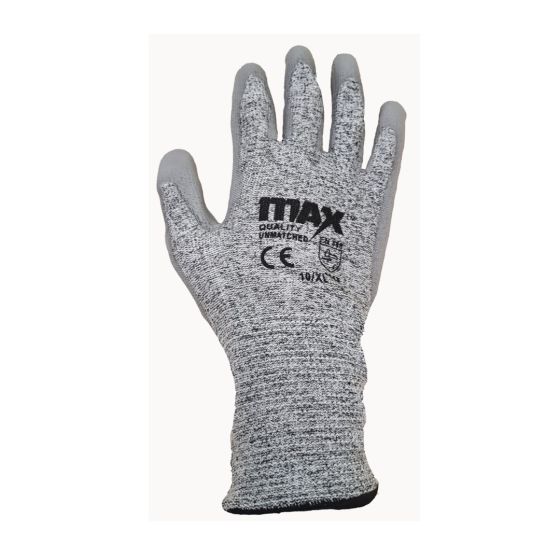 |
MAX | TDM Level C | PU Palm Coated | Construction, logistics, general fabrication |
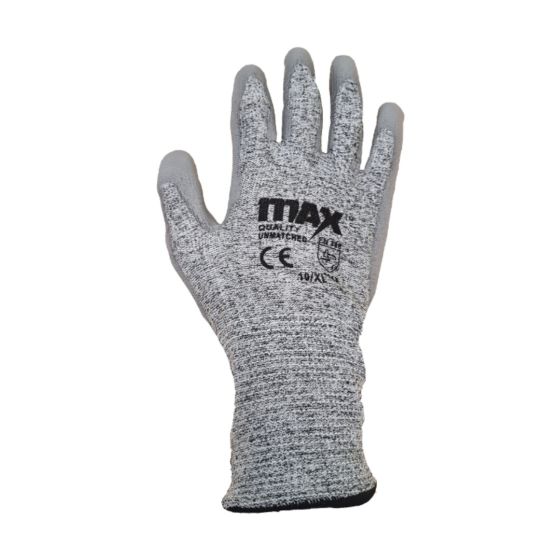 |
MAX | TDM Level E | PU Palm Coated | Sheet metal, blade handling, glass, automotive |
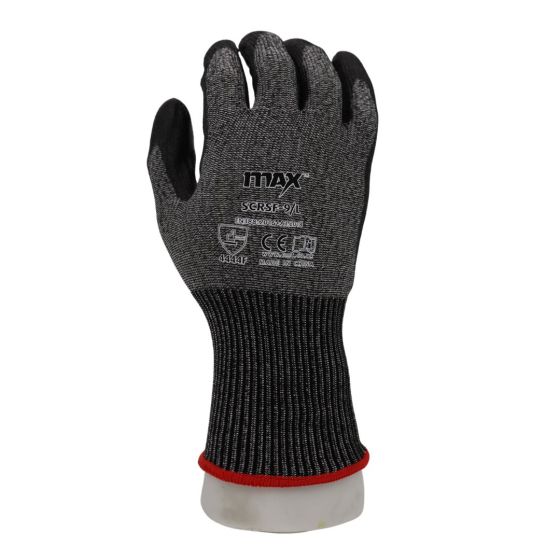 |
MAX | TDM Level F | PU Palm Coated | Heavy fabrication, slaughterhouse, maximum cut risk |
| Armour U Brand | ||||
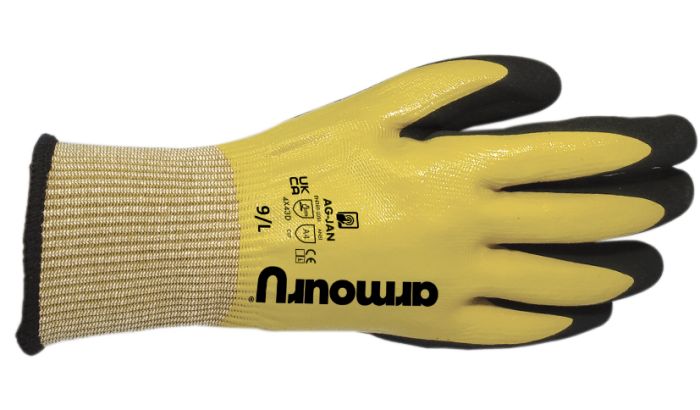 |
Armour U | TDM Level D | Fully Coated Latex | Heavy-duty grip, rough terrain, construction |
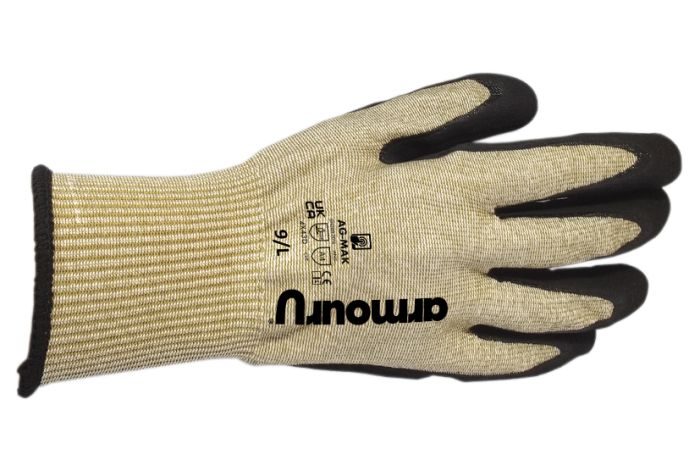 |
Armour U | TDM Level D | Palm Coated Latex | General handling, warehouse, light construction |
| Product | Protection | Coating | Best Use | |
|---|---|---|---|---|
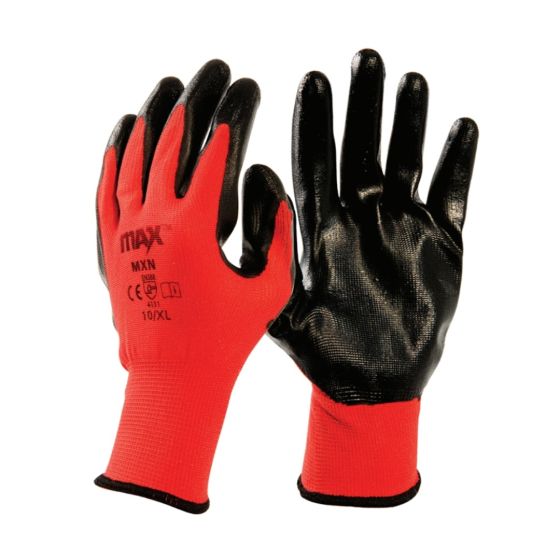 |
MAX | General | Smooth Nitrile, Latex-Free | Light assembly, dry handling, latex allergy users |
 |
MAX | General | Crinkle Latex | Heavy-duty handling, rough materials, site work |
 |
MAX | General | Latex Palm, Polycotton Liner | General purpose, warehousing, packing |
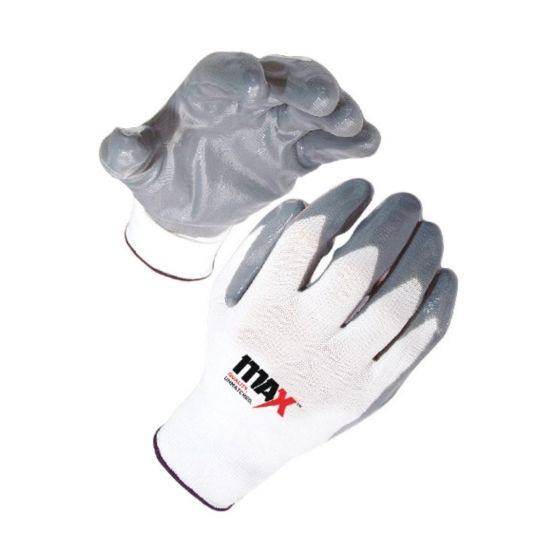 |
MAX | General | Smooth Nitrile | Precision handling, engineering, clean environments |
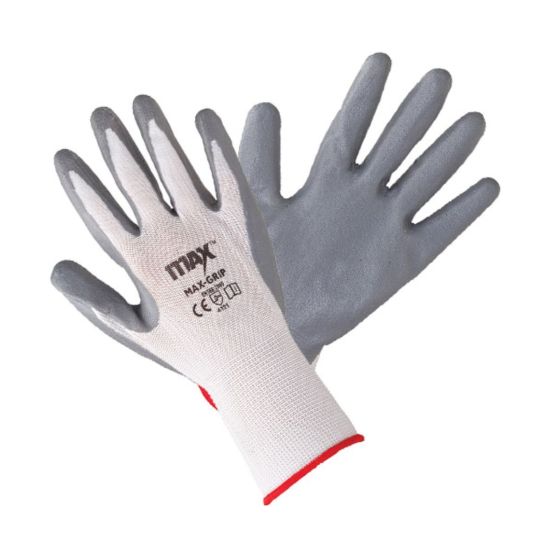 |
MAX | General | Foam Nitrile | Wet and oily conditions, mechanical handling |
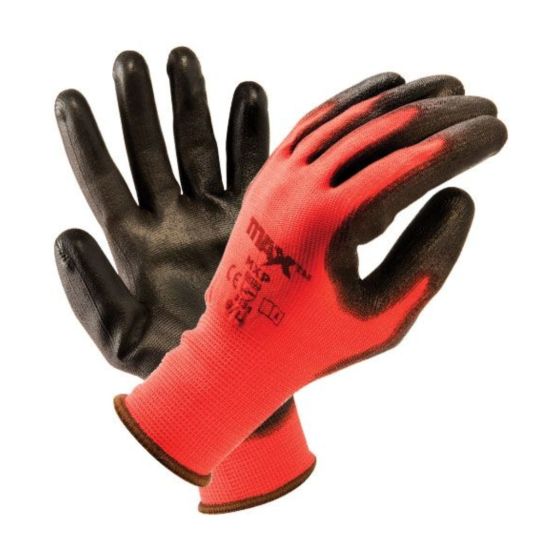 |
MAX | General | PU Palm | Light assembly, electronics, dry precision tasks |
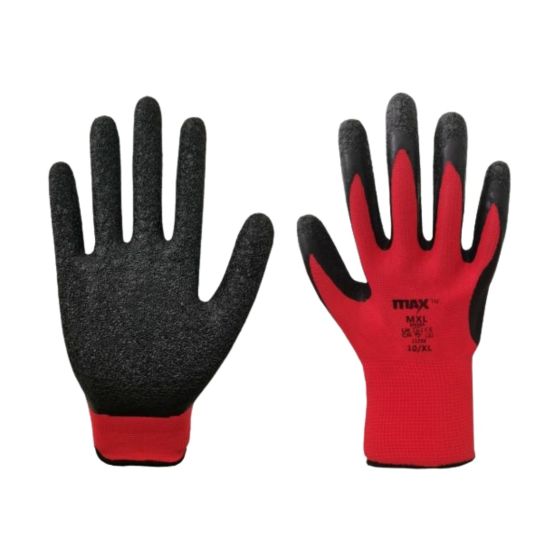 |
MAX | General | Crinkle Latex | Wet and oily grip, construction, utilities |
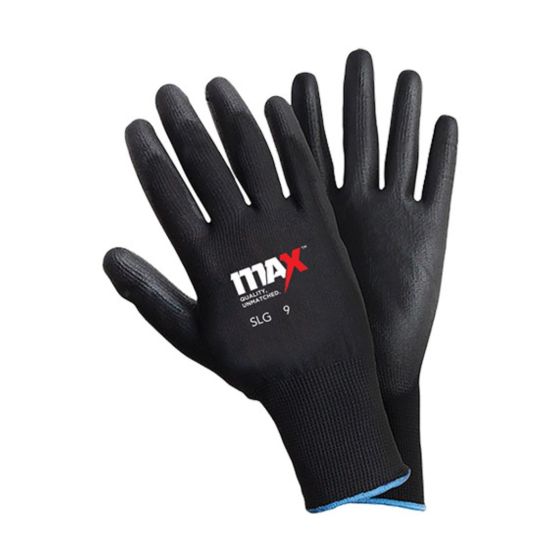 |
MAX | General | PU Palm, Nylon Liner | Light work, picking, packing, automotive assembly |
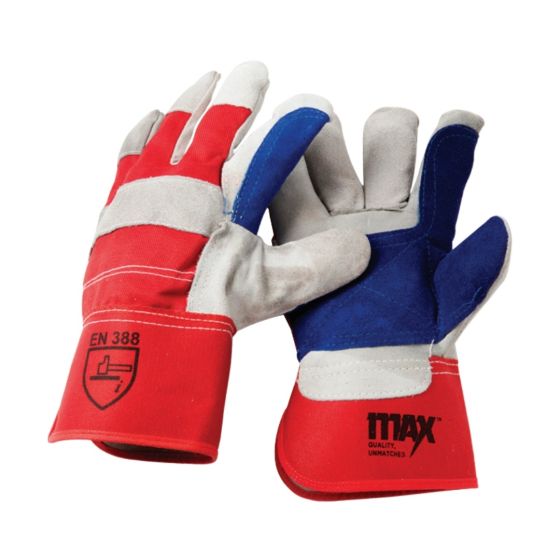 |
MAX | General | Double Leather Palm | Rigging, scaffolding, heavy construction |
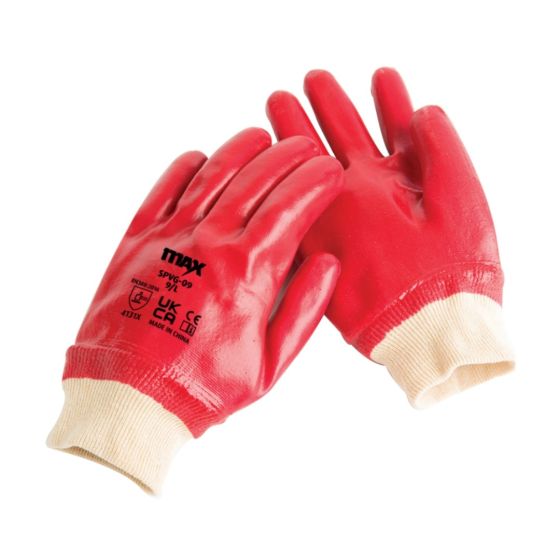 |
MAX | General | Fully Coated PVC | Wet conditions, drainage, groundwork, waste handling |
| Product | Protection | Coating | Best Use | |
|---|---|---|---|---|
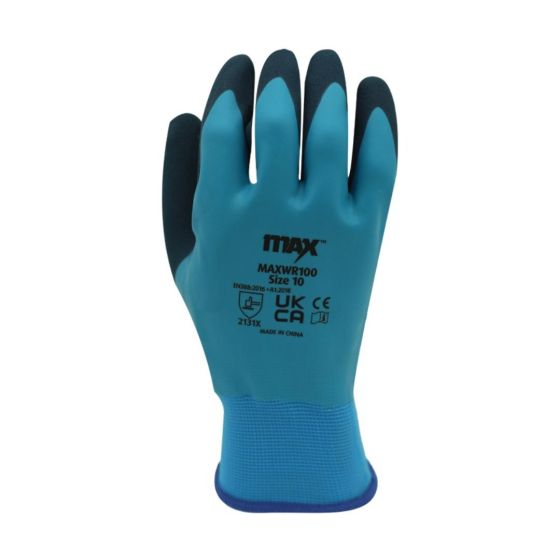 |
MAX | Waterproof | Foam Latex | Outdoor work, rain, wet handling, drainage |
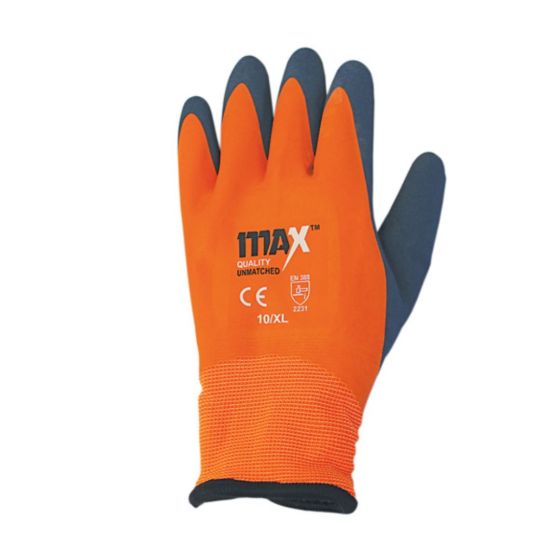 |
MAX | Thermal + Waterproof | Foam Latex, Thermal Liner | Cold outdoor work, winter construction, utilities |
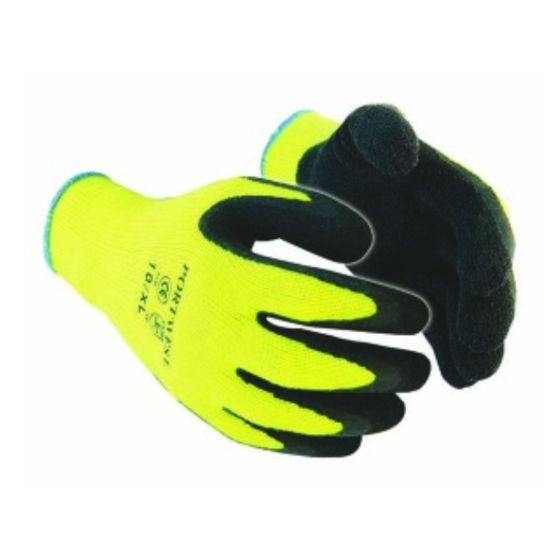 |
MAX | Thermal | Latex Grip, Fleece Lined | Cold storage, winter site work, freezer logistics |
MAX and Armour U are just two of the brands we stock. Browse our complete selection of safety gloves, including third-party brands across every protection category, for UK next-day delivery.
Final Thoughts
Modern safety gloves are highly specialised products designed to protect against very specific hazards, and the range of standards, ratings and materials available today reflects both the diversity of workplace risks and the significant advances in PPE materials technology over the past decade. Understanding TDM cut resistance, EN388 ratings, heat protection, chemical resistance, puncture resistance and grip performance is no longer specialist knowledge reserved for safety managers alone. It is essential for anyone involved in PPE specification, procurement or site management.
The right glove improves safety, productivity, comfort, worker compliance and operational efficiency. In today's UK workplace, where HSE enforcement, employer liability and duty-of-care requirements are all significant factors, informed glove selection is no longer optional. It is a critical part of responsible workplace risk management.
